Banner
Pilot Study: Fibromyalgia Fatigue Improved By TENS Therapy

Fibromyalgia is the term for a poorly-understood condition where people experience pain and fatigue...

High Meat Consumption Linked To Lower Dementia Risk

Older people who eat large amounts of meat have a lower risk of dementia and cognitive decline...

Long Before The Inca Colonized Peru, Natives Had A Thriving Trade Network

A new DNA analysis reveals that long before the Incan Empire took over Peru, animals were...

Mesolithic People Had Meals With More Tradition Than You Thought

The common imagery of prehistoric people is either rooting through dirt for grubs and picking berries...

User picture.
News StaffRSS Feed of this column.

News Releases From All Over The World, Right To You... Read More »

Blogroll

Secondary organic materials (SOM) in the atmosphere form two distinct types, liquids and jellies, and these airborne particles have begun to react with gases in the atmosphere. In the last 20 years' research and climate modeling, these SOM particles have been assumed to drift as liquids. In a liquid phase, the organic materials would absorb other compounds like ammonia or ozone very easily and then progress through a series of chemical changes, known as chemical aging, to form particles that reflect or absorb sunlight, or form clouds.

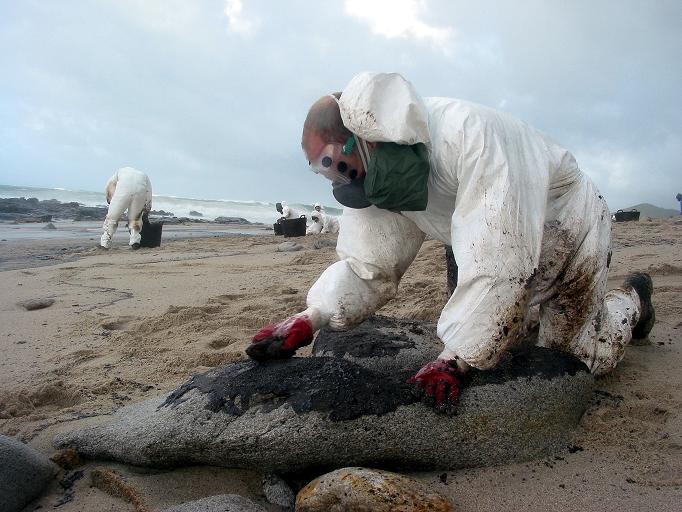
Next month will be the ten year anniversary of the Prestige sinking, which caused one of Spain's largest ecological disasters. The oil spill reached the coasts of Galicia and the rest of the Cantabrian coast, right up to the Landes area of France and Portugal. Thousands of people aided in the cleaning of the contaminated beaches and were exposed to the fuel for prolonged periods.

An experiment carried out on rodents exposed to fuel similar to that of the Prestige tanker oil spill concluded that inhalation of the fuel causes damage to genetic material. They say the results could be used to help people who carry out the industrial cleaning of coasts.
The best reasons to allow hunting in animal-heavy states are that they get hit by cars a lot and they starve. When it comes to cars, some areas are going to be a lot more dangerous than others and it is not a question of how many animals are there but simply where the road is. They have done things their way for 6,000 years and don't want to change, regardless of what automobiles might like.

But the animals will go over. Case in point: The Wildlife Conservation Society (WCS) has announced the successful use of newly constructed overpasses that provide safe passage for thousands of migrating pronghorn over U.S. Highway 191 in Trapper’s Point, Wyoming, and surrounding areas. 
Greenland has areas of very clean water, the like of which just does not exist in developed nations, but also highly polluted water, making it an excellent location for studying the environmental impacts of chemicals

More than 10,000 tons of antibiotics are consumed in Europe each year and an estimated 30-60% of those pass through animals and humans completely unchanged. These different substances can then reach the ocean via hospitals, municipal sewage, fish farms and run-off from agriculture and landfills.

A research group from the University of Gothenburg wanted to examine the potential effects of accumulating antibiotics in the seabed, so off to Greenland they went.
New research findings show that immune system development is affected by gravity changes when astronauts are exposed to stresses during launch and landing which disrupts their body’s natural defenses against infection. Changes to the immune system need to be investigated before astronauts undergo longer space missions. 

Researchers looked at how antibody production is affected when animal development occurs on board a space station and which part of space travel has the greatest impact on antibodies, which are the proteins that the immune system uses to protect us from diseases.
Why, in difficult driving conditions or when lost, do people turn down the volume of their radio? Some new research links motor skills and perception, specifically as it relates to a second finding; a new understanding of what the left and right brain hemispheres "hear."

The findings, the first to match human behavior with left brain/right brain auditory processing tasks, may eventually point to strategies that could help stroke patients recover their language abilities and to improve speech recognition in children with dyslexia.