Banner
Pilot Study: Fibromyalgia Fatigue Improved By TENS Therapy

Fibromyalgia is the term for a poorly-understood condition where people experience pain and fatigue...

High Meat Consumption Linked To Lower Dementia Risk

Older people who eat large amounts of meat have a lower risk of dementia and cognitive decline...

Long Before The Inca Colonized Peru, Natives Had A Thriving Trade Network

A new DNA analysis reveals that long before the Incan Empire took over Peru, animals were...

Mesolithic People Had Meals With More Tradition Than You Thought

The common imagery of prehistoric people is either rooting through dirt for grubs and picking berries...

User picture.
News StaffRSS Feed of this column.

News Releases From All Over The World, Right To You... Read More »

Blogroll
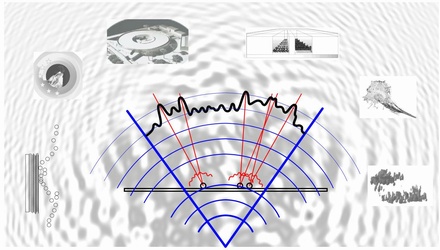
Can researchers improve the quality of matter akin to that found in plasma screens? A new study improves the understanding of plasma sources, where a certain portion of the particles are ionized. 

Under certain circumstances, plasma tends to form structures - filaments of electric discharge that are like mini-lightning. Researchers recently investigated barrier discharge, which features at least one electrical insulating material within the discharge gap that acts as an electrically insulating barrier and can be used as a plasma source. They investigated the transition from a highly ordered filament pattern, which is arranged hexagonally, to a disordered system due to the reduction of the externally applied voltage.
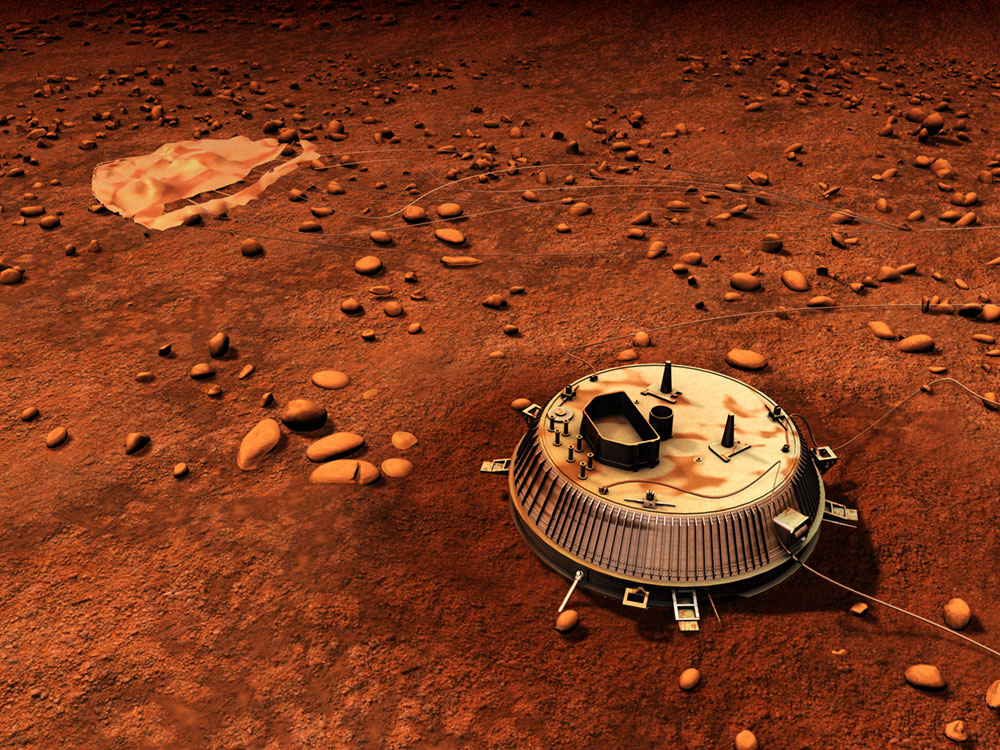
In January, 2005, ESA’s Huygens probe bounced, slid and wobbled its way to rest for 10 seconds after touching down on Saturn’s moon, Titan. As you can imagine, that tells scientists quite a bit about the nature of that moon’s surface.

They reconstructed the chain of events by analyzing data from a variety of instruments that were active during the impact, in particular changes in the acceleration experienced by the probe. The instrument data were compared with results from computer simulations and a drop test using a model of Huygens designed to replicate the landing and the analysis revealed that, on first contact with Titan’s surface, Huygens dug a hole 12 cm deep before bouncing out onto a flat surface.
Unless you are a microbiologist, you probably don't want to think about all of the things that are happening in your mouth right now. 

One thing you share with microbiologists is incomplete knowledge regarding what determines the specific types of microorganisms that live there. Is it genes that decide who lives in your microbial village, or your environment? In a new paper, researchers contend that environment plays a much larger role in determining oral microbiota than biology, a finding that sheds new light on a major factor in oral health.
Is it feasible to use dead stars to navigate spacecraft in deep space? Long-term space travel may be a pipe dream outside science fiction math but people inside science are at least thinking about how to make navigation possible. 

When temperatures get low, close to absolute zero, some chemical reactions still occur at a much higher rate than classical chemistry says they should – in that extreme chill, quantum effects enter the picture. Researchers have now confirmed this experimentally, providing insight into processes in the intriguing quantum world in which particles act as waves and perhaps also explaining how chemical reactions occur in the vast frigid regions of interstellar space.

Body hair in mammals is typically thought to have evolved to keep us warm in colder prehistoric periods but in elephants it may do the opposite.  A new study contends epidermal hair may have evolved to help the animals keep cool in the hot regions they live in.

Low surface densities of hair can help dissipate heat but the biological and evolutionary significance of sparse skin hair is not well known. The authors of the new paper studied the effects of skin hair densities in Asian and African elephants on thermoregulation in these animals, and concluded that elephant skin hair significantly enhances their capacity to keep cool under different scenarios like higher daytime temperatures or less windy days.