Banner
Pilot Study: Fibromyalgia Fatigue Improved By TENS Therapy

Fibromyalgia is the term for a poorly-understood condition where people experience pain and fatigue...

High Meat Consumption Linked To Lower Dementia Risk

Older people who eat large amounts of meat have a lower risk of dementia and cognitive decline...

Long Before The Inca Colonized Peru, Natives Had A Thriving Trade Network

A new DNA analysis reveals that long before the Incan Empire took over Peru, animals were...

Mesolithic People Had Meals With More Tradition Than You Thought

The common imagery of prehistoric people is either rooting through dirt for grubs and picking berries...

User picture.
News StaffRSS Feed of this column.

News Releases From All Over The World, Right To You... Read More »

Blogroll

In November 2010, the distant dwarf planet Eris passed in front of a faint background star, an event called an occultation. Occultations provide the most accurate, and often the only, way to measure the shape and size of a distant Solar System body like Eris.

Eris was identified as a large object in the outer Solar System in 2005. Its discovery was one of the factors that led to the creation of a new class of objects called dwarf planets by the IAU and the demotion of Pluto from planet to dwarf planet in 2006. Eris is currently three times further from the Sun than Pluto.

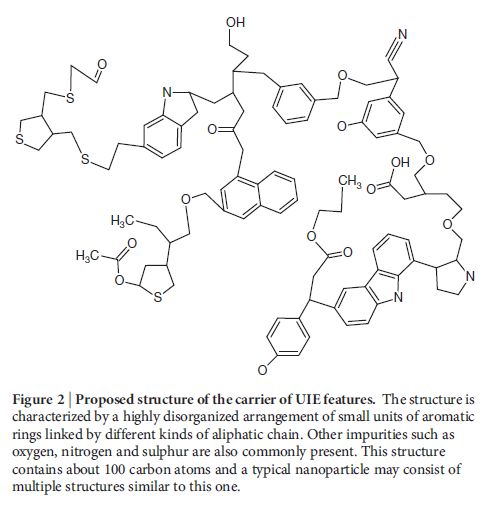
Astronomers are reporting that organic compounds of unexpected complexity exist throughout the Universe - which mean they can be made naturally by stars.

Researchers write in Nature that an organic substance commonly found throughout the Universe contains a mixture of aromatic (ring-like) and aliphatic (chain-like) components, compounds so complex that their chemical structures resemble those of coal and petroleum. 

Since coal and oil are remnants of ancient life, this type of organic matter was thought to arise only from living organisms but this new discovery suggests that complex organic compounds can be synthesized in space - even when no life forms are present.

Scientists have discovered more about the intricacies of Natural Killer cells, a unique type of white blood cell important in early immune responses to tumors and viruses.  

Unlike most cells of the immune system that are activated by molecules found on the pathogen or tumor, Natural Killer cells are shut down by a group of proteins found on healthy cells. These de-activating proteins, known as Human Leukocyte Antigens or HLA molecules are absent in many tumors and cells infected with viruses, leaving them open to attack by the Natural Killer cells. 

Natural Killer cells recognize the HLA molecules using an inbuilt surveillance system called "Killer cell immunoglobulin-like receptors" (KIR).

Why do some people, chess players or musicians, practice less but attain more?

Rats exposed to the antidepressant citalopram, a serotonin-selective reuptake inhibitor (SSRI), just before and after birth showed substantial brain abnormalities and behaviors, according to a new study. The long-distance connections between the two hemispheres of the brain showed stunted growth and degeneration and the animals also became excessively fearful when faced with new situations and failed to play normally with peers – behaviors reminiscent of novelty avoidance and social impairments seen in autism.

The abnormalities were more pronounced in male than female rats, just as autism affects 3-4 times more boys than girls.

When domesticated agriculture was invented, it took off and revolutionized human expansion but a study of ceramic pots from 15 sites dating to around 4,000 B.C. shows humans may have undergone a gradual rather than an abrupt transition from fishing, hunting and gathering to farming. The researchers analyzed the cooking residues preserved in 133 ceramic vessels from the Western Baltic regions of Northern Europe to establish whether these residues were from terrestrial, marine or freshwater organisms. 

The research team found that fish and other aquatic resources continued to be exploited after the advent of farming and domestication, with pots from coastal locations containing residues enriched in a form of carbon found in marine organisms.