Banner
Pilot Study: Fibromyalgia Fatigue Improved By TENS Therapy

Fibromyalgia is the term for a poorly-understood condition where people experience pain and fatigue...

High Meat Consumption Linked To Lower Dementia Risk

Older people who eat large amounts of meat have a lower risk of dementia and cognitive decline...

Long Before The Inca Colonized Peru, Natives Had A Thriving Trade Network

A new DNA analysis reveals that long before the Incan Empire took over Peru, animals were...

Mesolithic People Had Meals With More Tradition Than You Thought

The common imagery of prehistoric people is either rooting through dirt for grubs and picking berries...

User picture.
News StaffRSS Feed of this column.

News Releases From All Over The World, Right To You... Read More »

Blogroll
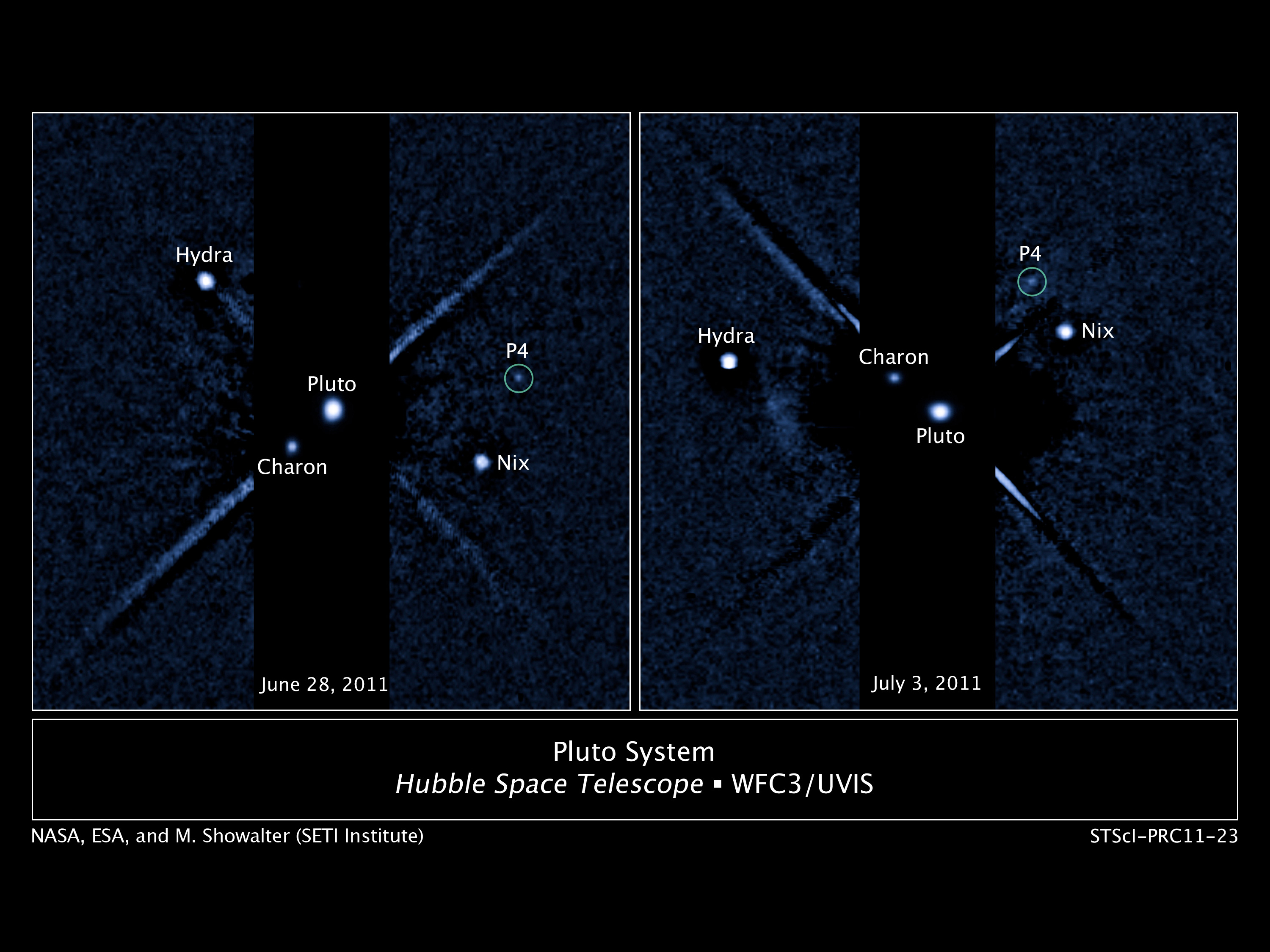
Though 2 percent of astronomers declared Pluto was no longer a planet, for not being a planet, it sure has a lot of moons.   Four so far.

The Hubble Space Telescope discovered this fourth moon, cleverly designated P4, and astronomers say this newest, smallest one has an estimated diameter of 8 to 21 miles.  By comparison, Charon, Pluto's largest moon, is 648 miles (1,043 km) across, and the other moons, Nix and Hydra, are in the range of 20 to 70 miles in diameter (32 to 113 km).

Distance: 3 billion miles.
Human-like features of the feet and gait were in existence almost two million years earlier than previously thought, according to recent analysis of ancient footprints in Laetoli, Tanzania.

Earlier studies suggested that the characteristics of the human foot, like the ability to push off the ground with the big toe and a fully upright bipedal gait, emerged in early Homo approximately 1.9 million years-ago but researchers now say that footprints of a human ancestor dating back 3.7 million years ago show features of the foot with more similarities to the gait of modern humans than with the type of bipedal walking used by chimpanzees, orangutans and gorillas.

Last month, Pluto passed in front of a star and cast a small shadow on the Earth - astronomers from Lowell Observatory were among the scientists and crew who observed the rare occultation event from NASA's newest airborne observatory, SOFIA (Stratospheric Observatory for Infrared Astronomy).  

SOFIA has a 100-inch (2.5-meter) telescope aboard a modified 747 SP aircraft, and can fly at an altitude of 45,000 ft., above most of the cloud cover and water vapor in the Earth's atmosphere.

Habituation is when people lose interest in something after being repeatedly exposed to it (insert your favorite joke about being married here).

When it comes to diet, it is hypothesized that habituation can decrease caloric intake.    That also means caloric intake will increase if you get a lot of variety.   Of course, habituation is a no-no in the modern world of nutritional variety.   We're not 19th century Irish peasants, we shouldn't just eat potatoes every day in order to stay thin.

Researchers have captured the bioelectrical signals necessary for normal head and facial formation in an organism and  captured the process in a time-lapse video that reveals never-before-seen patterns of visible bioelectrical signals outlining where eyes, nose, mouth, and other features will appear in an embryonic tadpole. 

The biologists from Tufts University found that before the face of a tadpole develops, bioelectrical signals (ion flux) cause groups of cells to form patterns marked by different membrane voltage and pH levels. When stained with a reporter dye, hyperpolarized (negatively charged) areas shine brightly, while other areas appear darker, creating an "electric face."

New research has found that some of the human X chromosome originates from Neanderthals and is found exclusively in people outside Africa.

Neanderthals, whose ancestors left Africa somewhere in the range of 400,000 to 800,000 years ago, evolved in what is now France, Spain, Germany and Russia, and are believed to have lived until about 30,000 years ago.  Early modern humans left Africa about 80,000 to 50,000 years ago.