How easy is it to falsify memory? Perhaps as easy as a little bit of social pressure, according to research at the Weizmann Institute.
In a forthcoming Science study, they show a unique pattern of brain activity when false memories are formed – one that hints at a surprising connection between our social selves and memory.
The experiment took place in four stages. In the first, volunteers watched a documentary film in small groups. Three days later, they returned to the lab individually to take a memory test, answering questions about the film. They were also asked how confident they were in their answers.
You know a problem is real when academics say they don't need 5 more years of funding to know what is going to happen.
But that's the situation in the Great Lakes and the threated posed by Asian carp, according to Bill Taylor, University Distinguished professor in global fisheries sustainability at Michigan State University . "The costs of hydrological separation are high, but it's a one-time expense and remediation in the Great Lakes from these invasive species will eventually make separation look cheap."
The U.S. Food and Drug Administration’s federal regulatory process is stifling commercial investment in the development of genetically engineered animals for food, warns a task force led by a U.C. Davis animal scientist, and that could have serious implications for agriculture and food security in the United States.
Clouding the science issues are anti-science opposition groups that seek to delay or obstruct approval by co-opting regulations and concerns about labeling requirements. The FDA does not require that food labels include information about production methods, such as genetic engineering or organic processes, unless those processes result in a material difference in the product.
A quasar named
ULAS J1120+0641, powered by a black hole with a mass two billion times that of the Sun, is by far the brightest object yet discovered in the early Universe - yet.
Given the news recently about yet another E. coli outbreak, you may be concerned E. coli is not just a plague in 'organically' processed and prepared vegetables but perhaps in regular steak - and you would be correct.
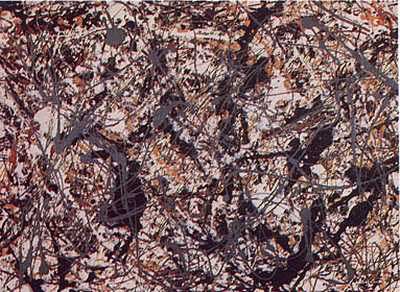
Jackson Pollock (d.1956) is famous to mainstream people more for the movie about his troubled life than his art, but his drip paintings have intrigued more than art historians.
A quantitative analysis of Pollock's streams, drips, and coils reveals some deep knowledge of applied physics and an ability to exploit fluid dynamics. Crossovers between art and science are nothing new, of course, Leonardo da Vinci's is the archetype of the "Renaissance man" because of his botanical sketches, proportional studies, flying machines, war engines and a painting or two.


 Pilot Study: Fibromyalgia Fatigue Improved By TENS Therapy
 High Meat Consumption Linked To Lower Dementia Risk
 Long Before The Inca Colonized Peru, Natives Had A Thriving Trade Network
 Mesolithic People Had Meals With More Tradition Than You Thought