There are varying levels of acceptance for various climate models, especially those that predict short-term escalation of warming due to man-made emissions.
Given that, no one is going to like new University of Washington claims that it's already too late. People who want curbs on emissions won't like news that it won't help and people who don't think emissions are the biggest problem in a worldwide recession won't bother to listen if it doesn't matter.
When you were young you may have heard something about a dog like, "Fido is 10 years old, that is 70 in people years" and wondered what that meant.
It's a rule of thumb but there is a science basis to it, yet current methods of comparing patterns of aging are limited because they confound two different elements of aging – pace and shape. And it can be confusing for non-biologists.
When you were younger, you may have wondered why gas had odd prices like $1.09.9 and your parents likely told you it's because $1.09.9 looks cheaper than $1.10. Stores love prices that end in $.99 for that reason.
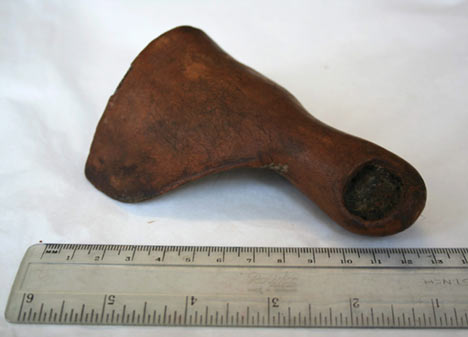
An artificial big toe found attached to the foot of an ancient Egyptian mummy is the world's oldest prosthetic. At least for now. It predates the previous earliest known practical prosthesis , the Roman Capula Leg, by several hundred years.
It wasn't simply cosmetic. The two toes, a three-part wood and leather artifact housed in the Egyptian Museum in Cairo, and the Greville Chester artificial toe on display in the British Museum, also helped their toeless owners walk like Egyptians.
A University of Leicester ecologist has warned that Kenya is being “bled dry” by the UK’s demand for fresh flowers, a timely concern given Valentine's Day. Dr. David Harper, of the Department of Biology has been working at Lake Naivasha in Kenya as part of ongoing research and projects on the ecosystem of lakes there and has called on UK supermarkets to show more concern about the health of the natural environment that the flowers come from.
Blaming supermarkets seems a little much but academics know better than to blame individuals so telling poor women they shouldn't get flowers would have some backlash - faceless corporations are fair game.
How does something made of loose particles sometimes behave like a solid, liquid or gas? For example, dry sand acts like a solid when you stand on it but like a liquid when you try to scoop some up in your hand.
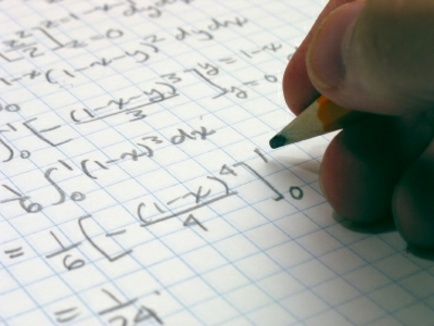
Or how Saturn's rings act like a fluid. Dr Nikolai Brilliantov from the University of Leicester Department of Mathematics is intrigued by the maths of things like that and is going to give a free lecture on February 15th in the University’s Ken Edwards Building, Lecture Theatre 1, at 5.30pm titled ‘Statistical mechanics of granular matter: simple concepts and complex phenomena’.


 Pilot Study: Fibromyalgia Fatigue Improved By TENS Therapy
 High Meat Consumption Linked To Lower Dementia Risk
 Long Before The Inca Colonized Peru, Natives Had A Thriving Trade Network
 Mesolithic People Had Meals With More Tradition Than You Thought