Researchers have created the first brain-wide wiring map of a fruit fly, a breakthrough that is being compared to the genome for geneticists, and they say it paves the way for a comprehensive analysis of information processing within and between neurons and ultimately a deeper understanding of control and causality in fly behavior.
Botulinum Toxin A is a commonly used cosmetic treatment, where the drug paralyzes small muscles in the face to reduce the appearance of wrinkles. If you have ever seen someone who looks normal and then suddenly looks like The Joker, you have seen Botox in action. A new study by researchers at the Faculty of Kinesiology, University of Calgary, is raising questions about the therapeutic use of botulinum toxin A.
If you are unaware, a supernova is an exploding star. In certain types of supernovae, the detonation starts with a flame ball buried deep inside a white dwarf and the flame ball is much lighter than its surroundings, so it rises rapidly making a plume topped with an accelerating smoke ring.
A team of physicists have mimicked this type explosion of a supernova in miniature.
“We created a smaller version of this process by triggering a special chemical reaction in a closed container that generates similar plumes and vortex rings,” says Stephen Morris, a University of Toronto physics professor.
A new study says that exposure to polluted air in young mice led to an accumulation of abdominal fat and insulin resistance even if they ate a normal diet.
The U.S. Environmental Protection Agency(EPA) says that nearly one out of every three people in the United States is at a higher risk of experiencing health effects related to the presence of polluted air. Because of the tiny size of fine-particulate air pollution - 2.5 micrometers or smaller in diameter, or about 1/30th of the average width of a human hair - pollutants could reach deep areas of the lungs and other organs in the body.
Bacteria that we carry in our bodies may help decide who we marry, according to a new study that analyzes the gut of...a small fruit fly.
A group of molecular biologists recently demonstrated that the symbiotic bacteria inside a fruit fly greatly influence its choice of mates. They propose that the basic unit of natural selection is not the individual living organism, plant or animal, but rather a larger biological milieu called a holobiont. This milieu can include plant or animal life as well as their symbiotic partners. In the case of animals, these partners tend to be microorganisms like intestinal bacteria.
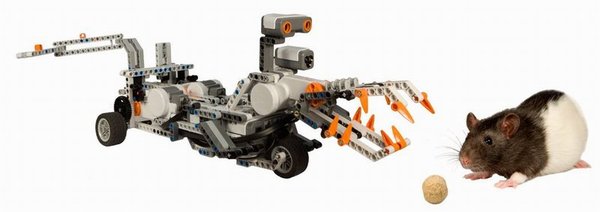
We instinctively know how to keep ourselves safe and so do other animals, according to neuroscientists in the Proceedings of the National Academy of Sciences. University of Washington researcher Jeansok Kim demonstrates that rats weigh their odds of safely retrieving food pellets placed at varying distances from a perceived predator.
Stay or forage might seem obvious but rats need to get out and find food and how do they decide whether it's safe to leave the nest was the focus of Kim and co-author June-Seek Choi, a visiting professor in the UW psychology department from Korea University. They studied how the amygdala, an important brain area for perceiving and reacting to fear, was involved in the rats' decisions to risk their safety for food.


 Pilot Study: Fibromyalgia Fatigue Improved By TENS Therapy
 High Meat Consumption Linked To Lower Dementia Risk
 Long Before The Inca Colonized Peru, Natives Had A Thriving Trade Network
 Mesolithic People Had Meals With More Tradition Than You Thought