Banner
Pilot Study: Fibromyalgia Fatigue Improved By TENS Therapy

Fibromyalgia is the term for a poorly-understood condition where people experience pain and fatigue...

High Meat Consumption Linked To Lower Dementia Risk

Older people who eat large amounts of meat have a lower risk of dementia and cognitive decline...

Long Before The Inca Colonized Peru, Natives Had A Thriving Trade Network

A new DNA analysis reveals that long before the Incan Empire took over Peru, animals were...

Mesolithic People Had Meals With More Tradition Than You Thought

The common imagery of prehistoric people is either rooting through dirt for grubs and picking berries...

User picture.
News StaffRSS Feed of this column.

News Releases From All Over The World, Right To You... Read More »

Blogroll
Body checking in hockey, intentionally slamming an opponent against the boards, is regarded as violence under the guise of sports, according to hockey detractors, but injury numbers don't agree - at least in young players.

Findings from a new study show that 66 percent of overall injuries were caused by accidentally hitting the boards or goal posts, colliding with teammates or being hit by a puck.   Only 34 percent of the injuries were caused by checking. Moreover, the accidental injuries were more severe than those from body checks. 

The results appeared in June issue of the British Journal of Sports Medicine and were a surprise to the researchers at the University at Buffalo who conducted the five-year study. 
Calcium supplements are commonly taken by older people for osteoporosis but have now been associated with an increased risk of a heart attack, according to a study published in BMJ-British Medical Journal.   

The results seem to indicate that a reassessment of the role of calcium supplements in osteoporosis management is needed.  Calcium supplements are commonly prescribed for skeletal health, but the recent trial suggested they might increase rates of heart attack (myocardial infarction) and cardiovascular events in healthy older women.
A pig's 'mood' can show us how content he is, say researchers at Newcastle's School of Agriculture, Food and Rural Development.

Led by Dr Catherine Douglas, the team has employed a technique to 'ask' pigs if they are feeling optimistic or pessimistic about life as a result of the way in which they live and their results say that pigs are capable of complex emotions which are directly influenced by their living conditions.

The Newcastle team taught the pigs to associate a note on a glockenspiel with a treat (an apple) and a dog training 'clicker' with something unpleasant – rustling a plastic bag.

Werner Heisenberg's 'Uncertainty Principle'(1927) is a fundamental concept in quantum physics, basically saying you can be increasingly accurate in position or momentum (mass X velocity), but not both(1).  

This can be an important feature rather than a defect in something like quantum cryptography, where information is transmitted in the form of quantum states such as the polarization of particles of light.

A group of scientists from LMU and the ETH in Zurich say they have shown that position and momentum can be predicted more precisely than Heisenberg's Uncertainty Principle states - if the recipient makes use of a quantum memory that employs ions or atoms.

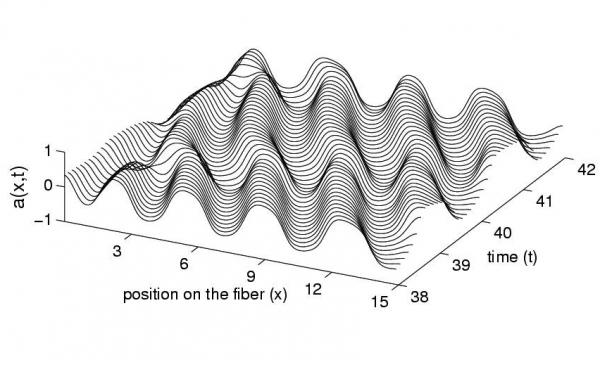
Chaos is the disorder of a dynamical system but it is not completely unpredictable.   Researchers are convinced that locating the origin of chaos and watching it develop might allow science to predict, and perhaps counteract, outcomes.

Like having a heart attack. 

Writing in in the journal CHAOS, researchers say chaos models may someday help model cardiac arrhythmias (abnormal electrical rhythms of the heart) and help to understand the behavior of ventricular fibrillation, a severely abnormal heart rhythm that is often life-threatening, in order to mitigate it.
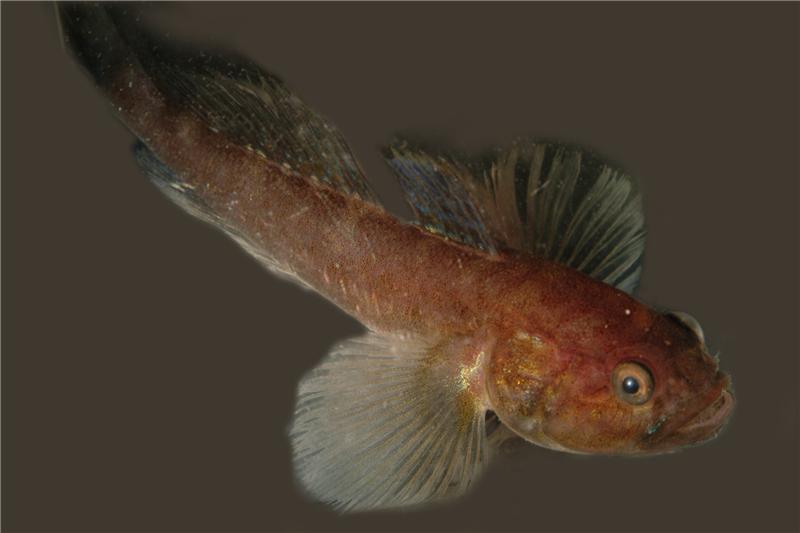
Benguela-goby, or bearded goby, is a fish species that has adapted to a hostile environment poisonous to most other organisms.  

This little goby-fish (Sufflogobius bibarbatus) reaches a maximum length of 13 cm and is only found in the Benguela ecosystem, the anoxic continental shelf outside Namibia and South-Africa,  and one of the world’s most productive fisheries areas.   Since the collapse of the sardine fisheries, this goby has become the new predominant prey species for larger fish, birds and mammals in the region.