Banner
Pilot Study: Fibromyalgia Fatigue Improved By TENS Therapy

Fibromyalgia is the term for a poorly-understood condition where people experience pain and fatigue...

High Meat Consumption Linked To Lower Dementia Risk

Older people who eat large amounts of meat have a lower risk of dementia and cognitive decline...

Long Before The Inca Colonized Peru, Natives Had A Thriving Trade Network

A new DNA analysis reveals that long before the Incan Empire took over Peru, animals were...

Mesolithic People Had Meals With More Tradition Than You Thought

The common imagery of prehistoric people is either rooting through dirt for grubs and picking berries...

User picture.
News StaffRSS Feed of this column.

News Releases From All Over The World, Right To You... Read More »

Blogroll
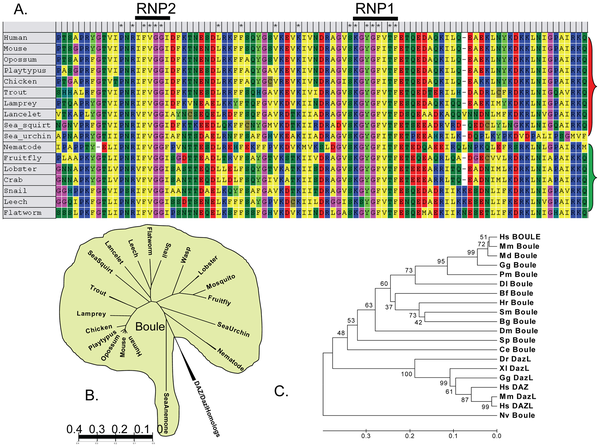
Genes specific to sex change rapidly but there is one sex-specific gene so vital its function has remained unaltered throughout evolution and is found in almost all animals, according to new research from Northwestern University Feinberg School of Medicine.

The gene, called Boule, is responsible for sperm production and they say that Boule appears to be the only gene known to be exclusively required for sperm production from an insect to a mammal. 
Superstition may work if you think it works.   If only voodoo were so easy, we'd love to have an army of zombies at our command.

But people, and certainly athletes, maintain any number of superstitious rituals, so Lysann Damisch, Barbara Stoberock and Thomas Mussweiler of the University of Cologne designed a set of experiments to see if activating  people's superstitious beliefs would improve their performance on a task.  Their research says that having some kind of lucky token can actually improve performance – but by increasing self-confidence and not any magical mojo.
A new study says it is the first to identify a life-or-death "cell competition" process in mammalian tissue that suppresses cancer by causing cancerous cells to kill themselves. 

Central to their discovery was the researchers' identification of 'Mahjong,  a gene that can determine the winners of the competition through its close relationship with another powerful protein player.
Think a a mere 0.0350 millionth of a millionth of a millimeter is unimportant?  Think again.   

At the Paul Scherrer Institute in Switzerland, an international team of researchers has now measured the proton with experiments they say are ten times more accurate than all previous ones.   And all the old values for the dimension of the proton, the nucleus of the hydrogen atom, are off. Instead of 0.8768 femtometres it measures only 0.8418 femtometres, they say

If so, at least one fundamental constant now changes and physicists also have to check the calculations of quantum electrodynamics. This theory is assumed to be very well proven, but its predictions do not agree with these latest measurements. 
Even if you know an unexpected event is likely to occur, you are no better, and may be even worse, than those who aren't expecting anything unexpected at all.   Did you expect that confusing opening sentence?   Now you get the point.

The study, from Daniel Simons, a professor of psychology and in the Beckman Institute at the University of Illinois, appears this month as the inaugural paper in the new open access journal i-Perception. (www.perceptionweb.com/i-perception)
The black hole at the edge of galaxy NGC 7793, twelve million light years from Earth, has been found to be doing something rare - emitting powerful jets of particles of a total length of 1,000 light years.  The energy produced by matter falling into a black hole this size is usually transformed into X-rays, not into jets, but this one is the exception - a miniature version of certain supermassive black holes present in the active nuclei of galaxies.