You would think religious people and atheists don't have a lot in common regarding thinking but they do, says a study by UCLA, Pepperdine and USC neuroscientists.
It's tough to systematically compare religious faith with ordinary cognition, so calibrate accordingly, but in a neuroimaging study the researchers found that while the human brain responded very differently to religious and nonreligious propositions, the process of believing or disbelieving a statement, whether religious or not, was governed by the same areas in the brain.
The power of quantum mechanics for data transmission is intriguing because of potential for secure, high speed communications but current storage and transmission of quantum information is far too fragile to have any practical value in the near term.
In classical communications, a bit can represent one of two states - either 0 or 1. But because photons are quantum mechanical objects, they can exist in multiple states at the same time. Photons can also be combined, in a process known as entanglement, to store a bit of quantum information (i.e. a qubit).
The diagnosis of mental health disorders in the US has nearly doubled in the past 20 years and clinical psychologists and therapists are on the front lines of handling it but many are falling short because they use methods that are out of date or lack any scientific rigor or both.
How is that possible? Because many of the training programs, and especially some Doctorate of Psychology (PsyD) programs and for-profit training centers, are not grounded in science, according to a new report in Psychological Science in the Public Interest.
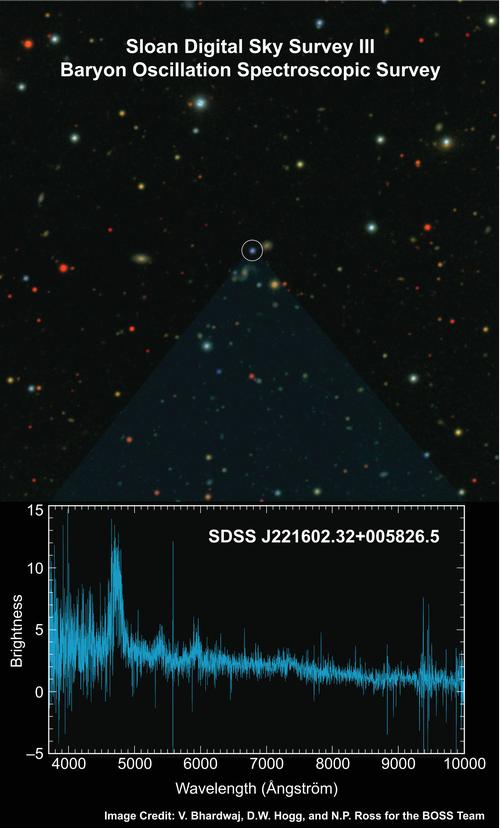
Is 'dark energy', the mysterious unidentified thing that would be a nice explanation for a lot of universal questions, physics or religion? Maybe baryon oscillations can tell us.
Baryon oscillations began when pressure waves travelled through the early universe. An ambitious attempt to trace the history of the universe, called the Baryon Oscillation Spectroscopic Survey (BOSS), has seen first light. BOSS, a part of the Sloan Digital Sky Survey III (SDSS-III), took its first astronomical data on the night of September 14th.
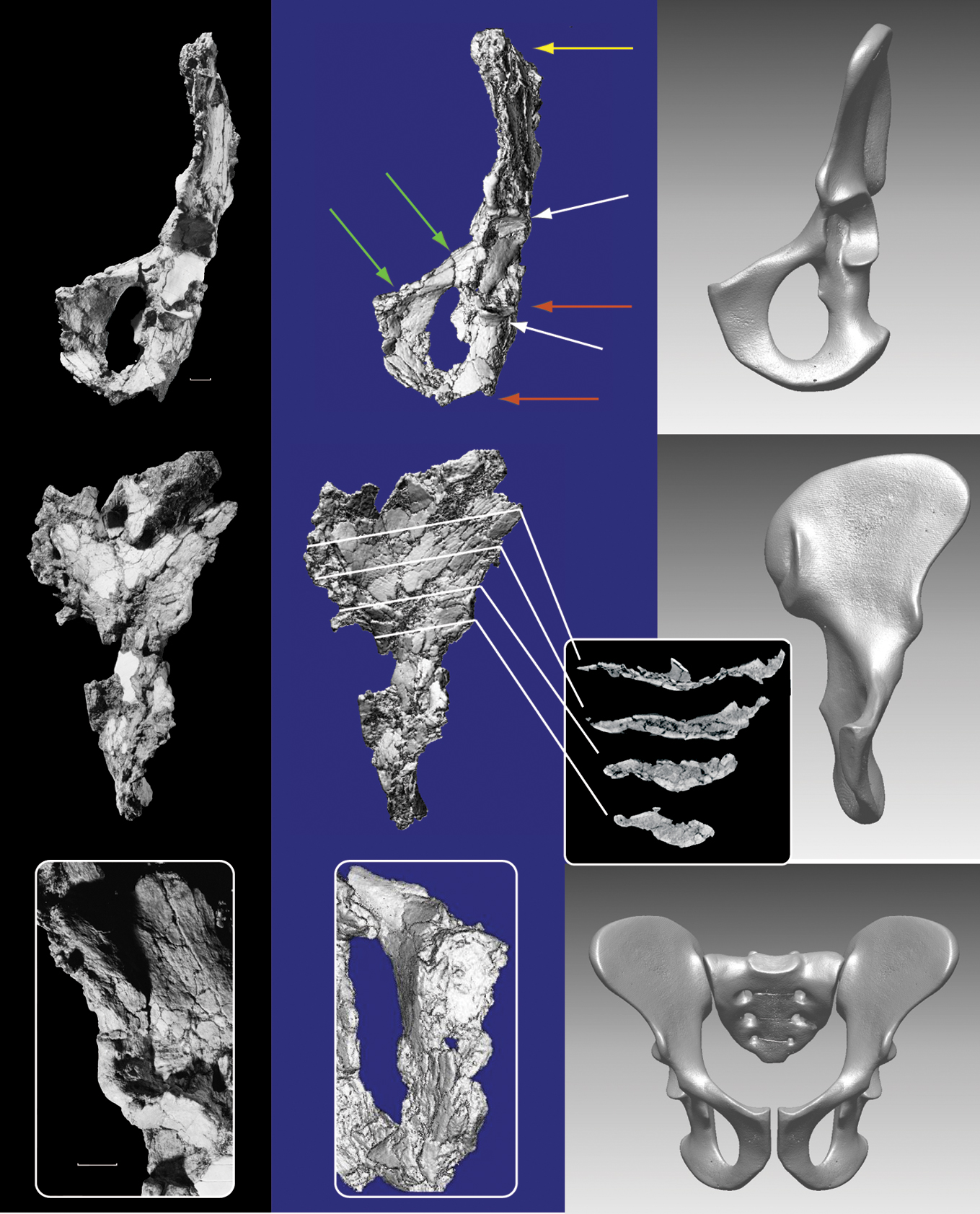
Researchers writing in Science have described Ardipithecus ramidus, a hominid species that lived 4.4 million years ago in what is now Ethiopia.
The last common ancestor shared by humans and chimpanzees is thought to have lived six or more million years ago and Ardipithecus likely shared many of this ancestor's characteristics. In context, Ardipithecus is more than a million years older than the famous "Lucy" female partial skeleton of Australopithecus afarensis. Until the discovery of the new Ardipithecus remains, the fossil record contained scant evidence of other hominids older than Australopithecus.
Reduviasporonites were tiny organisms that covered the planet more than 250 million years ago. According to new research in Geology, they appear to be a species of ancient fungus that thrived in dead wood and the researchers believe that the organisms were able to thrive during this period because the world's forests had been wiped out.
Researchers had previously been unsure as to whether Reduviasporonites were a type of fungus or algae but by analyzing the carbon and nitrogen content of the fossilised remains of the microscopic organisms, the scientists identified them as a type of wood-rotting fungus that would have lived inside dead trees.


 Pilot Study: Fibromyalgia Fatigue Improved By TENS Therapy
 High Meat Consumption Linked To Lower Dementia Risk
 Long Before The Inca Colonized Peru, Natives Had A Thriving Trade Network
 Mesolithic People Had Meals With More Tradition Than You Thought