Banner
Pilot Study: Fibromyalgia Fatigue Improved By TENS Therapy

Fibromyalgia is the term for a poorly-understood condition where people experience pain and fatigue...

High Meat Consumption Linked To Lower Dementia Risk

Older people who eat large amounts of meat have a lower risk of dementia and cognitive decline...

Long Before The Inca Colonized Peru, Natives Had A Thriving Trade Network

A new DNA analysis reveals that long before the Incan Empire took over Peru, animals were...

Mesolithic People Had Meals With More Tradition Than You Thought

The common imagery of prehistoric people is either rooting through dirt for grubs and picking berries...

User picture.
News StaffRSS Feed of this column.

News Releases From All Over The World, Right To You... Read More »

Blogroll
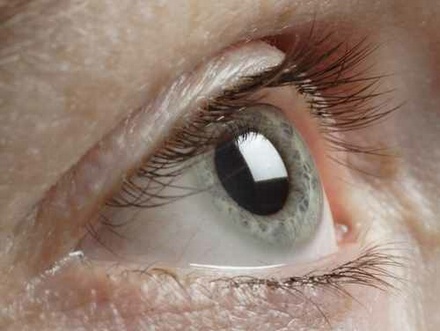
In a survey conducted about patients’ expectations of electronic retina prostheses (retina implants) a decade ago, visually impaired or blind patients with degenerative retina conditions stated they would be happy if they were able to regain some mobility and recognize faces and read again.

According to the presentations given at the international symposium “Artificial Vision” September 19th, 2009 at the Wissenschaftszentrum Bonn, that's gotten a lot closer.
Scientists at a research institute in Austria are trying to figure out how life might evolve under different biochemistry conditions and with exotic solvents than what would exist on a world similar to Earth - think sulphuric acid instead of water.

Traditionally, planets that might sustain life are looked for in a ‘habitable zone’ - the region around a star in which Earth-like planets with carbon dioxide, water vapor and nitrogen atmospheres could maintain liquid water on their surfaces.
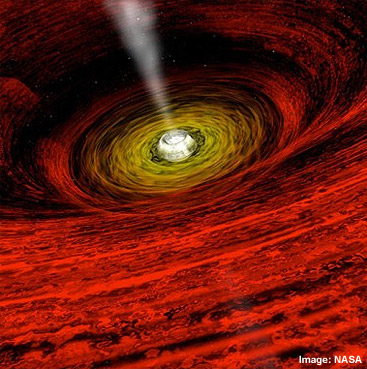
Black holes are invading stars, according to a new hyposthesis for the origin of the bright flashes in the universe that are one of the biggest mysteries in astronomy today. 

Those flashes, known as gamma ray bursts, are beams of high energy radiation produced by jets of plasma from massive dying stars.   The current model for these cosmic 'jet engines' involves plasma being heated by neutrinos in a disk of matter that forms around a black hole, which is created when a star collapses. 
Meteorites discovered with known orbits are incredibly rare but researchers using cameras which capture fireballs streaking across the night sky have managed to find not only a tiny meteorite on the vast Nullarbor Plain, but also mathematically determine its orbit and the asteroid it came from.

The ability to track meteorites back to their asteroid home also means it is an incredibly cheap way of sampling that asteroid, rather than conducting an expensive space mission.

To find the meteorite, the team deployed three 'all sky cameras' on the Nullarbor Plain to form a fireball camera network.   The cameras take a single time lapse picture of the sky throughout the entire night to record any fireballs over the Plain.
Freedom of the press is integral to a functioning democracy and respect for human rights, it is said, and a new study tackles the effects of media freedom in countries that lack democratic institutions like fair elections. 

The findings?   By itself, freedom of the press doesn't accomplish much.   Media freedom in the absence of other institutional outlets for dissent is actually associated with greater oppression of human rights, Jenifer Whitten-Woodring, a doctoral candidate in political science and international relations at USC, found utilizing data from 93 countries for the years 1981-1995. 

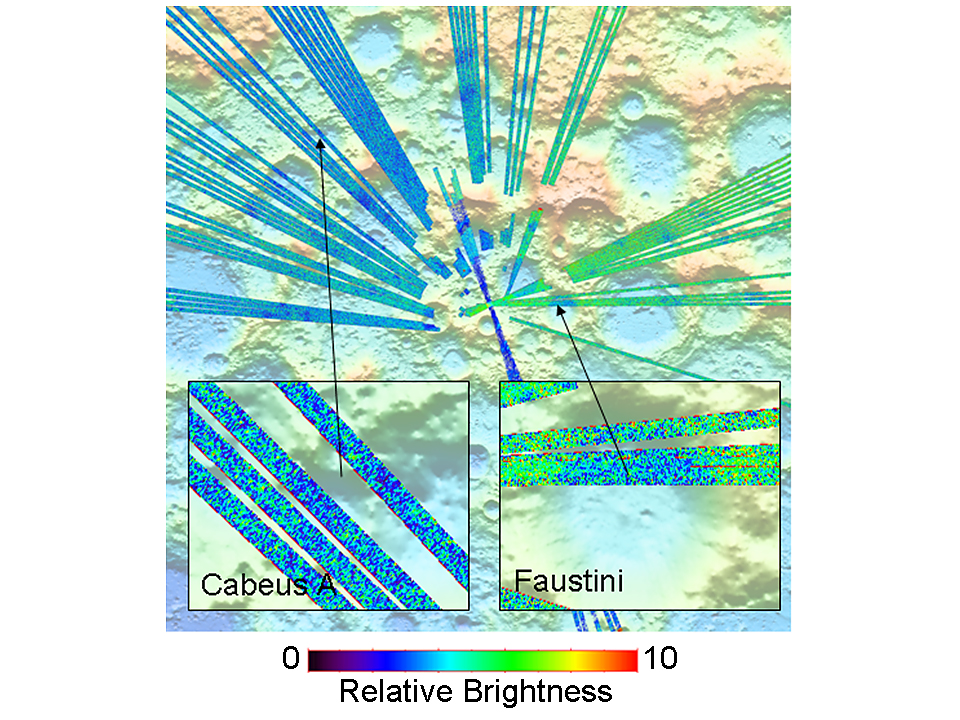
NASA's Lunar Reconnaissance Orbiter (LRO), launched on June 18th, 2009,  will return more data about the Moon than any previous mission. The Lyman-Alpha Mapping Project (LAMP), developed by Southwest Research Institute,  uses a novel method to peer into the perpetual darkness of the Moon's so-called permanently shadowed regions - the dark side of the moon.