Banner
Pilot Study: Fibromyalgia Fatigue Improved By TENS Therapy

Fibromyalgia is the term for a poorly-understood condition where people experience pain and fatigue...

High Meat Consumption Linked To Lower Dementia Risk

Older people who eat large amounts of meat have a lower risk of dementia and cognitive decline...

Long Before The Inca Colonized Peru, Natives Had A Thriving Trade Network

A new DNA analysis reveals that long before the Incan Empire took over Peru, animals were...

Mesolithic People Had Meals With More Tradition Than You Thought

The common imagery of prehistoric people is either rooting through dirt for grubs and picking berries...

User picture.
News StaffRSS Feed of this column.

News Releases From All Over The World, Right To You... Read More »

Blogroll
A 9-foot dinosaur excavated illegally from northeastern China and purchased by a private collector who brought it to the attention of paleontologists (hey, they'll return it after they're done)  is about the same weight as a grown human yet had still evolved all the hallmark anatomical features of Tyrannosaurus rex - except 30 million years earlier, according to a study in Science.

Raptorex displays the hallmarks of its famous descendant, Tyrannosaurus rex, like an oversized head, tiny arms and feet well-suited for running. The Raptorex brain cast also shows enlarged olfactory bulbs, like T. rex, indicating a highly developed sense of smell.
If you want to create a micro-aircraft that flies with the maneuverability and energy efficiency of an insect (and you know you do) decoding the aerodynamic secrets of insect flight is key because optimization through evolutionary pressures over millions of years far outstrips what we can achieve artificially. 

But it's not that simple.  Consider the 'bumblebee paradox' that plagued researchers for decades.    It turned out not to be a paradox but rather an issue with what we could model aerodynamically.   Look at mister bee below:


Scientists have observed ferromagnetism in an atomic gas for the first time, addressing the decades-old question of whether gases could show properties similar to a magnet made of iron or nickel.

A team observed the ferromagnetic behavior in a gas of lithium atoms cooled to 150 billionth of 1 Kelvin above absolute zero (-273 degrees C or -459 degrees F). Team members used the lithium-6 isotope, which consists of three protons, three neutrons and three electrons. Since the number of constituents is odd, lithium-6 is a fermion — a class of exotic particles that have a half-integral spin — and has properties similar to an electron. Therefore, lithium atoms can be used to simulate the behavior of electrons.
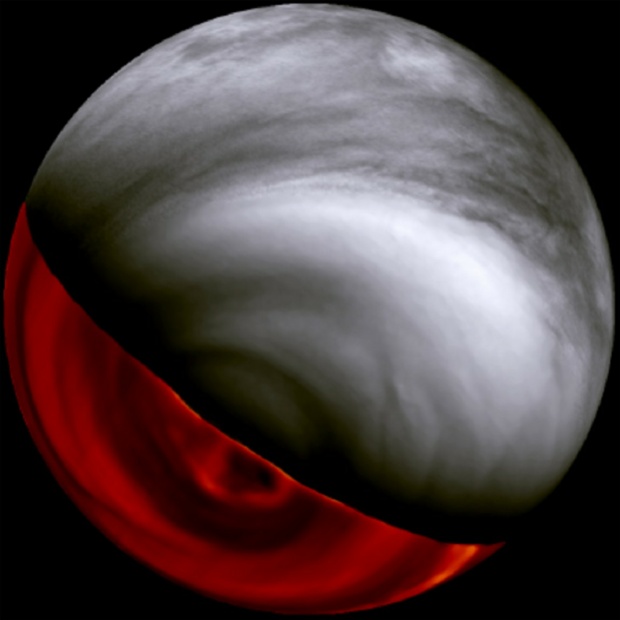
There is new evidence that the solar wind has stripped away significant quantities of water from Venus.  

The SPICAV and VIRTIS instruments carried by the Venus Express spacecraft have been used to measure concentrations of water vapor in the Venusian atmosphere at altitudes ranging from the lowest 10 km up to 110 km, high above the cloud tops.

Studies led by scientists from Belgium and Russia have found that the ratio of heavy water, which contains the isotope deuterium instead of hydrogen, to normal water is nearly twice as high above the clouds compared to its value in the lower atmosphere. 

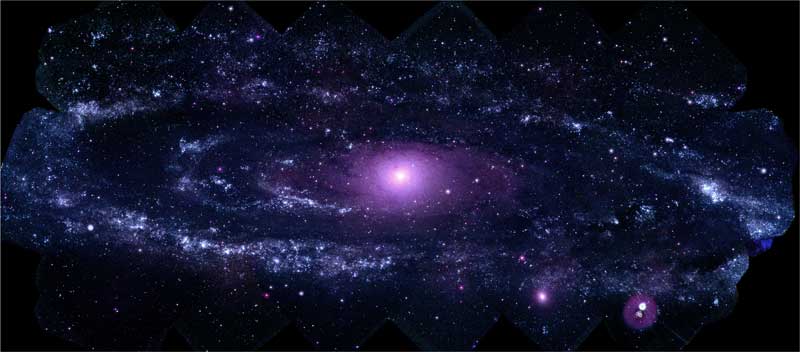
NASA's Swift satellite has acquired a new high-resolution view of a neighboring spiral galaxy; M31 in the constellation Andromeda, the largest and closest spiral galaxy to our own.

M31, also known as the Andromeda Galaxy, is more than 220,000 light-years across and lies 2.5 million light-years away. On a clear, dark night, the galaxy is faintly visible as a misty patch to the naked eye.

Between May 25 and July 26, 2008, Swift's Ultraviolet/Optical Telescope (UVOT) acquired 330 images of M31 at wavelengths of 192.8, 224.6, and 260 nanometers. The images represent a total exposure time of 24 hours. 
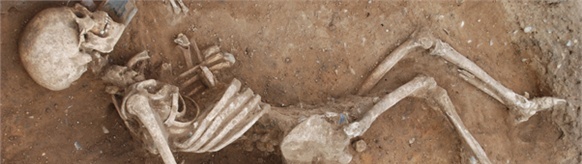
The buried town of Venta Icenorum at Caistor St Edmund in Norfolk is one of the most important, though least understood, Roman sites in Britain.

Caistor lies in the former territory of the Iceni, the tribe of Boudica Celts who famously rebelled against Roman rule in AD 60/61.

The survey revealed numerous circular features that apparently predate the Roman town.  These are probably of prehistoric date, and suggest that Caistor was the site of a large settlement before the Roman town was built. This had always been suspected because of numerous chance finds of late Iron Age coins and metalwork, but until the survey was carried out there had never been any evidence of buildings.