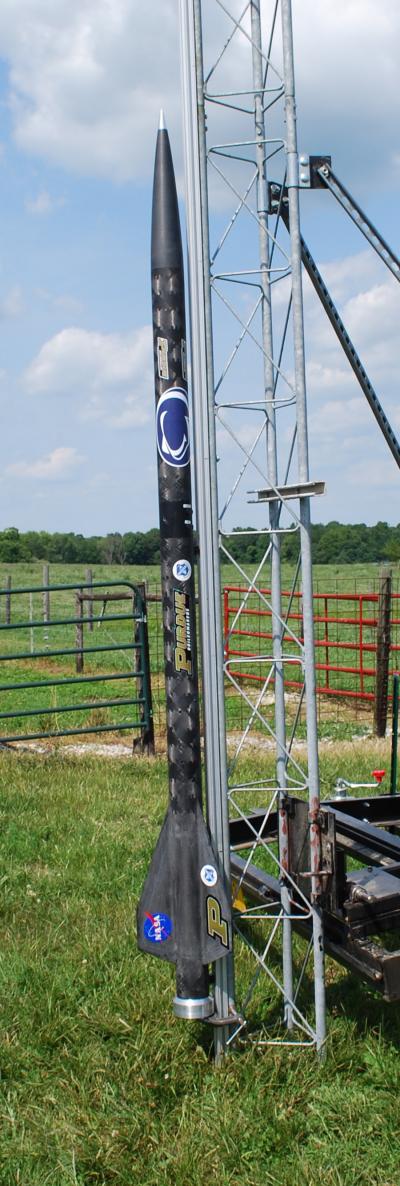
On the big list of environmental challenges we face, you might worry about volcanic ash or industrial soot or farting cows ... some people are even concerned by an obscure greenhouse gas named carbon dioxide. But you probably aren't concerned about the global impact of those rare rocket launches.
Going green is big, though, so efforts to make green rocket propellant are getting funding. Thus, NASA and the Air Force Office of Scientific Research are pleased to accounce they have successfully launched a small rocket using an environmentally-friendly, safe propellant comprised of aluminum powder and water ice, called ALICE.
Researchers at the University of Iowa and Kansas State University say a deafness-causing gene defect in mice helped identify a new protein that protects sensory cells in the ear, according to findings in PLoS Genetics.
In humans, hereditary deafness is one of the most common birth defects, yet most genes involved in hearing are unidentified. Mice are used as research models because mouse and human auditory genetics are very similar.
Using a deaf mouse model generated at The Jackson Laboratory, the team identified the deafness-causing defect in the claudin-9 gene. The mutated gene fails to produce normal claudin-9 protein, which, the UI team showed, is needed to maintain the proper distribution of potassium in the inner ear.
We humans spend roughly one-third of our lives asleep but researchers don't know why.
Science magazine listed the function of sleep is one of the 125 greatest unsolved mysteries in science and we've seen theories range from brain 'maintenance', including
memory consolidation and pruning, to
reversing damage from oxidative stress suffered while awake, to promoting longevity. None of these theories are well established, and many are mutually exclusive.
Next year begins one of the largest and most important scientific experiments in history; the initial attempts at the
National Ignition Facility (NIF) to produce the world's first controlled nuclear fusion reaction and tame the energy source of the sun.
That would mean a limitless new source of energy for homes, factories, and businesses.
Premier League clubs who have long-term managers are more successful than those who change their managers on a frequent basis, say business school researchers.
Because there's nothing sports clubs want more than advice from academics who examine past trends and draw conclusions based on the fact that elite clubs fire people less.
The lowly appendix used to get no respect and was simply regarded as a useless evolutionary artifact but two years ago researchers at Duke University Medical Center proposed that it actually serves a critical function as a safe haven where good bacteria could hang out until they were needed to repopulate the gut, like after a nasty case of diarrhea.
Now a group writing in the Journal of Evolutionary Biology claim something even more aggressive; that Charles Darwin was wrong and the appendix is a whole lot more than an evolutionary remnant. Not only does it appear in nature much more frequently than previously acknowledged, but it has been around much longer than anyone had suspected.


 Pilot Study: Fibromyalgia Fatigue Improved By TENS Therapy
 High Meat Consumption Linked To Lower Dementia Risk
 Long Before The Inca Colonized Peru, Natives Had A Thriving Trade Network
 Mesolithic People Had Meals With More Tradition Than You Thought