Banner
Pilot Study: Fibromyalgia Fatigue Improved By TENS Therapy

Fibromyalgia is the term for a poorly-understood condition where people experience pain and fatigue...

High Meat Consumption Linked To Lower Dementia Risk

Older people who eat large amounts of meat have a lower risk of dementia and cognitive decline...

Long Before The Inca Colonized Peru, Natives Had A Thriving Trade Network

A new DNA analysis reveals that long before the Incan Empire took over Peru, animals were...

Mesolithic People Had Meals With More Tradition Than You Thought

The common imagery of prehistoric people is either rooting through dirt for grubs and picking berries...

User picture.
News StaffRSS Feed of this column.

News Releases From All Over The World, Right To You... Read More »

Blogroll
Epidemiological studies have shown that some oral contraceptives are less effective at preventing pregnancy in obese women until an 'effective blood concentration' has been reached, meaning there is a 'window' where the contraceptive will not be effective in heavier women.

With estimates  that up to 30 percent of adults in the U.S. are obese, this could be important.   Fixing contraceptives is an easier path than telling people to eat less while simultaneously telling them that society's unrealistic body images should be resisted.
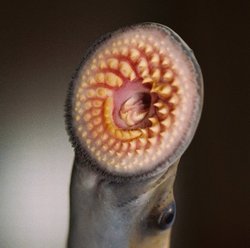
Researchers writing in Proceedings of the National Academy of Sciences say they have discovered that the sea lamprey, which emerged from jawless fish first appearing 500 million years ago, dramatically remodels its genome. Shortly after a fertilized lamprey egg divides into several cells, the growing embryo discards millions of units of its DNA - one fifth of its genome. 

Mayo Clinic investigators say a proof-of-concept study has demonstrated that induced pluripotent stem (iPS) cells can be used to treat heart disease.  iPS cells are stem cells converted from adult stem cells so don't involve the ethical concerns involved in using human embryonic stem cells.

In their study, the researchers reprogrammed ordinary fibroblasts, cells that contribute to scars such as those resulting from a heart attack, converting them into stem cells that fix heart damage caused by infarction.

This is the first application of iPS-based technology for heart disease therapy. Previously iPS cells have been used on only three other disease models: Parkinson's disease, sickle cell anemia and hemophilia A.

Neanderthals were stoutly-built and human-like and lived at the same time and in the same areas as some modern humans.  But they went extinct.

Anthropologists have tried to solve the mystery of Neanderthal's fate since the first fossils were discovered in the small valley of the river Düssel called Neandertal, about 7 miles east of Düsseldorf in Germany.

Speculation is they they inter-bred with modern humans or failed to compete for food or resources  or perhaps were even hunted to extinction by humans.
Stars don't die without being noticed and sometimes the results are pretty spectacular.  At the end of its life cycle, a star begins to collapse and throws new material into space, which eventually becomes incorporated into new planets and life.

How evolution can bridge the gap between two discrete physiological states is a question that puzzles biologists and therefore delights critics.

Most evolutionary changes happen in tiny increments; an elephant grows a little larger, a giraffe's neck a little longer and if those tiny changes prove advantageous there is a better chance of passing them to the next generation, which might then add its own mutations until you may end up with a huge pachyderm or the stretched neck of a giraffe.

But when it comes to traits like the number of wings on an insect or limbs on a primate there is no apparent middle ground. How are these sorts of large evolutionary leaps made?