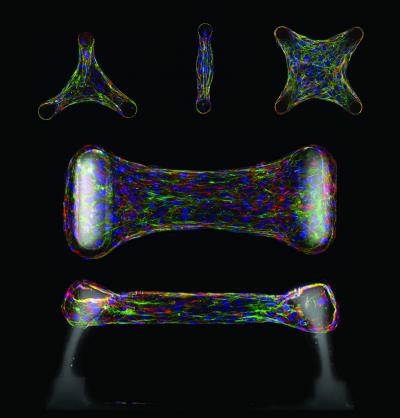
A new micro-tool allows researchers to measure and manipulate cellular forces as assemblies of living cells reorganize themselves into tissues. The new technique allows researchers to gauge how cells' minute mechanical forces affect cellular behavior and cell differentiation in a 3-D, in vivo-like environment. It mimics how tissue actually forms in a living organism.
The push-and-pull of cellular forces drives the deformation, extension and contraction of cells that occur during tissue development and these processes ultimately shape the architecture of tissues so how it is done plays an important role in coordinating cell signaling, gene expression and behavior, and they are essential for wound healing and tissue homeostasis in adult organisms.
"It's not supposed to do that" - Sandia principal investigator Jack Houston.
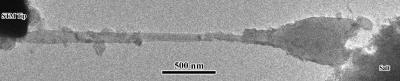
Researchers from Sandia National Laboratories and the University of Pittsburgh have found they can make salt, a solid, physically stretch.
"Unlike, say, gold, which is ductile and deforms under pressure, salt is brittle. Hit it with a hammer, it shatters like glass, " says Houston.
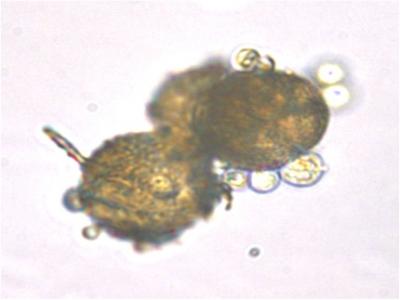
Labyrinthulomycetes, single-celled marine decomposers that eat non-living plant, algal, and animal matter, are ubiquitous and abundant, particularly on dead vegetation and in salt marshes and mangrove swamps.
Although most labyrinthulomycetes species are not pathogens, the organisms responsible for eelgrass wasting disease and QPX disease in hard clams are part of this group.
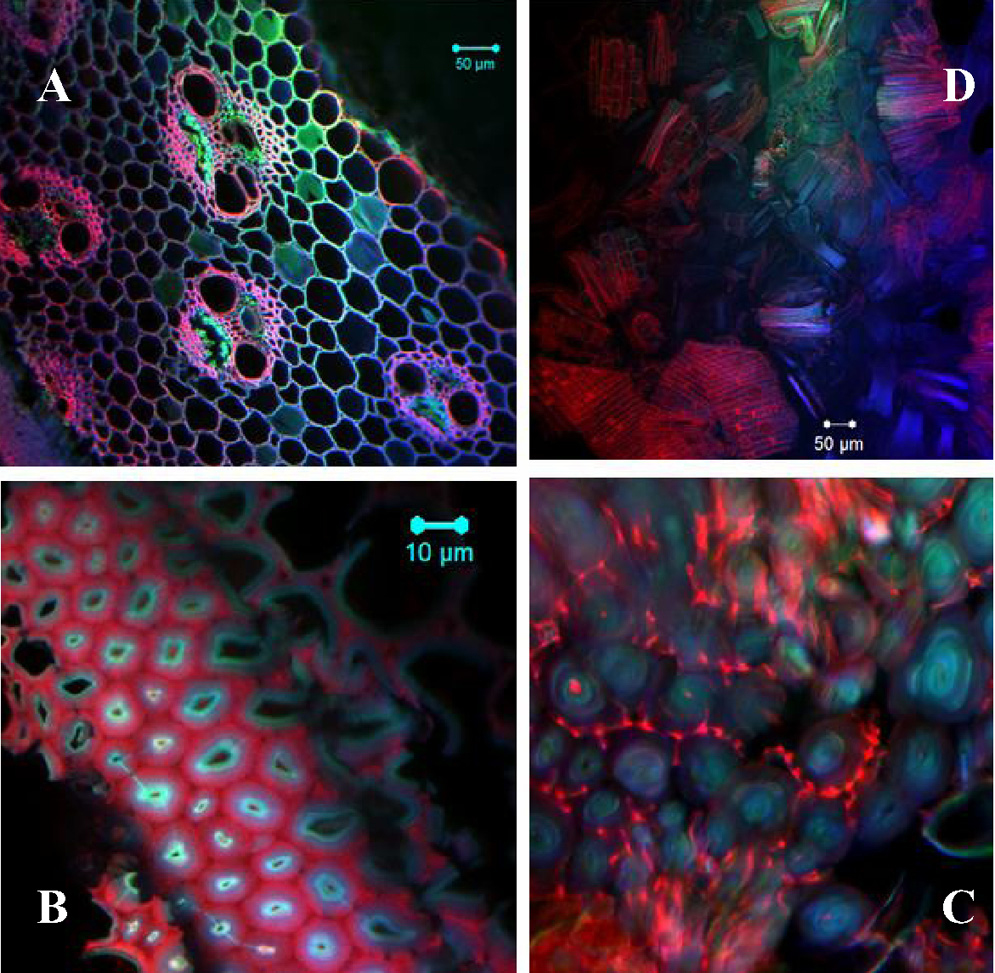
Before we can begin to implement sustainable, carbon-neutral gasoline - "grassoline" - from inedible plant material like fast-growing weeds and agricultural waste, some technology hurdles have to be overcome. Namely, finding better ways to break lignocellulosic biomass down into fermentable sugars.
Over 60 percent of the nearly 5,000 genome projects reported in the Genomes OnLine Database involve microbes. It's no surprise. Microbes are important in everything from bioenergy to agriculture and medicine and are involved in Earth’s biogeochemical cycles.
A lot could be done with microbial genomics, says DOE JGI Genome Biology head Nikos Kyrpides writing in Nature Biotechnology, if researchers go beyond the present anthropocentric focus and institute shared standards for genomic data collection and analysis.
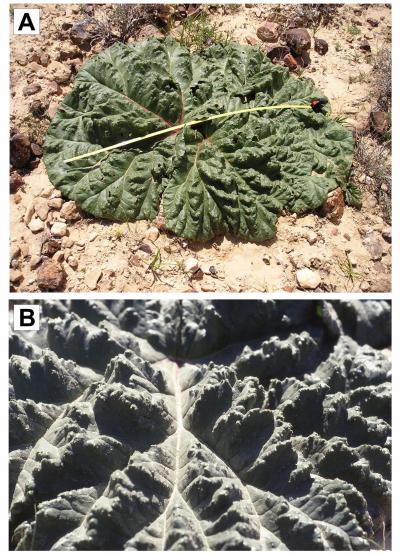
University of Haifa-Oranim researchers have managed to make out the “self-irrigating” mechanism of Rumex hymenosepalus, the desert rhubarb, which enables it to harvest 16 times the amount of water than otherwise expected for a plant in this region based on the quantities of rain in the desert - the first example of a self-irrigating plant worldwide.
The desert rhubarb grows in the mountains of Israel’s Negev desert, where average precipitation is particularly low (75 mm per year). Unlike most of the other desert plant species, which have small leaves so as to minimize moisture loss, this plant is unique in that its leaves are particularly large; each plant’s rosette of one to four leaves reaches a total diameter of up to one meter.


 Pilot Study: Fibromyalgia Fatigue Improved By TENS Therapy
 High Meat Consumption Linked To Lower Dementia Risk
 Long Before The Inca Colonized Peru, Natives Had A Thriving Trade Network
 Mesolithic People Had Meals With More Tradition Than You Thought