Dye-sensitized solar cells (DSSCs), expected to power Air Force unmanned aerial vehicles (UAVs) in the future because they are an optimum energy harvesting source that may lead to longer flight times without refueling, have gotten a boost by using a flexible film and a thin glass coating with transparent conductive electrodes.
The University of Washington's Multidisciplinary University Research Initiative (MURI) project team, with lead researcher Dr. Minoru Taya is working on the airborne solar cells and found that DSSCs made from organic materials, which use (dyes) and moth-eye film, are able to catch photons and convert them into synthesized electrons that can harvest high photon energy.
Georgia State University researchers are manipulating individual atoms in DNA and forming unique molecules in hopes of understanding the mechanisms of DNA replication and transcription, and perhaps leading to new treatments for diseases.
Chemistry and chemical biology Professor Zhen Huang and his lab were able, for the first time, to manipulate groups of molecules called methyl and phosphate groups in DNA that have been altered to contain selenium in order to bring them close enough together to form hydrogen bonds.
It isn't often that the government gets it right and the energy/climate change policies being jammed through Congress while there is no way to block them could be with us for a long time.
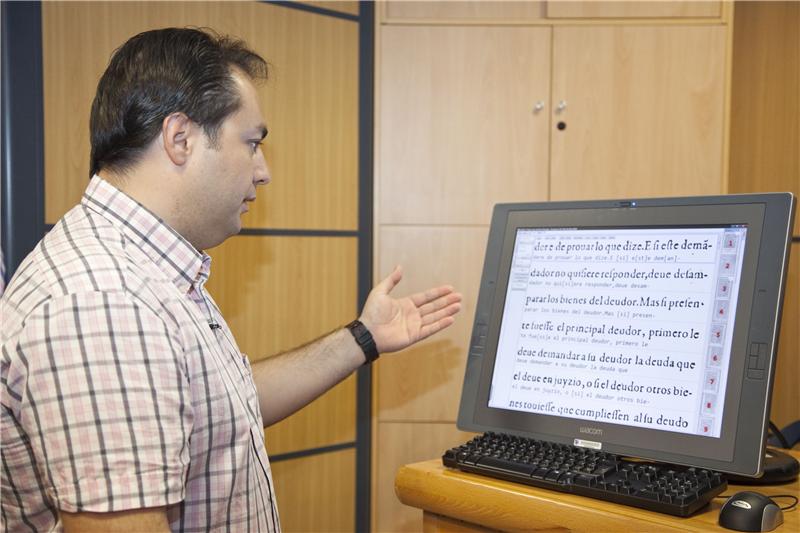
Unless the writing is completely legible and usually modern, even advanced Optical Character Recognition (OCR) systems give rise to transcription problems and provide results with many errors that need to be edited afterwards, a time-consuming process.
The Computational Perception and Learning Research Group in the Computer Languages and Systems Department at the Universitat Jaume I, in collaboration with the Universidad Politécnica de Valencia, have developed a new assisted system for the transcription of written text called 'State', a transcription system that integrates a series of tools with which images can be processed in order to remove noise and clean up the original image.
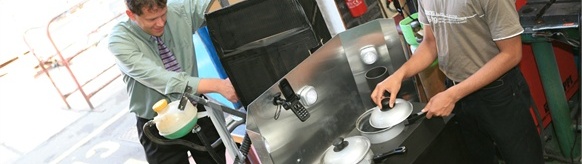
A low-cost generator could be a boon for people in the world’s poorest countries. The Score project, led by The University of Nottingham, is developing a biomass-burning cooking stove which also converts heat into acoustic energy and then into electricity, all in one unit.
The £2 million Score project (Stove for Cooking, Refrigeration and Electricity) has brought together experts from across the world to develop the biomass-powered generator. An affordable, versatile domestic appliance like Score aims to address the energy needs of rural communities in Africa and Asia, where access to power is extremely limited.
In the 150 years since the publication of Charles Darwin's 'Origin of Species', despite consistent patterns of biodiversity identified over space, time, organism type and geographical region, there still remain two views of the process of 'speciation', the evolutionary process by which new biological species arise.
The first requires a physical barrier; a glacier, mountain or body of water that separates organisms, enabling groups to diverge until they become separate species. In the second scenario, an environment favors specific characteristics within a species, which encourages divergence as members fill different roles in an ecosystem.


 Pilot Study: Fibromyalgia Fatigue Improved By TENS Therapy
 High Meat Consumption Linked To Lower Dementia Risk
 Long Before The Inca Colonized Peru, Natives Had A Thriving Trade Network
 Mesolithic People Had Meals With More Tradition Than You Thought