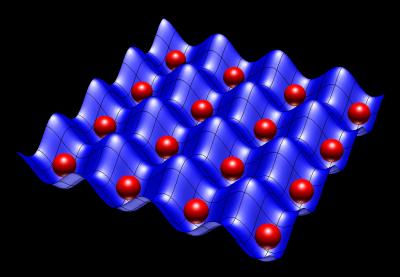
Physicists at the National Institute of Standards and Technology (NIST) have devised a viable way to manipulate a single 'bit' in a quantum processor without disturbing the information stored in its neighbors, using polarized light to create "effective" magnetic fields.
A great challenge in creating a working quantum computer is maintaining control over the carriers of information, the "switches" in a quantum processor while isolating them from the environment. These quantum bits, or "qubits," have the uncanny ability to exist in both "on" and "off" positions simultaneously, giving quantum computers the power to solve problems conventional computers find intractable – such as breaking complex cryptographic codes.
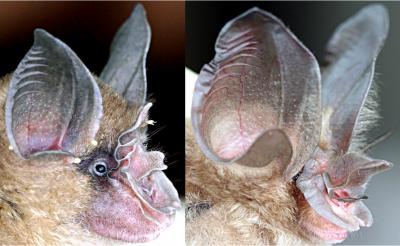
The mystery of a rare bat's unusually large nose has been solved, according to an article in Physical Review Letters.
The adult Bourret's horseshoe bat, known scientifically as the Rhinolophus paradoxolophus meaning paradoxical crest, has a nose roughly 9 millimeters in length but the typical horseshoe bat's nose is half that long, said Rolf Mueller, an associate professor with the Virginia Tech mechanical engineering department and director for the Bio-inspired Technology (BIT) Laboratory in Danville, Va. "This nose is so much larger than anything else," among other bats of the region, he said.
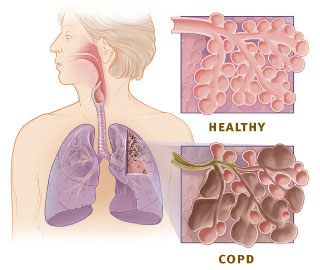
Severe chronic obstructive pulmonary disease (COPD) is associated with lower cognitive function in older adults, according to research from Mount Sinai School of Medicine.
Researchers compared cognitive performance in over 4,150 adults with and without COPD and found that individuals with severe COPD had significantly lower cognitive function than those without, even after controlling for confounding factors such as comorbidities.
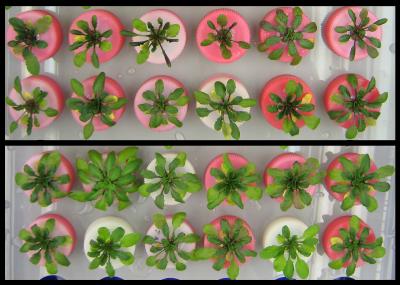
Researchers have used genetific modification (GM) to bring salt-tolerant plants a little closer to reality.
The research team – based at the University of Adelaide's Waite Campus in Australia – has used a new GM technique to contain salt in parts of the plant where it does less damage.
Salinity affects agriculture worldwide, which means the results of this research could impact on world food production and security.
The work has been led by researchers from the Australian Centre for Plant Functional Genomics and the University of Adelaide's School of Agriculture, Food and Wine, in collaboration with scientists from the Department of Plant Sciences at the University of Cambridge, UK.
A new monkey has been discovered in a remote region of the Amazon in Brazil, according to the Wildlife Conservation Society (WCS) .
The monkey is related to saddleback tamarins, which include several species of monkeys known for their distinctively marked backs. The newly described distinct subspecies was first seen by scientists on a 2007 expedition into the state of Amazonas in northwestern Brazil.
Though New Orleans residents were told to evacuate days before the arrival of Hurricane Katrina, no one could have predicted the real extent of the devastation that would follow.
Researchers from Tel Aviv University say they may be ableto make just such a prediction in the future. They say a reliable way to help predict the intensity of the next big flood can use common cell phone towers across the United States. Their model, which analyzes cell phone signals, adds a critical component to weather forecasting never before available.


 Pilot Study: Fibromyalgia Fatigue Improved By TENS Therapy
 High Meat Consumption Linked To Lower Dementia Risk
 Long Before The Inca Colonized Peru, Natives Had A Thriving Trade Network
 Mesolithic People Had Meals With More Tradition Than You Thought