Banner
Pilot Study: Fibromyalgia Fatigue Improved By TENS Therapy

Fibromyalgia is the term for a poorly-understood condition where people experience pain and fatigue...

High Meat Consumption Linked To Lower Dementia Risk

Older people who eat large amounts of meat have a lower risk of dementia and cognitive decline...

Long Before The Inca Colonized Peru, Natives Had A Thriving Trade Network

A new DNA analysis reveals that long before the Incan Empire took over Peru, animals were...

Mesolithic People Had Meals With More Tradition Than You Thought

The common imagery of prehistoric people is either rooting through dirt for grubs and picking berries...

User picture.
News StaffRSS Feed of this column.

News Releases From All Over The World, Right To You... Read More »

Blogroll
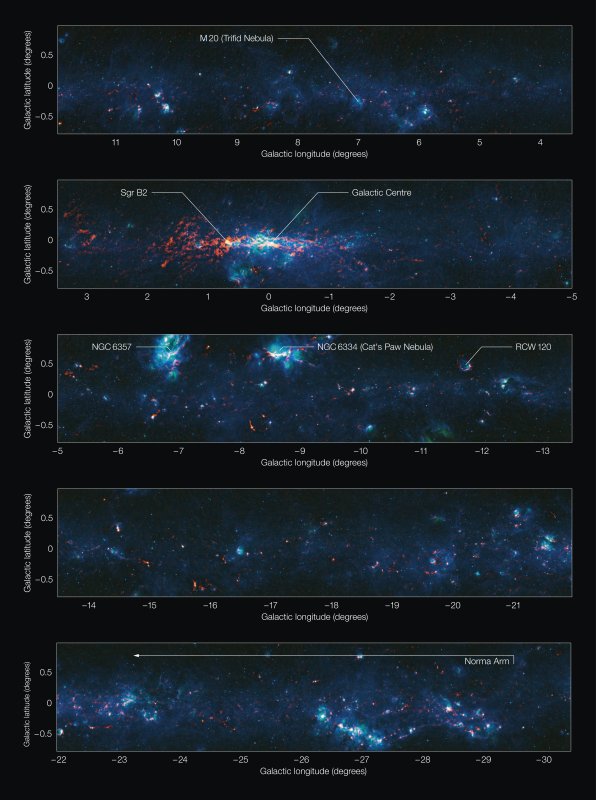
Astronomers have unveiled a new atlas of the inner regions of the Milky Way - that's our home galaxy, if you're from someplace else - and it's peppered with thousands of previously undiscovered dense knots of cold cosmic dust, the potential birthplaces of new stars. Using observations from the APEX telescope in Chile, this survey is the largest map of cold dust so far.

This new guide for astronomers, known as the APEX Telescope Large Area Survey of the Galaxy (ATLASGAL) shows the Milky Way in submillimetre-wavelength light (between infrared light and radio waves. Images of the cosmos at these wavelengths are vital for studying the birthplaces of new stars and the structure of the crowded galactic core. 
Do friends wear the same clothes or see the same movies because they have similar tastes, part of the reason they became friends or, once a friendship is established, do individuals influence each other to adopt like behaviors? 

Social scientists don't know for sure and are still trying to understand the role social influence plays in the spreading of trends because the real world doesn't keep track of how people acquire new items or preferences. 

But the virtual world of "Second Life" does. Researchers from the University of Michigan have tried to use this information to study how "gestures" make their way through this online community. Gestures are code snippets that Second Life avatars must acquire in order to make motions such as dancing, waving or chanting.
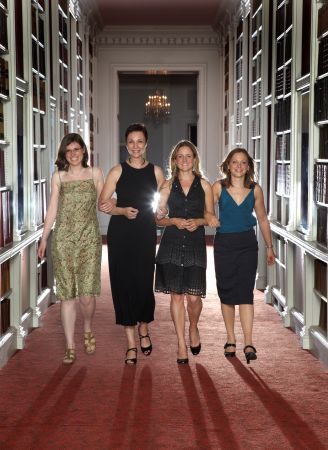
L'Oréal and New Scientist today announced the results of a poll revealing the most inspirational female scientists of all time. Nuclear physicist and chemist Marie Curie topped the poll which was created to celebrate 10 years of the L'Oréal-UNESCO For Women In Science program, with around a quarter (25.1%) of the vote. 

Voted for by more than 800 members of the scientific community and visitors to http://www.NewScientist.com, the poll highlights the absence of modern role models on the list; Astrophysicist Dame Susan Jocelyn Bell Burnell (4.7%), responsible for the discovery of radiopulsars, and Jane Goodall, the primatologist (2.7 per cent) were the only scientists in the top ten to have research published in recent years, polled 4th and 10th, respectively. 
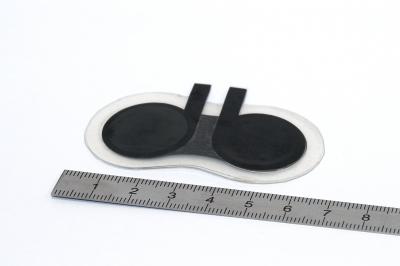
A new printable battery that can be produced cost-effectively on a large scale has been developed by a research team led by Prof. Dr. Reinhard Baumann of the Fraunhofer Research Institution for Electronic Nano Systems ENAS in Chemnitz together with colleagues from TU Chemnitz and Menippos GmbH.

Like your t-shirt, the batteries are printed using a silk-screen method.

They are also different from conventional batteries in that these printable versions weigh less than one gram, are less than a millimeter thick and can even be integrated into bank cards.
When glaciers advanced over much of the planet's surface during the last ice age, what kept  Earth from freezing over entirely?  Climate scientists are unsure because popular numerical models indicated that over the past 24 million years geological conditions should have caused carbon dioxide levels in the atmosphere to plummet, possibly leading to runaway "icehouse" conditions - yes, we needed CO2-related global warming, they said - but researchers writing in Nature claims plants are a missing piece of the puzzle.
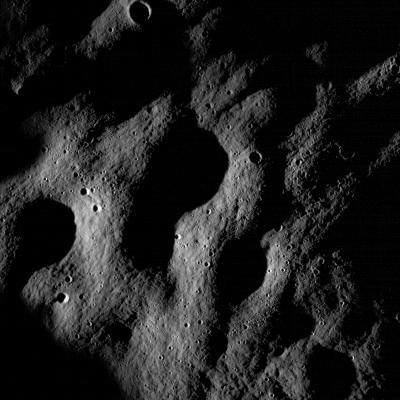
NASA's Lunar Reconnaissance Orbiter has transmitted its first images since reaching the moon on June 23. The spacecraft's two cameras, collectively known as the Lunar Reconnaissance Orbiter Camera, or LROC, were activated June 30. The cameras are working well and have returned images of a region in the lunar highlands south of Mare Nubium (Sea of Clouds).

As the moon rotates beneath LRO, LROC gradually will build up photographic maps of the lunar surface.