Organ donation would be a lot less variable if they could be grown in the lab and a more effective way to build plastic scaffolds on which new tissues and even whole organs might be grown in the laboratory is being developed by an international collaboration between teams in Portugal and the UK.
The researchers say rapid prototyping, or three-dimensional(3-D) 'printing', could enable tissue engineering that replicates the porous and hierarchical structures of natural tissues at an unprecedented level.
A University of Colorado at Boulder research team say their discovery of shorelines on Mars is an indication of a deep, ancient lake there and a finding with implications for the discovery of past life on the Red Planet.
Estimated to be more than 3 billion years old, the lake appears to have covered as much as 80 square miles and was up to 1,500 feet deep, roughly the equivalent of Lake Champlain bordering the United States and Canada, said CU-Boulder Research Associate Gaetano Di Achille, who led the study. The shoreline evidence, found along a broad delta, included a series of alternating ridges and troughs thought to be surviving remnants of beach deposits.
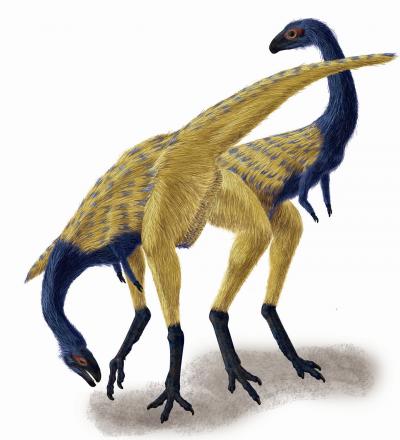
Scientists who discovered a beaked, plant-eating dinosaur in China called Limusaurus inextricabilis ("mire lizard who could not escape") say it demonstrates that theropod, or bird-footed, dinosaurs were more ecologically diverse in the Jurassic period than previously thought. Even more, they write in Nature that it offers important evidence about how the three-fingered hand of birds evolved from the hand of dinosaurs.
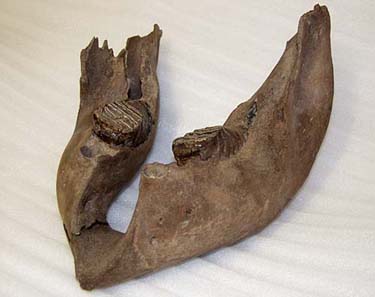
Some mammoths remained part of British wildlife long after they were believed (scientifically) to have become extinct, according to research published today in the Geological Journal.
Analysis of both the bones and the surrounding environment in Shropshire, England provide the most geologically recent evidence of woolly mammoths in western Europe, they say.
When a steep decline in the wool trade prompted an 18th century credit crunch, folks in Yorkshire took up a new (and dangerous) business venture - counterfeiting.
In the 18th century, coining was a treasonable offense and therefore punishable by death but in the 1760s and 1770s, a decline in the textile trade motivated hundreds of Yorkshire people from rural communities to risk the gallows by counterfeiting British and Spanish coins.
Living in an area with more fast food outlets and convenience stores than supermarkets and grocers has been associated with obesity in a Canadian study published by BMC Public Health.
Correlation/causation misfire? Sure, unless you want to believe that the government should put up a fresh food stand within a half mile of your house to keep you from becoming obese.


 Pilot Study: Fibromyalgia Fatigue Improved By TENS Therapy
 High Meat Consumption Linked To Lower Dementia Risk
 Long Before The Inca Colonized Peru, Natives Had A Thriving Trade Network
 Mesolithic People Had Meals With More Tradition Than You Thought