Banner
Pilot Study: Fibromyalgia Fatigue Improved By TENS Therapy

Fibromyalgia is the term for a poorly-understood condition where people experience pain and fatigue...

High Meat Consumption Linked To Lower Dementia Risk

Older people who eat large amounts of meat have a lower risk of dementia and cognitive decline...

Long Before The Inca Colonized Peru, Natives Had A Thriving Trade Network

A new DNA analysis reveals that long before the Incan Empire took over Peru, animals were...

Mesolithic People Had Meals With More Tradition Than You Thought

The common imagery of prehistoric people is either rooting through dirt for grubs and picking berries...

User picture.
News StaffRSS Feed of this column.

News Releases From All Over The World, Right To You... Read More »

Blogroll
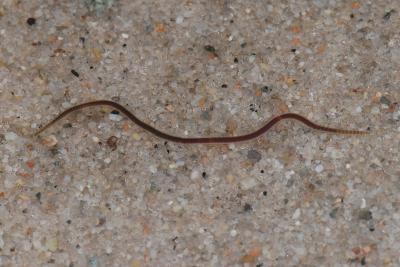
Researchers know that animals which seem identical can actually belong to completely different species.   But if it's worms used in laboratory testing, that could be important news in research.

Researchers at the University of Gothenburg, Sweden, say they have used DNA analyses to discover that one of our most common segmented worms, Lumbriculus variegatus, is actually two types of worm. Along with some obvious issues in research it also affirms that the variety of species on the earth could be considerably larger than we thought. "We could be talking about a large number of species that have existed undiscovered because they resemble other known species," says Professor Christer Erséus.

WHAT: New research from Baylor College of Medicine indicates a positive effect of chewing gum on academic performance in teenagers. The study examined whether chewing Wrigley sugar-free gum can lead to better academic performance in a "real life" classroom setting. Major findings include:


  • The researchers found that students who chewed gum showed an increase in standardized math test scores and their final grades were better compared to those who didn't chew gum.
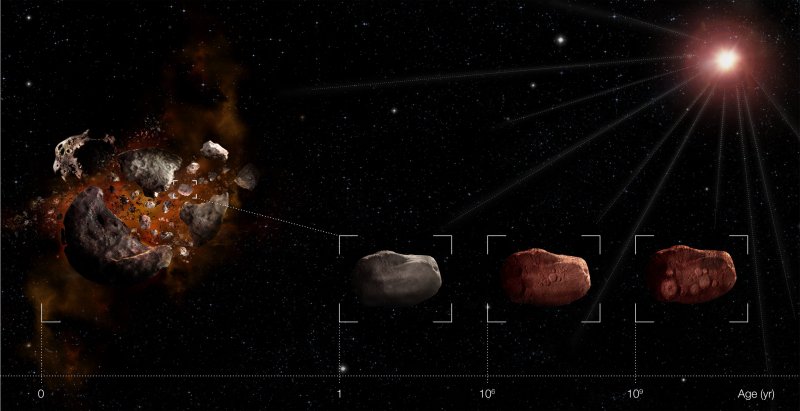
A new study reveals that asteroid surfaces age and redden much faster than previously thought — in less than a million years, the blink of an eye for an asteroid.  The solar wind is the likely culprit in very rapid space weathering, they say, and this knowledge will help astronomers relate the appearance of an asteroid to its actual history and identify any after effects of a catastrophic impact with another asteroid.
Waves from Daphnis

Undulations mark both sides of the path of Saturn's moon Daphnis through the A ring. 

Daphnis may be small at only 8 kilometers (5 miles) across, but the moon's gravity is great enough, and the Keeler gap in which it resides is narrow enough, so that the perturbed particles create the wavelike patterns seen here. 
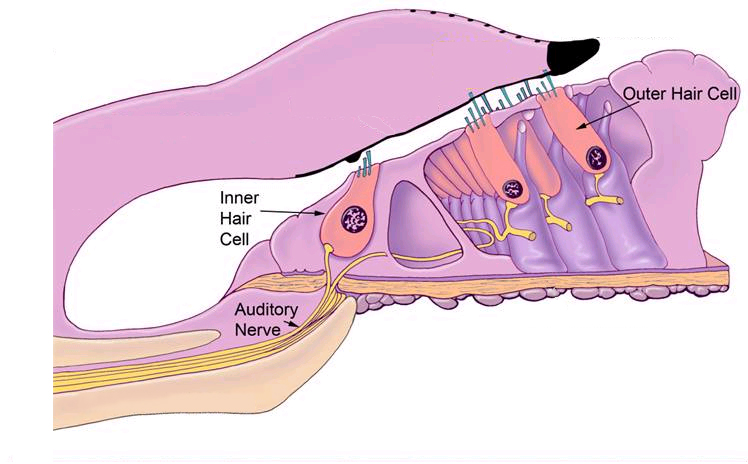
Utah and Texas researchers have learned how quiet sounds are magnified by bundles of tiny, hair-like tubes atop “hair cells” in the ear: when the tubes dance back and forth, they act as “flexoelectric motors” that amplify sound mechanically.

“We are reporting discovery of a new nanoscale motor in the ear,” says Richard Rabbitt, the study’s principal author and a professor and chair of bioengineering at the University of Utah College of Engineering. “The ear has a mechanical amplifier in it that uses electrical power to do mechanical amplification.”
A team of astronomers from University College London (UCL) have discovered that an exotic world passes directly in front of the Sun-like star it orbits, revealing for the first time that it is about the same size as Jupiter.

The team were alerted by the exoplanet science website http://www.oklo.org, run by Greg Laughlin of the University of California Santa Cruz. Using infrared space observations, Greg predicted that a planet (HD 80606b) would pass in front of its parent star (HD 80606) in a so-called transit event.

Rather than travelling to one of the major observatories in Hawaii or Chile, the students used a telescope at UCL's University of London Observatory (ULO) in the capital's northern suburb of Mill Hill.