Banner
Pilot Study: Fibromyalgia Fatigue Improved By TENS Therapy

Fibromyalgia is the term for a poorly-understood condition where people experience pain and fatigue...

High Meat Consumption Linked To Lower Dementia Risk

Older people who eat large amounts of meat have a lower risk of dementia and cognitive decline...

Long Before The Inca Colonized Peru, Natives Had A Thriving Trade Network

A new DNA analysis reveals that long before the Incan Empire took over Peru, animals were...

Mesolithic People Had Meals With More Tradition Than You Thought

The common imagery of prehistoric people is either rooting through dirt for grubs and picking berries...

User picture.
News StaffRSS Feed of this column.

News Releases From All Over The World, Right To You... Read More »

Blogroll

It has been revealed that 1 in 3 people in the UK are still struggling to find an NHS dentist, according to new research from Simplyhealth.

Simplyhealth's Annual Dental Survey has revealed that alarmingly just over a third of Brits (35%) struggled to find an NHS dentist over the last year, which has increased from 23% at the same time in 2008.

Perhaps more shocking is the fact that this figure soars in certain areas of the UK, with over half of the people in Plymouth finding it difficult to get an NHS dentist, closely followed by those in Southampton and Manchester, where 45% and 43% have struggled.

The severity of the situation this year has been heightened by the economic downturn, as almost half of people across the UK have put off visiting the dentist becaus

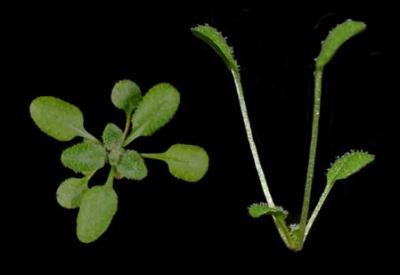
Researchers at the universities of Leicester and Oxford have made a discovery about plant growth which could potentially have an enormous impact on crop production as global warming increases.

Dr Kerry Franklin, from the University of Leicester Department of Biology led the study which has identified a single gene responsible for controlling plant growth responses to elevated temperature.
Video games that involve high levels of action,like first-person-shooter games, can increase real-world vision, according to research in Nature Neuroscience, including discerning slight differences in shades of gray; an attribute of the human visual system that can't be improved, it has been believed.

Daphne Bavelier, professor of brain and cognitive sciences at the University of Rochester, says that very practiced action gamers can actually become 58 percent better at perceiving fine differences in contrast.
Individuals with autism spectrum disorders (ASD) tend to stare at people's mouths rather than their eyes. A new study of 2-year-olds with the social deficit disorder suggests why they might find mouths so attractive: lip-sync—the exact match of lip motion and speech sound. Such audiovisual synchrony preoccupied toddlers who have autism, while their unaffected peers focused on socially meaningful movements of the human body, such as gestures and facial expressions. 

Chemists at the University of Illinois have created a simple and inexpensive molecular technique that replaces an expensive atomic force microscope for studying what happens to small molecules when they are stretched or compressed. 

The researchers use stiff stilbene, a small, inert structure, as a molecular force probe to generate well-defined forces on various molecules, atom by atom. 

"By pulling on different pairs of atoms, we can explore what happens when we stretch a molecule in different ways," said chemistry professor Roman Boulatov. "That information tells us a lot about the properties of fleeting structures called transition states that govern how, and how fast, chemical transformations occur." 
The benefits to animals of omega 3 fatty acids in fish oils have been well documented – helping the heart and circulatory system.   Can they also help in improving meat quality and reducing methane emissions?

Perhaps.   Methane given off by farm animals is a major contributor to greenhouse gas levels and researchers from University College Dublin have reported that by including 2% fish oil in the diet of cattle they achieved a reduction in the amount of methane released by the animals.