Banner
Pilot Study: Fibromyalgia Fatigue Improved By TENS Therapy

Fibromyalgia is the term for a poorly-understood condition where people experience pain and fatigue...

High Meat Consumption Linked To Lower Dementia Risk

Older people who eat large amounts of meat have a lower risk of dementia and cognitive decline...

Long Before The Inca Colonized Peru, Natives Had A Thriving Trade Network

A new DNA analysis reveals that long before the Incan Empire took over Peru, animals were...

Mesolithic People Had Meals With More Tradition Than You Thought

The common imagery of prehistoric people is either rooting through dirt for grubs and picking berries...

User picture.
News StaffRSS Feed of this column.

News Releases From All Over The World, Right To You... Read More »

Blogroll
Humans excel at recognizing faces, but how we do this has been an abiding mystery in neuroscience and psychology. In an effort to explain our success in this area, researchers are taking a closer look at how and why we fail. 

A new study from MIT looks at a particularly striking instance of failure: our impaired ability to recognize faces in photographic negatives. The study, which appears in the Proceedings of the National Academy of Sciences this week, suggests that a large part of the answer might lie in the brain's reliance on a certain kind of image feature.

FINDINGS: Scientists at the Whitehead Institute for Biomedical Research and the National University of Singapore have discovered the first microRNA (miRNA) capable of directly tamping down the activity of the well known tumor-suppressor gene, p53, While p53 functions to prevent tumor formation, the p53 gene is thought to malfunction in more than 50% of cancerous tumors.

RELEVANCE: The study reports the first time a miRNA has been shown to directly affect the p53 protein level, although researchers have previously identified other genes and miRNAs that indirectly affect p53's activity.

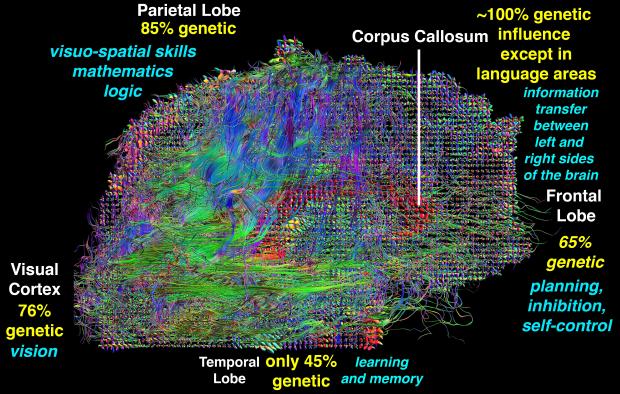
They say a picture tells a thousand stories, but can it also tell how smart you are?  Yes, say UCLA researchers. 

In a Journal of Neuroscience study, UCLA neurology professor Paul Thompson and colleagues used a new type of brain-imaging scanner to show that intelligence is strongly influenced by the quality of the brain's axons, or wiring that sends signals throughout the brain. The faster the signaling, the faster the brain processes information. And since the integrity of the brain's wiring is influenced by genes, the genes we inherit play a far greater role in intelligence than was previously thought. 
The next time an overnight snow begins to fall, take two bricks and place them side by side a few inches apart in your yard.  In the morning, the bricks will be covered with snow and barely discernible. The snowflakes will have filled every vacant space between and around the bricks.

What you will see, says Ivan Biaggio, an associate professor of physics at Lehigh University, resembles a phenomenon that, when it occurs at the smallest of scales on an integrated optical circuit, could hasten the day when the Internet works at superfast speeds.
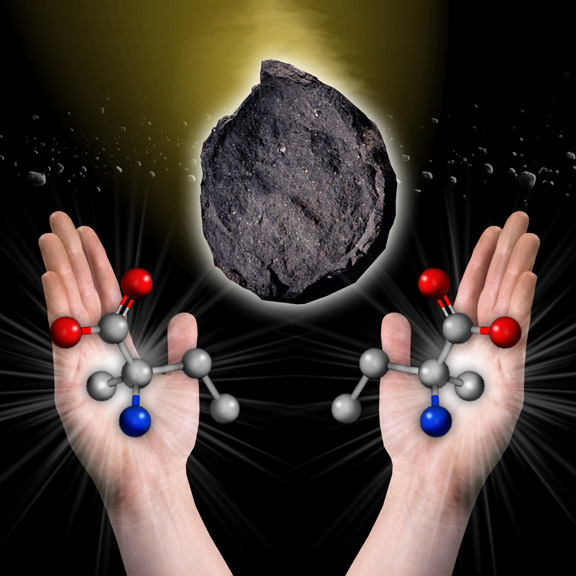
NASA scientists analyzing the dust of meteorites say they have discovered new clues to a long-standing mystery about how life works on its most basic, molecular level.

Over the last four years, the team carefully analyzed samples of meteorites with an abundance of carbon, called carbonaceous chondrites. The researchers looked for the amino acid isovaline and discovered that three types of carbonaceous meteorites had more of the left-handed version than the right-handed variety – as much as a record 18 percent more in the often-studied Murchison meteorite. 
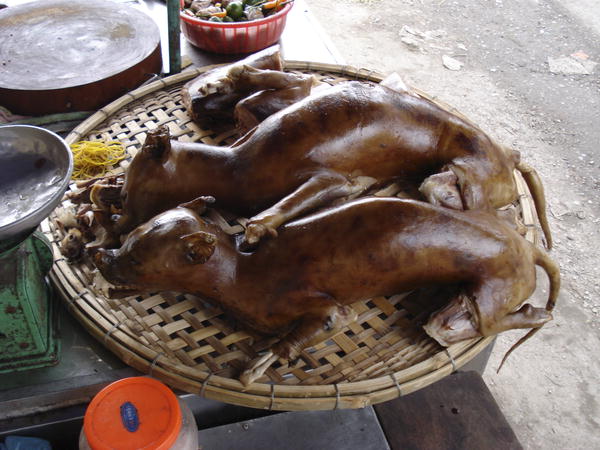
Eating dog meat is common in Asia. In two case studies published by PLoS Medicine, researchers analyzed situations in Hanoi where men died from laboratory-confirmed rabies.

The first patient was a 48-year-old male construction worker, with no preceding medical illnesses who was, among other symptoms, unable to swallow due to involuntary inspiratory muscle spasms.  The second patient was a 37-year-old male farmer, without any prior medical history and similar symptoms.