Banner
Pilot Study: Fibromyalgia Fatigue Improved By TENS Therapy

Fibromyalgia is the term for a poorly-understood condition where people experience pain and fatigue...

High Meat Consumption Linked To Lower Dementia Risk

Older people who eat large amounts of meat have a lower risk of dementia and cognitive decline...

Long Before The Inca Colonized Peru, Natives Had A Thriving Trade Network

A new DNA analysis reveals that long before the Incan Empire took over Peru, animals were...

Mesolithic People Had Meals With More Tradition Than You Thought

The common imagery of prehistoric people is either rooting through dirt for grubs and picking berries...

User picture.
News StaffRSS Feed of this column.

News Releases From All Over The World, Right To You... Read More »

Blogroll
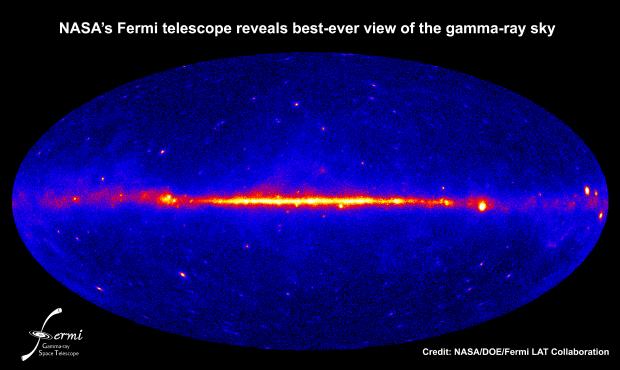
A new map combining nearly three months of data from NASA's Fermi Gamma-ray Space Telescope is giving astronomers an unprecedented look at the high-energy cosmos. To Fermi's "eyes", the universe is ablaze with gamma rays from sources within the solar system to galaxies billions of light-years away.

A paper describing the 205 brightest sources the LAT sees has been submitted to The Astrophysical Journal Supplement. "This is the mission's first major science product, and it's a big step toward producing our first source catalog later this year," said David Thompson, a Fermi deputy project scientist at NASA's Goddard Space Flight Center in Greenbelt, Md.
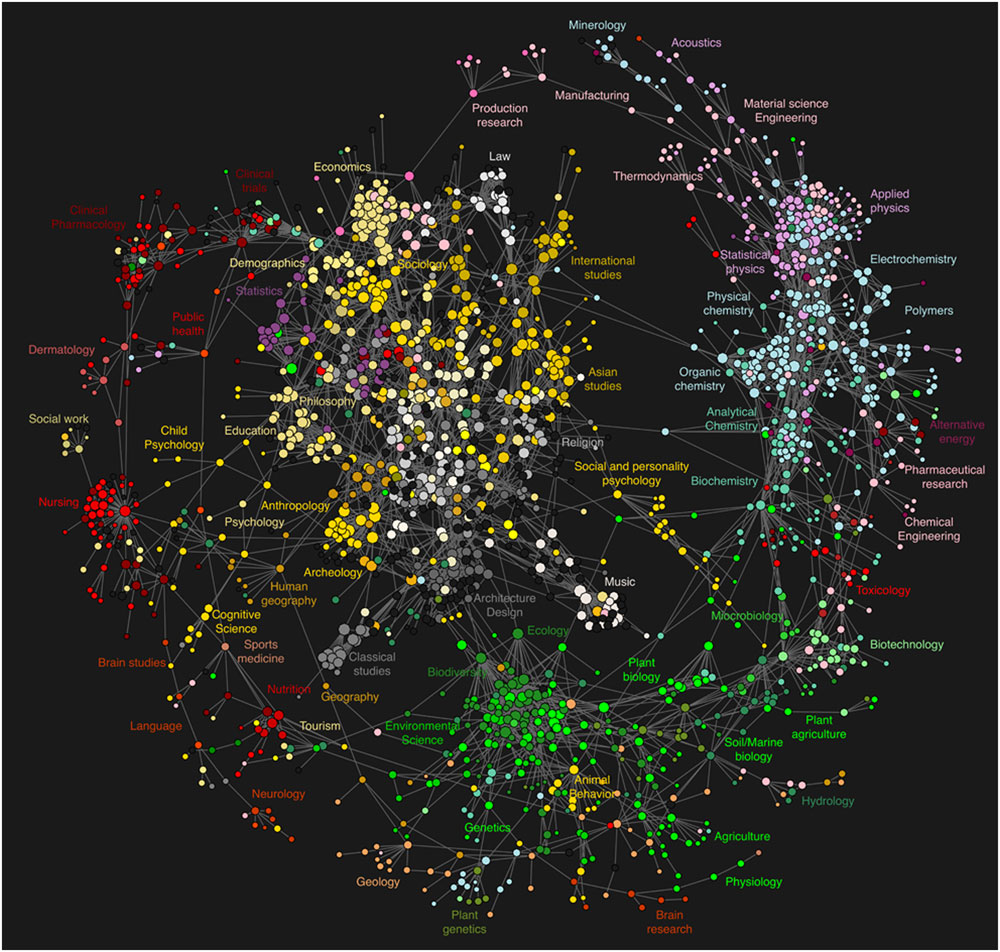
While science is of tremendous societal importance, it is difficult to probe the often hidden world of scientific creativity. Most studies of scientific activity rely on citation data, which takes a while to become available because both the cited publication and the publication of a particular citation can take years to appear. In other words, citation data observes science as it existed years in the past, not the present.

What we need is a Map Of Science.

Enter a group of Los Alamos researchers who created a high-resolution graphic depiction of the virtual trails scientists leave behind when they retrieve information from online services.
The creation of long platinum nanowires at the University of Rochester could soon lead to the development of commercially viable fuel cells.

Described in a paper published today in the journal Nano Letters, the new wires should provide significant increases in both the longevity and efficiency of fuel cells, which have until now been used largely for such exotic purposes as powering spacecraft. Nanowire enhanced fuel cells could power many types of vehicles, helping reduce the use of petroleum fuels for transportation, according to lead author James C. M. Li, professor of mechanical engineering at the University of Rochester.
A 7-year-old girl from Long Island, NY, is on her way home a little more than four weeks after receiving a historic surgery that involved the removal and partial re-implantation of six organs in order to resect an abdominal tumor that otherwise would be inoperable. The 23-hour surgery, which began on Feb. 6, was led by Dr. Tomoaki Kato at NewYork-Presbyterian Morgan Stanley Children's Hospital, and is the first reported pediatric case of its kind.
Most people consume far too much salt, and a University of Iowa researcher has discovered one potential reason we crave it: it might put us in a better mood.

UI psychologist Kim Johnson and colleagues found in their research that when rats are deficient in sodium chloride, common table salt, they shy away from activities they normally enjoy, like drinking a sugary substance or pressing a bar that stimulates a pleasant sensation in their brains.

"Things that normally would be pleasurable for rats didn't elicit the same degree of relish, which leads us to believe that a salt deficit and the craving associated with it can induce one of the key symptoms associated with depression," Johnson said.
It makes sense that ecological changes caused by humans affect natural biodiversity and, in some cases, can even cause permanent displacement of a species.

Unless science revives it.

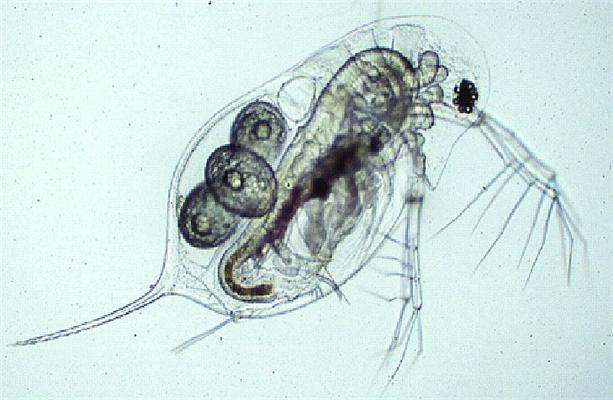
Researchers from Eawag and from two German universities (Frankfurt and Konstanz), analyzed genetic material from Daphnia eggs up to 100 years old and say the eutrophication of Greifensee and Lake Constance in the 1970s and 1980s led to genetic changes in a species of water flea which was ultimately displaced. Despite the fact that water quality has since been significantly improved, this species has not been re-established.   Naturally, anyway.


Daphnia Galeata.  Photo: Eaweg University