Banner
Pilot Study: Fibromyalgia Fatigue Improved By TENS Therapy

Fibromyalgia is the term for a poorly-understood condition where people experience pain and fatigue...

High Meat Consumption Linked To Lower Dementia Risk

Older people who eat large amounts of meat have a lower risk of dementia and cognitive decline...

Long Before The Inca Colonized Peru, Natives Had A Thriving Trade Network

A new DNA analysis reveals that long before the Incan Empire took over Peru, animals were...

Mesolithic People Had Meals With More Tradition Than You Thought

The common imagery of prehistoric people is either rooting through dirt for grubs and picking berries...

User picture.
News StaffRSS Feed of this column.

News Releases From All Over The World, Right To You... Read More »

Blogroll
One of the weaknesses of using a surname as a guide in understanding genetic characteristcs has been the belief that 1 in 10 births were the result of infidelity - so the name is not only an incorrect characteristic but could even be deceptive.

Not, so, says a study funded by the Wellcome Trust published this week in the journal Molecular Biology and Evolution, which may help genealogists create more accurate family trees even when records are missing. It suggests that the often quoted "one in ten" figure for children born through infidelity is unlikely to be true.
Sky diving and base jumping are not for everyone. However, for certain people, the more risk and adrenaline involved in an activity, the better! What draws some people to daredevil behavior while others shy away from it? Psychologists Jane E. Joseph, Xun Liu, Yang Jiang and Thomas H. Kelly from the University of Kentucky, along with Donald Lyman of Purdue University were interested in testing how the brains of sensation-seekers differ from those of us who avoid risky behavior.
Scientists have sequenced over seventy strains of yeast, the greatest number of genomes for any species.  The basic machinery of yeast is surprisingly similar to that of humans, and the project is already helping experts to develop the tools necessary for studying human genetic variation. Yeast can also be used to develop and test new drugs, such as for cancer. 

It also gave us a clever way to finagle the title and remind you about Darwin Day tomorrow - the 200th anniversary of his birth.   And, if you are  an American Republican, it's also the 200th birthday of the first Republican President, Abraham Lincoln.    But we're a science site so we'll focus on the yeast.
Roughly 10 million years ago, a major genetic change occurred in a common ancestor of gorillas, chimpanzees, and humans. Segments of DNA in its genome began to form duplicate copies at a greater rate than in the past, creating an instability that persists in the genome of modern humans and contributes to diseases like autism and schizophrenia. But that gene duplication also may be responsible for a genetic flexibility that has resulted in some uniquely human characteristics.
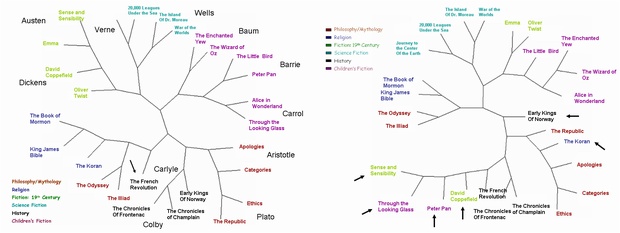
What does uncovering the true authorship of plays attributed to Shakespeare have to do with identifying our genetic ancestors or classifying new life forms? All involve the comparative analysis of long sets of data and all will benefit from a unique new analytical tool developed by researchers at the Lawrence Berkeley National Laboratory.
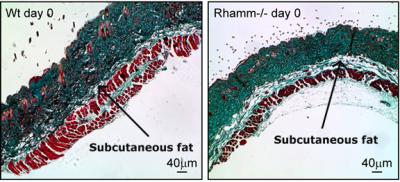
Hollywood stars of a certain age take note: Research at Berkeley Lab suggests that a protein linked to the spread of several major human cancers may also hold great potential for the elimination of wrinkles and the rejuvenation of the skin. If this promise bears fruit, the protein, called RHAMM, could one day replace injections with neurotoxins that carry such unpleasant side-effects as muscle paralysis and loss of facial expressions.