Sensors able to identify individuals’ brain patterns and heart rhythms could become part of security systems which also use more traditional forms of biometric recognition, thanks to pioneering work being done by European researchers.
Since 9/11, the need to secure important facilities from terrorist attack has become a top priority around the world. And one of the keys to this is making sure the right people are allowed into sensitive areas and the wrong people are kept out.
A range of technologies and systems have been deployed in the past few years, but the more successful they are the more obtrusive they tend to be, causing disruptions and delays.
Want to learn how to survive in exteme environments? A marine bacterium living 8,000 feet below the ocean's surface can show you the way.
The bacterium Nautilia profundicola, a microbe that survives near deep-sea hydrothermal vents, was found in a fleece-like lining on the backs of Pompeii worms, a type of tubeworm that lives at hydrothermal vents, and in bacterial mats on the surfaces of the vents' chimney structures.
One gene, called rgy, allows the bacterium to manufacture a protein called reverse gyrase when it encounters extremely hot fluids from the Earth's interior released from the sea floor.
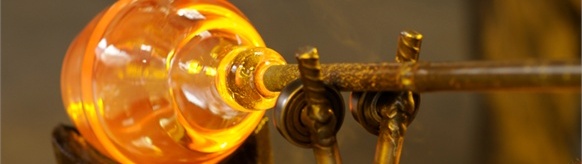
Scientists can easily explain the structural order that makes steel and aluminium out of molten metal and they have discovered the molecular changes that take place as water turns to ice, but glass blowers have been plying their trade since the first century BC and we have only just begun to understand what makes molten glass solid.
One hundred and fifty years after the construction of Crystal Palace at the Great Exhibition, scientists at The University of Nottingham and the University of California, Berkeley in collaboration with the University of Bath, have presented an explanation of how atoms behave as glass cools and hardens. Their research has just been published online in Science Express, in advance of publication in Science.
Electronic implants that dispense medicines automatically or via a wireless medical network are on the horizon and Australian and US researchers warn of the security risks that will follow.
With the advent of personalized medicine, advances in diagnostics and the miniaturization of sensors and control systems for delivering drugs automatically, the Remote Intelligent Drug Delivery System (RIDDS) may soon be a reality. Such devices, implanted under the skin, would remove the inconvenience of manual drug delivery. By connecting a RIDDS to a wireless medical control center wirelessly patients with physical disabilities, learning difficulties, or who are otherwise unable to give themselves medication could benefit.
According to popular stereotype, young teenagers are shortsighted, leaving them prone to poor judgment and risky decision-making when it comes to issues like taking drugs and having sex and a new study confirms that. Teens 16 and younger do think about the future less than adults but the reasons may have less to do with impulsivity and more to do with a desire to do something exciting.
The study, by scientists at Temple University, the University of California, Los Angeles, Georgetown University, the University of California, Irvine, and the University of Colorado, is published in the the journal Child Development.
Losing weight is good for all overweight people but for sufferers of obstructive sleep apnea (OSA), a new study shows that losing weight is perhaps the single most effective way to reduce OSA symptoms and associated disorders. The study is in the American Journal of Respiratory and Critical Care Medicine.


 Pilot Study: Fibromyalgia Fatigue Improved By TENS Therapy
 High Meat Consumption Linked To Lower Dementia Risk
 Long Before The Inca Colonized Peru, Natives Had A Thriving Trade Network
 Mesolithic People Had Meals With More Tradition Than You Thought