Banner
Pilot Study: Fibromyalgia Fatigue Improved By TENS Therapy

Fibromyalgia is the term for a poorly-understood condition where people experience pain and fatigue...

High Meat Consumption Linked To Lower Dementia Risk

Older people who eat large amounts of meat have a lower risk of dementia and cognitive decline...

Long Before The Inca Colonized Peru, Natives Had A Thriving Trade Network

A new DNA analysis reveals that long before the Incan Empire took over Peru, animals were...

Mesolithic People Had Meals With More Tradition Than You Thought

The common imagery of prehistoric people is either rooting through dirt for grubs and picking berries...

User picture.
News StaffRSS Feed of this column.

News Releases From All Over The World, Right To You... Read More »

Blogroll

MS is the result of damage to myelin - the protective sheath surrounding nerve fibres of the central nervous system - which interferes with messages between the brain and the body. For some people, MS is characterised by periods of relapse and remission while for others it has a progressive pattern.  Symptoms range from loss of sight and mobility, fatigue, depression and cognitive problems.

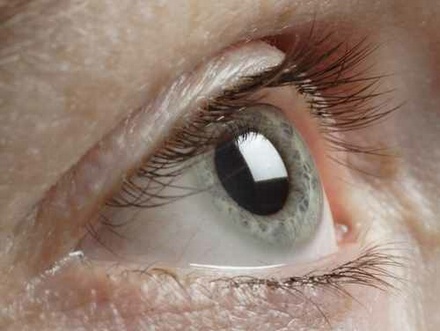
Scientists have known for more than 200 years that vision begins with a series of chemical reactions when light strikes the retina, but the specific chemical processes have largely been a mystery. A team of researchers from the United States and Switzerland say they have shed new light on this process by "capturing" this chemical communication for future study and say it may lead to the development of new treatments for some forms of blindness and vision disorders. 
Researchers at the University of British Columbia have discovered a mimic of one of "nature's antibiotics" that can be used to coat medical devices to prevent infection and rejection.   The study, released today in the journal Chemistry and Biology, found that a synthetic form, short tethered cationic antimicrobial peptides (cationic peptide), can protect surfaces, like those of medical devices, killing bacteria and fungi that come into contact with them. Peptides are small proteins.
A study of college freshmen in the United States and in China found that Chinese students know more science facts than their American counterparts but both groups are nearly identical when it comes to their ability to do scientific reasoning - unfortunately neither group  was very good at it.

The lesson is that educators must go beyond teaching science facts if we hope to produce voters, policy makers and scientists who can make reasoned choices.

The Scientific business of Thomson Reuters today announced the results of a study showing that the United States' share of scientific research has shrunk while Asia-Pacific's share of output has risen but the U.S. remains the leader globally in the relative impact of its research.

In its January/February issue of Science Watch, Thomson Reuters analyzes 12 year's worth of data from its National Science Indicators database to determine the U.S.'s global scientific influence based on the nation's research output and impact.

Investigators from Ludwig-Maximilians-Universität München and a Bolzano colleague have written another chapter in a murder case over 5,000 years old. New investigations  reconstructed the chronology of the injuries that Oetzi, the glacier man preserved as a frozen mummy, received in his last days.