Banner
Pilot Study: Fibromyalgia Fatigue Improved By TENS Therapy

Fibromyalgia is the term for a poorly-understood condition where people experience pain and fatigue...

High Meat Consumption Linked To Lower Dementia Risk

Older people who eat large amounts of meat have a lower risk of dementia and cognitive decline...

Long Before The Inca Colonized Peru, Natives Had A Thriving Trade Network

A new DNA analysis reveals that long before the Incan Empire took over Peru, animals were...

Mesolithic People Had Meals With More Tradition Than You Thought

The common imagery of prehistoric people is either rooting through dirt for grubs and picking berries...

User picture.
News StaffRSS Feed of this column.

News Releases From All Over The World, Right To You... Read More »

Blogroll
Imaging systems, artificial intelligence and computer programs for facial recognition could get a boost by  work from Dr. Adrian Dyer of Monash University,  one of Australia's leading bee experts - he says his latest research shows that honeybees can learn to recognize human faces even when seen from different viewpoints.

The findings show that despite the highly constrained neural resources of the insects (their brains are 0.01 per cent the size of the human brain) their ability has evolved so that they're able to process complex visual recognition tasks.
A recent theory of aging says that caloric restriction may do the trick but the research is inconsistent; the mice in the most promising studies were weaned that way, something unlikely to happen in human children.    New research says even those studies may not be entirely accurate and that for lean mice – and therefore lean humans, if prior mouse studies were to be taken at face value  – caloric restrictions as an anti-aging strategy may be a pointless, frustrating and even dangerous exercise.

But for fat mice, dieting makes sense and will extend life, the researchers say.   That goes for people as well.
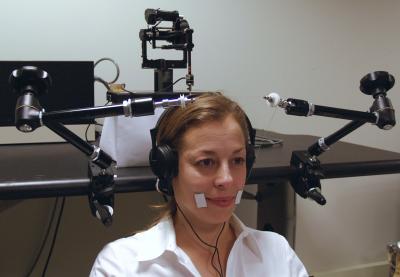
The movement of facial skin and muscles around the mouth plays an important role not only in the way the sounds of speech are made, but also in the way they are heard according to a study by scientists at Haskins Laboratories, a Yale-affiliated research laboratory. 

"How your own face is moving makes a difference in how you 'hear' what you hear," said first author Takayuki Ito, a senior scientist at Haskins Laboratories.

When, Ito and his colleagues used a robotic device to stretch the facial skin of "listeners" in a way that would normally accompany speech production they found it affected the way the subjects heard the speech sounds. 
To prolong the shelf life of foods, manufacturers often add hydrogen to natural oils, a process called hydrogenation. But hydrogenation also results in the production of trans fats, which have adverse health effects such as raising bad cholesterol and increasing the risk for coronary heart diseases.   Trans fats are found in vegetable shortenings, some margarines, crackers, cookies and snacks. Health authorities worldwide recommend that people reduce their consumption of trans fats.

UC Riverside chemists have designed a catalyst  (a substance that accelerates a chemical reaction) that allows hydrogenated oils to be made while minimizing the production of trans fats.

The American Peanut Council continues to work with the US Food and Drug Administration (FDA) to investigate which products may be affected by a manufacturer's recall due to salmonella contamination. It advises consumers that at this time, there is no indication that any jars of peanut butter sold in retail stores are linked to the recall by Georgia-based Peanut Corporation of America (PCA).

While none of this product was sold at retail to the general public, some of the peanut butter and peanut paste manufactured by PCA is used as ingredients in other products.

Manhattan Research, a global healthcare and pharmaceutical market research company, today announced the release of Taking the Pulse(R) Europe v8.0, its European physician study and strategic advisory service. It offers in-depth market data and analysis of how physicians across Western Europe integrate the Internet and technology into their practises. Taking the Pulse(R) Europe also looks at key trends in pharma company/sales rep interactions and electronic detailing.

According to the study, European physicians are more reliant than ever on technology - over 80% who are online reported that the Internet is essential to their practice.