Women appear to suffer more from rheumatoid arthritis (RA) than men, according to research published in Arthritis Research and Therapy.
A genetic variation involving the brain chemical serotonin has been found to shape the social behavior of rhesus macaque monkeys, which could provide researchers with a new model for studying autism, social anxiety and schizophrenia. Humans and macaques are the only members of the primate family to have this particular genetic trait.
"We have found very similar gene-based disruptions in social rewards shared by monkeys and by humans," said Michael Platt, Ph.D., associate professor of neurobiology at Duke University Medical Center and author of the study in PLoS One.
The last thing scientists want to know is that either caffeine or beer could have negative effects on brain power because, let's face it, without those two things nothing would ever get done.
So we note with some concern a new research study that suggests high caffeine consumption could be linked to a greater tendency to hallucinate. How much is too much? 7 cups of coffee per day, they say. Not even a full pot! So that leaves just beer.
Cattle and sheep grazed on natural grasslands help maintain biodiversity and produce tastier, healthier meat, according to a study funded by the Economic and Social Research Council (ESRC). The research, part of the Rural Economy and Land Use (RELU) program, concluded that pasture-based farming is good for the environment, the consumer and the producer but needs stronger support from British policy makers.
Detailed analysis of the nutritional qualities of the plant species present on the natural grasslands showed that they provided grazing animals with a richer more diverse diet than the improved pastures used for more intensive farming. And this richer diet translated into tastier meat.
XMM-Newton has caught the fading glow of a tiny celestial object, revealing its rotation rate for the first time. The new information confirms this particular object as one of an extremely rare class of stellar zombie – each one the dead heart of a star that refuses to die.
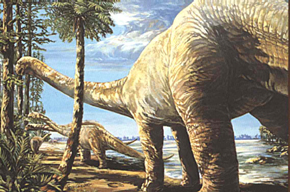
The official State Dinosaur of Texas is up for a new name, based on Southern Methodist University research that proved the titleholder has been misidentified. State Rep. Charles Geren of Fort Worth filed a resolution Jan. 7 to change the name of the state dinosaur from Pleurocoelus to Paluxysaurus jonesi to correctly name the massive sauropod whose tracks and bones litter the central Texas Jones Ranch. Peter Rose is the scientist behind the name change: His master's level study of dinosaur bones at SMU eventually led him to dispute the long-accepted notion that the large, sauropod bones found in and around the Paluxy River near Glen Rose, Texas, were the same as Pleurocoelus bones first found in Maryland in the late 1800s.


 Pilot Study: Fibromyalgia Fatigue Improved By TENS Therapy
 High Meat Consumption Linked To Lower Dementia Risk
 Long Before The Inca Colonized Peru, Natives Had A Thriving Trade Network
 Mesolithic People Had Meals With More Tradition Than You Thought