Take a close look at that cheap piece of scrap iron before you toss it in the trash. Wei-xian Zhang has a good use for it. Someday soon, much of the world might also. Zhang, a professor of civil and environmental engineering, recently concluded a five-year research project in which he and his colleagues at Tongji University in Shanghai used two million pounds of iron to
detoxify pollutants in industrial wastewater.
The fight against climate warming has an unexpected ally in mushrooms growing in dry spruce forests covering Alaska, Canada, Scandinavia and other northern regions, a new UC Irvine study finds. When soil in these forests is warmed, fungi that feed on dead plant material dry out and produce significantly less carbon dioxide than fungi in cooler, wetter soil. This came as a surprise to scientists, who expected warmer soil to emit larger amounts of carbon dioxide because extreme cold is believed to slow down the process by which fungi convert soil carbon into carbon dioxide.
Why are some species of plants and animals favored by natural selection? According to a UC Riverside-led research team, the answer lies in the rate of metabolism of a species – how fast a species consumes energy, per unit mass, per unit time. The researchers studied 3006 species, the largest number of species ever analyzed in a single study. The species list encompasses much of the range of biological diversity on Earth – from bacteria to elephants, and algae to sapling trees.
To the researchers' surprise, they found the mean metabolic rate of the species at rest fell on a narrow range of values – 0.3 to 9 Watts per kilogram.
Not all enzymes that are assumed to require an RNA component in order to function do actually contain RNA, according to a study that focused on the enzyme RNase P. Contrary to accepted scientific theory, the project team from Vienna has long believed that certain forms of RNase P do not contain any RNA. They say they have now succeeded in proving their point through a series of experiments and the results are published today in the journal CELL.
Although ribozymes are not quite living fossils, these enzymes, which function only in the presence of RNA, hail from a long gone age when biochemical processes were still controlled by RNA molecules. It was only later that proteins came onto the molecular scene.
Harvesting energy from the sun makes terrific sense until you factor in the economics of solar technology efficiency and the environmental impact of manufacturing panels and adding new power lines. But solar power is clearly the path to future energy independence once the obstacles have been overcome.
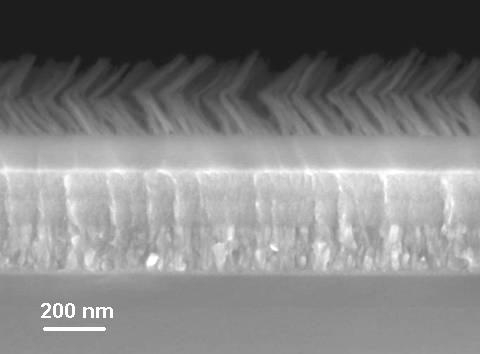
Researchers at Rensselaer Polytechnic Institute say they have made progress overcoming two of the major efficiency hurdles; the amount of sunlight captured by solar panels and the inability of solar panels to absorb the entire solar spectrum from nearly any angle.
A new University of Colorado at Boulder study indicates that not only do human hands harbor far higher numbers of bacteria species than previously believed, women have far more kinds of microbes on their palms than men. The results help understand human bacteria and should help establish a "healthy baseline" to detect microbial community differences on individuals that are associated with a wide variety of human diseases, said CU-Boulder ecology and evolutionary biology assistant professor Noah Fierer, lead study author.


 Pilot Study: Fibromyalgia Fatigue Improved By TENS Therapy
 High Meat Consumption Linked To Lower Dementia Risk
 Long Before The Inca Colonized Peru, Natives Had A Thriving Trade Network
 Mesolithic People Had Meals With More Tradition Than You Thought