A new study in the Canadian Journal of Economics outlines the first evidence on sexual orientation and economic outcomes in Canada. The study found that homosexual men have 12 percent lower personal incomes and lesbians have 15 percent higher personal incomes than heterosexual men and women.
Christopher S. Carpenter of The Paul Merage School of Business at the University of California Irvine used data from the Canadian Community Health Survey which includes standard demographic questions as well as self-reports on sexual orientation.
A new study in the Journal of Marital and Family Therapy explored how men and women perceive online and offline sexual and emotional infidelity. Results show that men felt sexual infidelity was more upsetting and women felt emotional infidelity was more upsetting.
Monica T. Whitty and Laura-Lee Quigley of Queen's University Belfast surveyed 112 undergraduate students and asked them questions about sexual and emotional infidelity both offline and on the internet.
When given the choice, men were more upset by sexual infidelity and women were more upset by emotional infidelity.
A quarter-million people were killed when a tsunami inundated Indian Ocean coastlines the day after Christmas in 2004. Now scientists have found evidence that the event was not a first-time occurrence.
A team working on Phra Thong, a barrier island along the hard-hit west coast of Thailand, unearthed evidence of at least three previous major tsunamis in the preceding 2,800 years, the most recent from about 550 to 700 years ago. That team, led by Kruawun Jankaew of Chulalongkorn University in Thailand, included Brian Atwater, a University of Washington affiliate professor of Earth and space sciences and a U.S. Geological Survey geologist.
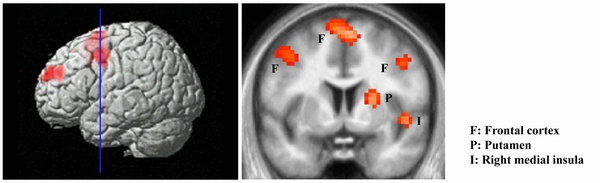
People who view pictures of someone they hate display activity in distinct areas of the brain that, together, may be thought of as a ‘hate circuit’, according to new research by scientists at University College London.
Some people have a fear of plane crashes, others of tiny little spiders. Going to the beach? You may worry about sharks.
But few people worry about diabetes, even though 24 million people have it. According to a new survey by the American Diabetes Association, more people reported fear of being in a plane crash, hit by lightning, attacked by a shark, or bitten by a snake, than a fear of developing diabetes.
Scientists believe that complex diseases such as schizophrenia, major depression and cancer are not caused by one, but a multitude of dysfunctional genes. A novel computational biology method developed by a research team led by Ali Abdi, PhD, associate professor in New Jersey Institute of Technology's department of electrical and computer engineering, has found a way to uncover the critical genes responsible for disease development.
"We see our research developing a novel technology holding high promises for finding key molecules that contribute to human diseases and for identifying critical targets in drug development," said Abdi. "The key to success was our collaboration among researchers with different backgrounds in engineering and medical sciences."


 Pilot Study: Fibromyalgia Fatigue Improved By TENS Therapy
 High Meat Consumption Linked To Lower Dementia Risk
 Long Before The Inca Colonized Peru, Natives Had A Thriving Trade Network
 Mesolithic People Had Meals With More Tradition Than You Thought