Banner
Pilot Study: Fibromyalgia Fatigue Improved By TENS Therapy

Fibromyalgia is the term for a poorly-understood condition where people experience pain and fatigue...

High Meat Consumption Linked To Lower Dementia Risk

Older people who eat large amounts of meat have a lower risk of dementia and cognitive decline...

Long Before The Inca Colonized Peru, Natives Had A Thriving Trade Network

A new DNA analysis reveals that long before the Incan Empire took over Peru, animals were...

Mesolithic People Had Meals With More Tradition Than You Thought

The common imagery of prehistoric people is either rooting through dirt for grubs and picking berries...

User picture.
News StaffRSS Feed of this column.

News Releases From All Over The World, Right To You... Read More »

Blogroll
The leading cause of death in all cancer patients continues to be the resistance of tumor cells to chemotherapy, a form of treatment in which chemicals are used to kill cells.   A study by UC Riverside biochemists that focuses on cancer cells reports that ingesting apigenin,  a naturally occurring dietary agent found in vegetables and fruit , improves cancer cells' response to chemotherapy.

Xuan Liu, a professor of biochemistry, and Xin Cai, a postdoctoral researcher working in her lab, found that apigenin localizes tumor suppressor p53, a protein, in the cell nucleus – a necessary step for killing the cell that results in some tumor cells responding to chemotherapy.
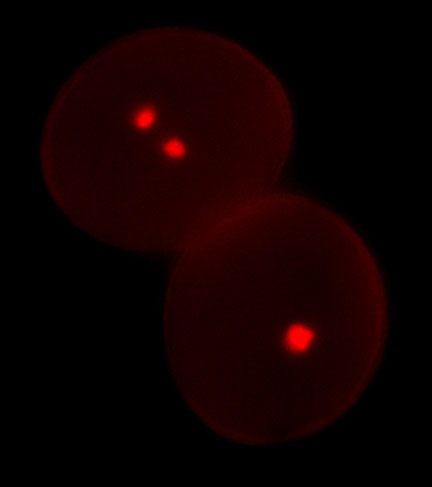
An enigma unique to flowering plants  has been solved, say researchers from the University of Leicester (UK) and POSTECH, South Korea.  Scientists already knew that flowering plants, unlike animals, require not one but two sperm cells for successful fertilization.  Double fertilization is essential for fertility and seed production in flowering plants so increased understanding of the process is important.

But the mystery of this ‘double fertilization’ process was how each single pollen grain could produce ‘twin’ sperm cells. One to join with the egg cell to produce the embryo, and the other to join with a second cell in the ovary to produce the endosperm, a nutrient-rich tissue, inside the seed.

The Bill Melinda Gates Foundation today announced 104 grants to explore bold and largely unproven ways to improve global health. The grants of US$100,000 each will be made to scientists from 22 countries and five continents. They mark the first round of funding from Grand Challenges Explorations, an initiative to help lower the barriers for testing innovative ideas in global health.

The initial set of grants will inject fresh perspective into research for preventing or curing infectious diseases such as HIV/AIDS and TB, and limiting the emergence of drug resistance.

Researchers from McGill University, the California Institute of Technology, the Curie Institute in Paris, Princeton University and other institutions, have unearthed crystalline magnetic fossils of a previously unknown species of microorganism that lived at the boundary of the Paleocene and Eocene epochs, some 55 million years ago. The research might help scientists understand more thoroughly the potential effects of significant changes in the Earth's climate. Though they are only some four microns long, these newly discovered, spear-shaped magnetite crystals (magnetofossils) – unearthed at a dig in New Jersey – are up to eight times larger than previously known magnetofossils.
A drug which was developed in Cambridge and initially designed to treat a form of leukaemia has also proven effective against combating the debilitating neurological disease multiple sclerosis (MS).

The study, led by researchers from the University of Cambridge, has found that alemtuzumab not only stops MS from advancing in patients with early stage active relapsing-remitting multiple sclerosis (RRMS) but may also restore lost function caused by the disease. The findings were published today in the New England Journal of Medicine.
Chandrayaan-1, India’s first mission to the Moon, was successfully launched earlier this morning from the Satish Dhawan Space Centre (SHAR) in Sriharikota, India.

The PSLV-C11 rocket, an upgraded version of the Indian Space Research Organization’s (ISRO’s) Polar Satellite Launch Vehicle, lifted off at 02:52 Central European Summer Time (CEST) and injected the spacecraft into a highly elongated orbit around the Earth. 

Chandrayaan-1 is led by ISRO and the international partners include ESA, Bulgaria and the USA.