Banner
Pilot Study: Fibromyalgia Fatigue Improved By TENS Therapy

Fibromyalgia is the term for a poorly-understood condition where people experience pain and fatigue...

High Meat Consumption Linked To Lower Dementia Risk

Older people who eat large amounts of meat have a lower risk of dementia and cognitive decline...

Long Before The Inca Colonized Peru, Natives Had A Thriving Trade Network

A new DNA analysis reveals that long before the Incan Empire took over Peru, animals were...

Mesolithic People Had Meals With More Tradition Than You Thought

The common imagery of prehistoric people is either rooting through dirt for grubs and picking berries...

User picture.
News StaffRSS Feed of this column.

News Releases From All Over The World, Right To You... Read More »

Blogroll
The extra layer of information that you add to a message when speaking is called prosody. The most important conclusion is that prosody lies not only in the voice but also in the facial expression. Further it appears that auditory and visual information together are more effective than the same information separately. 

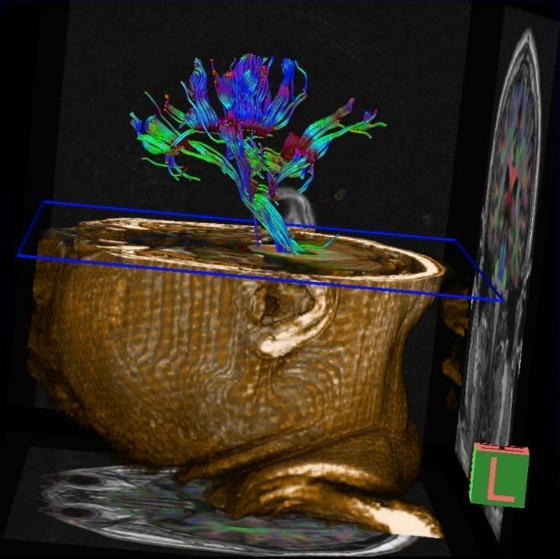
In middle age we begin to lose myelin, the fatty sheath of "insulation" that coats our nerve axons and allows for fast signaling bursts in our brains. So if you want to be the best at anything requiring speedy brain reaction times, you'd better get it in by age 39.

Writing in Neurobiology of Aging, Dr. George Bartzokis, professor of psychiatry at the UCLA Semel Institute for Neuroscience and Human Behavior at UCLA, and colleagues compared how quickly a group of males ranging in age from 23 to 80 could perform a motor task and then correlated their performances to their brains' myelin integrity.

The researchers found a striking correlation between the speed of the task and the integrity of myelination over the range of ages. Put another way, after middle age, we start to lose the battle to repair the myelin in our brain, and our motor and cognitive functions begin a long, slow downhill slide.

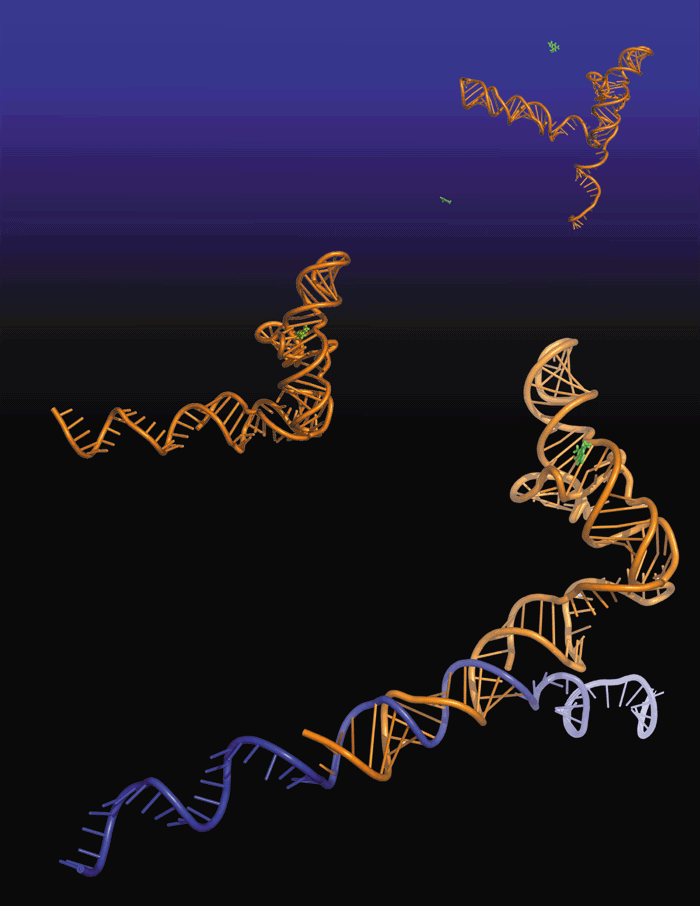
Engineers from the California Institute of Technology (Caltech) have created a "plug-and-play" synthetic RNA device--a sort of eminently customizable biological computer--that is capable of taking in and responding to more than one biological or environmental signal at a time.

In the future, such devices could have a multitude of potential medical applications, including being used as sensors to sniff out tumor cells or determine when to turn modified genes on or off during cancer therapy.

A synthetic RNA device is a biological device that uses engineered modular components made of RNA nucleotides to perform a specific function--for instance, to detect and respond to biochemical signals inside a cell or in its immediate environment.

People who use 'high fructose corn syrup' and 'fructose' interchangeably are either uninformed or intentionally misleading consumers, says the Corn Refiners Association (CRA), and they'd like to set the record straight.

Well, we are certainly against deception by fundamentalists with agendas manipulating data so we are happy to help. Because there are so many recent studies on the effects of sweeteners in the diet, it is important that people understand the differences among various ingredients used in scientific studies.

Research into tobacco dependence published online today (Friday 17 October 2008) in the November issue of Addiction, has shown that recent ex-smokers who find exposure to other people's cigarette smoke pleasant are not any more likely to relapse than those who find it unpleasant.

Led by Dr Hayden McRobbie and Professor Peter Hajek of the Tobacco Dependence Research Unit at Barts and The London School of Medicine and Dentistry, researchers examined the hypothesis that those who find the smell of smoke pleasant are more likely to relapse than those who have a neutral or negative reaction to it. Surprisingly, they concluded that finding the smell of other people's cigarettes pleasant does not make abstaining smokers any more likely to relapse.

The DNA's double helix--the sub-microscopic core of our life--has been the subject of intense study and scrutiny for decades.

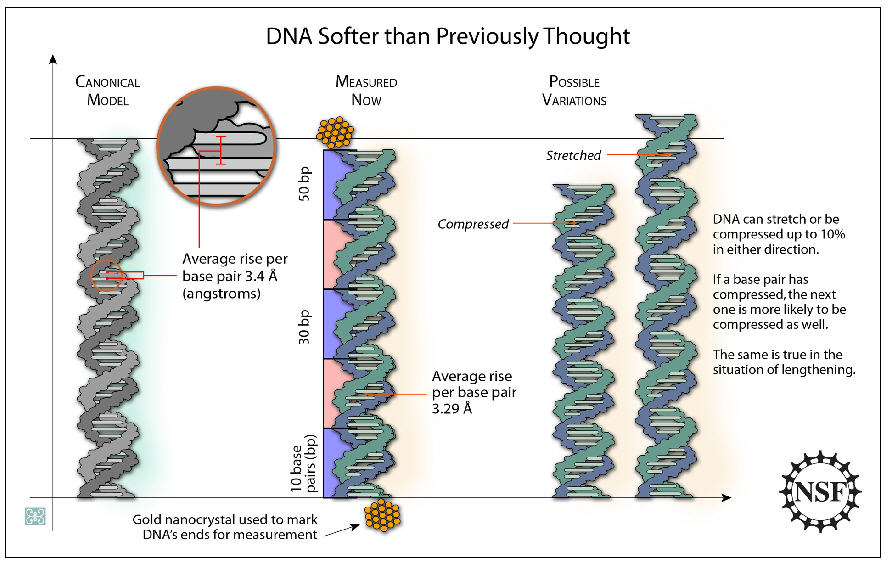
Observations and measurements at the scale of DNA are tricky. The distance between the rungs in DNA's ladder (or base pairs), for example, was thought to be barely over 3 millionths of a millimeter, or 3.4 Å (angstroms). And this ladder has been typically assumed to be very rigid.

But now a team of Stanford scientists, supported in part by the National Science Foundation, have used a novel molecular ruler to cast doubts on this picture. Using this molecular ruler, they marked each end of a snippet of DNA with electron-dense gold nanocrystals. These markers scattered X-rays directed at the sample differently than the rest of the molecules, and allowed for a more precise calculation.