Banner
Pilot Study: Fibromyalgia Fatigue Improved By TENS Therapy

Fibromyalgia is the term for a poorly-understood condition where people experience pain and fatigue...

High Meat Consumption Linked To Lower Dementia Risk

Older people who eat large amounts of meat have a lower risk of dementia and cognitive decline...

Long Before The Inca Colonized Peru, Natives Had A Thriving Trade Network

A new DNA analysis reveals that long before the Incan Empire took over Peru, animals were...

Mesolithic People Had Meals With More Tradition Than You Thought

The common imagery of prehistoric people is either rooting through dirt for grubs and picking berries...

User picture.
News StaffRSS Feed of this column.

News Releases From All Over The World, Right To You... Read More »

Blogroll

At a major Artificial Intelligence competition at the University of Reading on 12 October, machines have come close to imitating human communication.

As part of the 18th Loebner Prize, all of the artificial conversational entities (ACEs) competing to pass the Turing Test have managed to fool at least one of their human interrogators that they were in fact communicating with a human rather than a machine. One of the ACEs, the eventual winner of the 2008 Loebner Prize, got even closer to the 30% Turing Test threshold set by 20th-century British mathematician, Alan Turing in 1950, by fooling 25% of human interrogators.

Top machines from around the world were entered into the competition and following extensive scrutiny these were whittled down to the five best for the 12 October finale. During the Turing Test at the University of Reading, the ACEs competed in a series of five minute long, unrestricted conversations with human interrogators, attempting to pass themselves off as human. The interrogators did not know whether they were conversing with a human or a machine during the test.

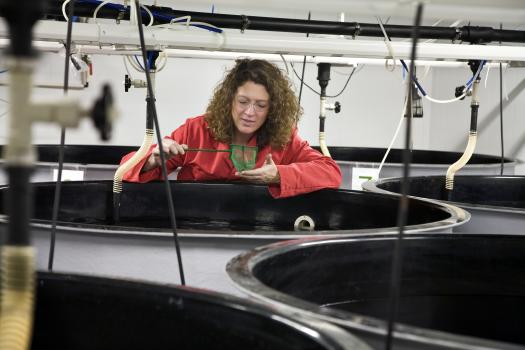
The President of SINTEF Fisheries and Aquaculture, Karl Andreas Almås, crouches over his laptop, opens one of his presentations and finds an illustration. It shows one red curve and one blue one. He then indicates the point where they meet each other, then frowns and says the message he cannot repeat often enough: There is a huge gap between world demand for fish and what we can harvest from the world’s natural stocks.

The figures are clear: If we don’t do something about the over fishing, the stocks of wild fish will be dealt a death blow. At the same time, the world’s population continues to grow – and with it the global demand for food.

“On a global basis today, we have an average annual consumption of 15-16 kilos of fish per person,” says Almås. “If we are going to continue consuming at this rate, we need to double the production of farmed fish within the next 20 years. Doing this in a sustainable manner will be a major challenge.”

Patients have on average a 70 percent lower chance of dying at the nation's top-rated hospitals compared with the lowest-rated hospitals across 17 procedures and conditions analyzed in the eleventh annual HealthGrades Hospital Quality in America Study, issued today by HealthGrades, the leading independent healthcare ratings organization.

While overall death rates declined from 2005 to 2007, the nation's best-performing hospitals were able to reduce their death rates at a much faster rate than poorly performing hospitals, resulting in large state, regional and hospital-to-hospital variations in the quality of patient care, the study found.

The more alcohol an individual drinks, the smaller his or her total brain volume, according to a report in the October issue of Archives of Neurology.

Brain volume decreases with age at an estimated rate of 1.9 percent per decade, accompanied by an increase in white matter lesions, according to background information in the article. Lower brain volumes and larger white matter lesions also occur with the progression of dementia and problems with thinking, learning and memory.

Caffeine consumption does not appear to be associated with overall breast cancer risk, according to a report in the October 13 issue of Archives of Internal Medicine, one of the JAMA/Archives journals. However, there is a possibility of increased risk for women with benign breast disease or for tumors that are hormone-receptor negative or larger than 2 centimeters.

Caffeine is probably the most commonly consumed drug worldwide, present in coffee, tea, chocolate and some medications, according to background information in the article. It was hypothesized that caffeine may increase the risk of breast cancer after a study showed that women with non-cancerous breast disease experienced relief from their symptoms after removing caffeine from their diet.

When it comes to embryo formation in the lowly fruit fly, a little molecular messiness actually leads to enhanced developmental precision, according to a study in the Oct. 14 Developmental Cell from Cincinnati Children's Hospital Medical Center.

While the fundamentals of this tiny bug's reproductive biology may seem insignificant, one day they could matter quite a bit to humans. That's because the study provides new information about how cells choose their own fates, especially in maintaining the size relationship and proportionality of body parts during embryonic development, said Jun Ma, Ph.D., a researcher in the divisions of Biomedical Informatics and Developmental Biology at Cincinnati Children's and the study's corresponding author.