Banner
Pilot Study: Fibromyalgia Fatigue Improved By TENS Therapy

Fibromyalgia is the term for a poorly-understood condition where people experience pain and fatigue...

High Meat Consumption Linked To Lower Dementia Risk

Older people who eat large amounts of meat have a lower risk of dementia and cognitive decline...

Long Before The Inca Colonized Peru, Natives Had A Thriving Trade Network

A new DNA analysis reveals that long before the Incan Empire took over Peru, animals were...

Mesolithic People Had Meals With More Tradition Than You Thought

The common imagery of prehistoric people is either rooting through dirt for grubs and picking berries...

User picture.
News StaffRSS Feed of this column.

News Releases From All Over The World, Right To You... Read More »

Blogroll

Scientists at Bonn and Düsseldorf Universities investigated over 500,000 positions in the human genome and found a gene variant which occurs clearly more frequently in bald men than in control persons. This means they have found a new hair loss gene, according to their study in Nature Genetics.

In 2005, these scientists had already characterized the first hair-loss gene inherited through the maternal line, which explained why hair-loss in men often reflects that of their maternal grandfathers. This newly discovered gene, on the other hand, may now account for the similarity in cranial hair growth between father and son.

Would you ever have thought there could be anyone considered an expert on the political impact of late-night comedy shows on candidates? Us either, but that's the claim.

American University says Lauren Feldman is that expert and in her real job she is an assistant professor at American University’s School of Communication. Feldman did an analysis of the 2004 election and the results say Tina Fey’s humorous impersonations of vice presidential candidate Sarah Palin on Saturday Night Live (SNL) could be doing real damage to the McCain campaign in the 2008 election. Even if they aren't, it's a good rumor to start.

To get from one cell to a complex organism, cells have to divide, travel around the body and arrange intricate shapes and specialized tissues. The best way to understand these dynamic processes is to look at what happens in the first few hours of life in every part of an embryo. While this is possible with invertebrates with a few hundred cells, like worms, it was previously impossible to achieve for vertebrates.

“Imagine following all inhabitants of a town over the course of one day using a telescope in space. This comes close to tracking the 10 thousands of cells that make up a vertebrate embryo – only that the cells move in three dimensions,” says Philipp Keller. Together with Annette Schmidt he carried out the research in the labs of Jochen Wittbrodt and Ernst Stelzer at the European Molecular Biology Laboratory (EMBL).

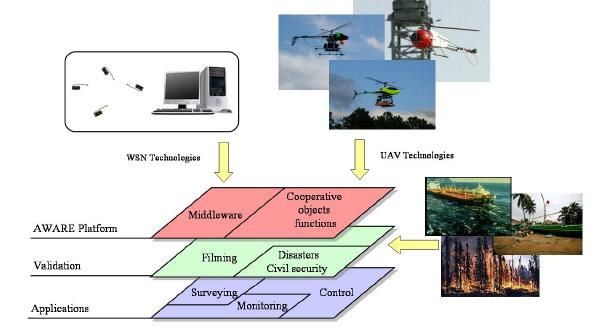
Unmanned helicopters could soon be a key part of emergency relief operations, as well as bringing a new dimension to filmmaking, thanks to innovative work done by European researchers.

When natural disasters happen one of the first casualties is often the communications network. As a result, rapid response crews can be working virtually blind, cut off from each other and the victims they are trying to help. Where there are transport arteries, such as roads, rivers and railways, they are also very often damaged or disrupted, which makes getting medical and relief supplies to survivors extremely difficult.

When such disasters happen in remote areas with little in the way of communications or transport infrastructure to start with, the problem is exacerbated. A solution for both the communications and delivery of supplies problems is now being researched in an EU-funded project, called AWARE, which comprises academic and commercial partners from five European countries.

Humans have a built-in weapon against HIV, but until recently no one knew how to unlock its potential. A study published in Nature reveals the atomic structure of this weapon, an enzyme known as APOBEC-3G, and suggests new directions for drug development.

APOBEC-3G is present in every human cell. It is capable of stopping HIV at the first step of replication, when the retrovirus transcribes its RNA into viral DNA.

The study's authors, led by Xiaojiang Chen of the University of Southern California, were able to show the atomic structure of the active portion of APOBEC-3G.

The Internet is a powerful resource can may help patients make informed treatment decisions but the quality of the content on health-related Web sites is not rigorously monitored and studies have shown that some Web sites present inaccurate information.

More than 110 million adults in the United States have searched online for health information, and two-thirds of these patients seek information through a search engine rather than directly accessing a specific Web site, so helping people to gain an understanding of which types of sites will be most reliable has a great deal of benefit.