Banner
Pilot Study: Fibromyalgia Fatigue Improved By TENS Therapy

Fibromyalgia is the term for a poorly-understood condition where people experience pain and fatigue...

High Meat Consumption Linked To Lower Dementia Risk

Older people who eat large amounts of meat have a lower risk of dementia and cognitive decline...

Long Before The Inca Colonized Peru, Natives Had A Thriving Trade Network

A new DNA analysis reveals that long before the Incan Empire took over Peru, animals were...

Mesolithic People Had Meals With More Tradition Than You Thought

The common imagery of prehistoric people is either rooting through dirt for grubs and picking berries...

User picture.
News StaffRSS Feed of this column.

News Releases From All Over The World, Right To You... Read More »

Blogroll

Researchers are reporting that new insights into the composition of human breast milk may lead to new ways to prevent and treat stomach illnesses and other diseases in babies and adults, according to an article in the Sept. 29 issue of Chemical & Engineering News.

In the story, Jyllian Kemsley notes that human breast milk is a complex fluid composed of several key components, including lactose, a sugar that provides energy for the infant, and lipids, which are thought to provide healthy fats to infants. But scientists are just now beginning to understand the composition and function of many of the components of human breast milk.

Although the industrial compounds known as polychlorinated biphenols or PCBs have been found in previous air samples collected in the city of Chicago, a University of Iowa researcher says that a new study of Chicago air sampled between November 2006 and November 2007 found PCB11, a byproduct of the manufacture of paint pigments and a potentially toxic substance, present throughout the city.

"To the best of our knowledge, this is the first published report of PCB11 in ambient air," said Keri Hornbuckle, UI professor of civil and environmental engineering, in the Sept. 24 online issue of the journal Environmental Science & Technology.

Shape is the most important factor affecting Christmas tree selection, followed by needle retention, species, and price, according to M. Elizabeth Rutledge, a graduate student in the Department of Forestry and Environmental Resources at North Carolina State University.

How many of you out there remember your father negotiating over tree shape? None of us either. But Rutledge says that is the case so we'll let it go and assume everyone picks the best tree and then looks at the price tag, rather than the other way around.

Traditionally, Americans have also preferred dense trees, she writes, whereas Europeans have preferred more natural, or "open" trees. Open trees have more space to hang ornaments, holding up to two-thirds more decorations than heavily sheared trees, and tend to weigh less than dense trees, providing advantages for growers and consumers alike.

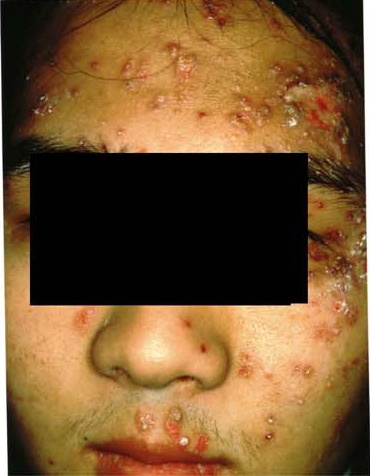
It used to be that being buried under a pile of large, sweaty men was the worst thing that could happen to you playing Rugby - but then it turned out a herpes virus can cause a skin disease called "scrumpox" and it spreads through physical contact.

Researchers have discovered that a new strain could be even more pathogenic - and it's now also found among sumo wrestlers in Japan.

"Scrumpox", or herpes gladiatorum, is a skin infection caused by the herpes virus, which can cause coldsores. It is spread through direct skin-to-skin contact so it is common among rugby players. Symptoms can start with a sore throat and swollen glands and the telltale blisters appear on the face, neck, arms or legs. The disease is highly infectious, so players who are infected are often taken out of competition to stop the virus from spreading.

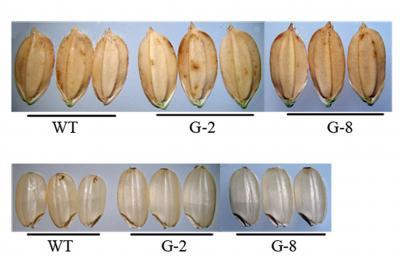
A team of scientists has identified a gene in rice that controls the size and weight of rice grains. The gene may prove to be useful for breeding high-yield rice and, thus, may benefit the vast number of people who rely on this staple food for survival.

The researchers first searched for and identified mutant strains of rice that exhibited underweight grains. "We found a particular mutant that is defective in its ability to produce normal-sized grains," said Zuhua He, a biology professor at the Chinese Academy of Sciences and the leader of the team. The group then examined the mutant and found that it carried a mutation within the GIF1 gene. "The GIF1 gene is responsible for controlling the activity of the enzyme invertase, which is located in the cell wall and converts sucrose to substances that then are used to create starch," said He. "Invertase is important in the formation of starch within developing grains of rice. If invertase is not active, the rice plant cannot produce edible grains."

Instead of using a flat microchip as the light sensor for their new camera, a team of engineers has developed a sensor that is a flexible mesh of wire-connected pixels. The mesh is made from many of the same materials as a standard digital-camera sensor, but has the unique ability to conform to convoluted, irregular surfaces.

The technology breakthrough is a novel approach that bypasses a traditional planar sensor of adjacent pixels and instead relies upon an array of pixels interconnected by small wires. Using a flexible, temporary backing, the researchers can form the array into a curved shape and then transfer the array to its permanent location affixed to a glass lens.

Over the last 20 years, many researchers have tried to manufacture such electronic eye systems, but until now, none were able to create a working camera.