Banner
Pilot Study: Fibromyalgia Fatigue Improved By TENS Therapy

Fibromyalgia is the term for a poorly-understood condition where people experience pain and fatigue...

High Meat Consumption Linked To Lower Dementia Risk

Older people who eat large amounts of meat have a lower risk of dementia and cognitive decline...

Long Before The Inca Colonized Peru, Natives Had A Thriving Trade Network

A new DNA analysis reveals that long before the Incan Empire took over Peru, animals were...

Mesolithic People Had Meals With More Tradition Than You Thought

The common imagery of prehistoric people is either rooting through dirt for grubs and picking berries...

User picture.
News StaffRSS Feed of this column.

News Releases From All Over The World, Right To You... Read More »

Blogroll

A protein required for the earliest steps in embryonic development also plays a key role in solidifying fear memories in the brains of adult animals, scientists have revealed. An apparent "hub" for changes in the connections between brain cells, beta-catenin could be a potential target for drugs to enhance or interfere with memory formation.

The protein beta-catenin acts like a Velcro strap, fastening cells' internal skeletons to proteins on their external membranes that connect them with other cells. In species ranging from flies to frogs to mice, it also can transmit early signals that separate an embryo into front and back or top and bottom.

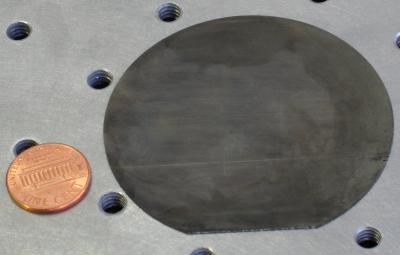
University of Utah engineers have devised a new way to slice thin wafers of germanium for use in efficient solar power cells. They say the new method should lower the cost of such cells by reducing the waste and breakage of the brittle semiconductor.

Germanium solar cells are expensive and so are only now used mainly on spacecraft but with the improved wafer-slicing method, "the idea is to make germanium-based, high-efficiency solar cells for uses where cost now is a factor," particularly for solar power on Earth, says Eberhard "Ebbe" Bamberg, an assistant professor of mechanical engineering. "You want to do it on your roof."

Dinesh Rakwal, a doctoral student in mechanical engineering, adds: "We're coming up with a more efficient way of making germanium wafers for solar cells – to reduce the cost and weight of these solar cells and make them defect-free."

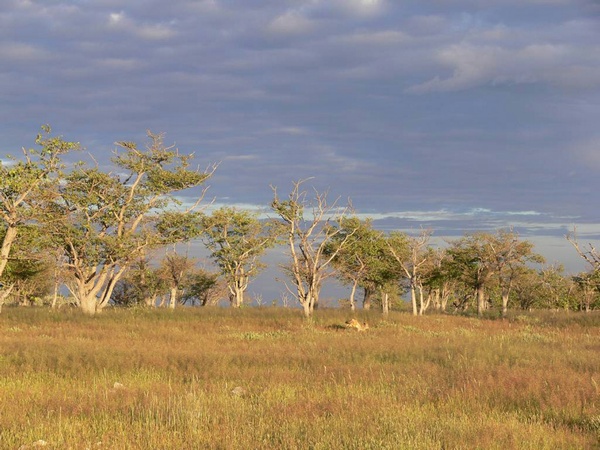
Natural grass fires are evidently more important for the ecology of savannahs than has previously been assumed, according to the findings of a study carried out in Etosha National Park in the north of Namibia.

Writing in the Journal of Ecology, researchers from the Helmholtz Centre for Environmental Research (UFZ), the University of Frankfurt am Main and the University of Cologne say that fire plays an important role in regeneration.

It is the first study to have investigated the complex interplay of the factors fire, competition, moisture and seed availability in relation to a grass species. Periodic fires in semi-arid regions can lead to older tufts of grass disappearing, thereby making room for younger grasses. The findings are particularly significant for the management of semi-arid nature reserves, in which, in the absence of natural plant eaters, fires are the only practical means of renewing the grass canopy.

Researchers at UT Southwestern Medical Center have found that individuals who carry a specific form of the gene PNPLA3 have more fat in their livers and a greater risk of developing liver inflammation.

They also found that Hispanics are more likely to carry the gene variant responsible for higher liver-fat content than African-Americans and Caucasians.

The new findings, published in Nature Genetics, provide a gene-based explanation for the results of a 2004 UT Southwestern-led study that determined that the propensity to develop nonalcoholic fatty liver disease differs among ethnic groups, with a higher percentage of Hispanics developing the disorder than African-Americans or Caucasians.

In marking the passing of its founder, Paul Newman, the Association of Hole in the Wall Camps has issued the following statement:

While greatly saddened by Paul's passing, the family of Hole in the Wall Camps celebrates the life of Paul Newman and the legacy he has left us and the world.

Paul's commitment to the welfare of children suffering from serious illnesses and life-threatening diseases was never-ending. His infinite passion to provide kids who are sick with a place "to kick back and raise a little hell" has touched the lives of children everywhere.

We read a lot about kids not being as good in science as we were back in the day. And we read a lot about women being missing from science too. You wouldn't know it by these outstanding young scientists in this year's EU contest for Young Scientists, which was held in Copenhagen, Denmark and rewarded contestants aged 14 - 19 who shared a €46,500 prize pot.

The contestants represented 39 countries across Europe - as well as special guests Brazil, Canada, China, Mexico, New Zealand and the USA - and they presented 87 winning projects from national competitions covering a wide range of scientific disciplines; from engineering and earth sciences to biology, mathematics, chemistry, physics, medicine, computer and social sciences. The standard of entries was consistently high and several past participants have achieved major scientific breakthroughs or set up businesses to market the ideas developed for the Contest.

"The EU Contest for Young Scientists is about supporting the rising stars of tomorrow's European science.” says European Science and Research Commissioner Janez Potocnik. It shows that Europe is a real reservoir of talents which is crucial at a time of global competition for knowledge. It also makes young people enjoy the experience of working together, beyond national borders, in the spirit of the European Research Area we strive to build.


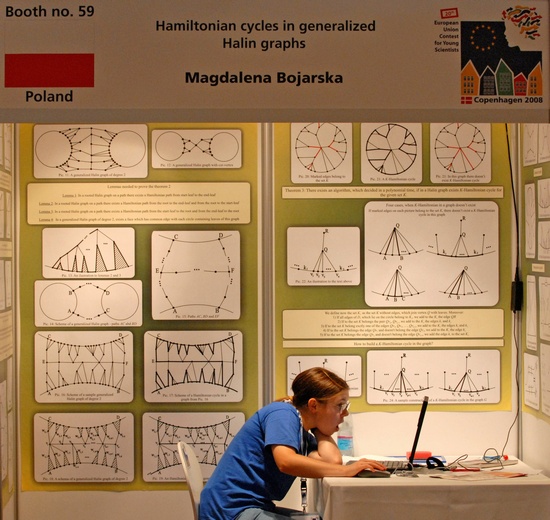
Magdalena Bojarska from Poland - “Hamiltonian cycles in generalized Halin graphs”