Banner
Pilot Study: Fibromyalgia Fatigue Improved By TENS Therapy

Fibromyalgia is the term for a poorly-understood condition where people experience pain and fatigue...

High Meat Consumption Linked To Lower Dementia Risk

Older people who eat large amounts of meat have a lower risk of dementia and cognitive decline...

Long Before The Inca Colonized Peru, Natives Had A Thriving Trade Network

A new DNA analysis reveals that long before the Incan Empire took over Peru, animals were...

Mesolithic People Had Meals With More Tradition Than You Thought

The common imagery of prehistoric people is either rooting through dirt for grubs and picking berries...

User picture.
News StaffRSS Feed of this column.

News Releases From All Over The World, Right To You... Read More »

Blogroll

Some human populations may rely on biological factors in addition to social factors when selecting a mate, according to a recent study in PLoS Genetics. Scientists in China, France, and the United Kingdom report genomic data showing that immunity traits may be involved in mate choice in some human populations.

In several species it has been shown that the Major Histocompatibility Complex (MHC), a large genomic region involved in immune response, influences mating selections and that this may be mediated by preferences based on body odor. Some previous studies have reported a tendency for humans to prefer MHC-dissimilar mates, encouraging heterozygosity at MHC loci in offspring and resulting in improved immune response.

However, other studies, both directly in couples and also indirectly in "sweaty T-shirts" experiments, have reported conflicting results.

When the world's land was congealed in one supercontinent 240 million years ago, Antarctica wasn't the forbiddingly icy place it is now. But paleontologists have found a previously unknown amphibious predator species that probably still made it less than hospitable.

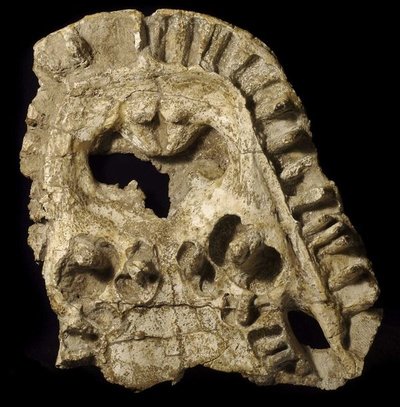
The species, named Kryostega collinsoni, is a temnospondyl, a prehistoric amphibian distantly related to modern salamanders and frogs. K. collinsoni resembled a modern crocodile, and probably was about 15 feet in length with a long and wide skull even flatter than a crocodile's.

The term "Kryostega" translates to 'frozen' and 'roof,' which refer to the top of the skull. The scientists named the species for James Collinson, a professor emeritus of Earth sciences at Ohio State University who made important contributions to the study of Antarctic geology.

MIT neuroscientists have tricked the visual brain into confusing one object with another, demonstrating that time teaches us how to recognize objects. This discovery, they say, could lead to robots with actual 'recognition' ability.

It may sound strange, but human eyes never see the same image twice. An object such as a cat can produce innumerable impressions on the retina, depending on the direction of gaze, angle of view, distance and so forth. Every time our eyes move, the pattern of neural activity changes, yet our perception of the cat remains stable.

A possible explanation is suggested by the fact that our eyes tend to move rapidly (about three times per second), whereas physical objects usually change more slowly. Therefore, differing patterns of activity in rapid succession often reflect different images of the same object. Could the brain take advantage of this simple rule of thumb to learn object invariance?

We all know that people can be influenced in complex ways by their peers. But two new studies in the September 11th issue of Current Biology reveal that the same can also be said of fruit flies.

The researchers found that group composition affects individual flies in several ways, including changes in gene activity and sexual behavior, all mediated by chemical communication.

Depending on if you are pro- or con- on the dinosaur issue, you have good or bad things to say. While dinosaurs dominated land for well over 100 million years and evolved into numerous species, they still got snuffed out rather suddenly 65 million years ago. epitomize both success and failure. Failure because they went extinct suddenly 65 million years ago; success because they dominated terrestrial ecosystems for well over 100 million years evolving into a wide array of species that reached tremendous sizes.

University of Bristol researchers Steve Brusatte and Professor Mike Benton say it was just bad luck, and that's okay, because it was only good luck that made them dominant in the first place. This defies conventional thinking that some feature or characteristic helped them out-compete other vertebrate groups.

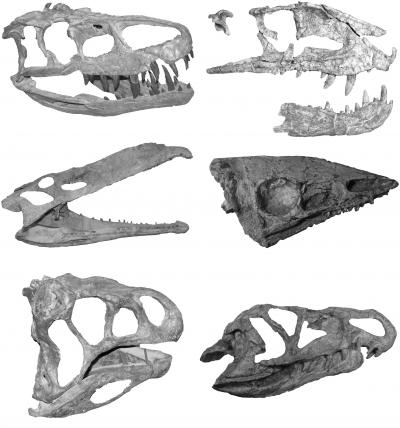
Like crocodiles, say Brusatte and Benton. They examined the evolution of dinosaurs and their closest competitors during the Triassic period (251 to 199 million years ago)and identified the the crurotarsan archosaurs, a large group of animals that are closely related to crocodiles, as the most likely 'competitors' to early dinosaurs. The other part of the group Archosauria are dinosaurs and their descendants, the birds.

We hear lots of concern about global warming and the world's rainforests, though they have even begun to thrive under warming conditions - but what about ancient rainforests, long before the Dawn of Man and the destruction we apparently set into motion just by evolving?

The answer lies in underground coalmines in Illinois.

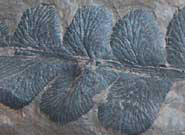
There lay the remains of the first tropical rainforests to evolve on our planet around 300 million years - when the USA lay on the equator. An amazing feature of the forests is that they are preserved over a vast area. One example covers 10,000 hectares - the size of a city.