Banner
Pilot Study: Fibromyalgia Fatigue Improved By TENS Therapy

Fibromyalgia is the term for a poorly-understood condition where people experience pain and fatigue...

High Meat Consumption Linked To Lower Dementia Risk

Older people who eat large amounts of meat have a lower risk of dementia and cognitive decline...

Long Before The Inca Colonized Peru, Natives Had A Thriving Trade Network

A new DNA analysis reveals that long before the Incan Empire took over Peru, animals were...

Mesolithic People Had Meals With More Tradition Than You Thought

The common imagery of prehistoric people is either rooting through dirt for grubs and picking berries...

User picture.
News StaffRSS Feed of this column.

News Releases From All Over The World, Right To You... Read More »

Blogroll

Slim Fast, Atkins, Weight Watchers - you've heard of them all. Some people get rich selling books on losing weight, others get rich selling books on how diet plans are bad for you.

A new scientific analysis published in Nutrition Journal says all of the popular programs accomplish their goals (fewer calories) without sacrificing nutrients.

Helen Truby worked with a team of academics from United Kingdom universities who studied the different diet plans. She described how the randomised controlled trial "provides reassuring and important evidence for the effectiveness and nutritional adequacy of the four commercial diets tested."

Researchers from Oregon State University say they have resolved a controversy that cellular biologists have been arguing over for nearly 50 years, with findings that may aid research on everything from birth defects and genetic diseases to the most classic "cell division" issue of them all – cancer.

The exact mechanism that controls how chromosomes in a cell replicate and then divide into two cells, a process fundamental to life, has never been completely pinned down, researchers say. You can find the basics in any high school biology textbook, but the devil is in the details.

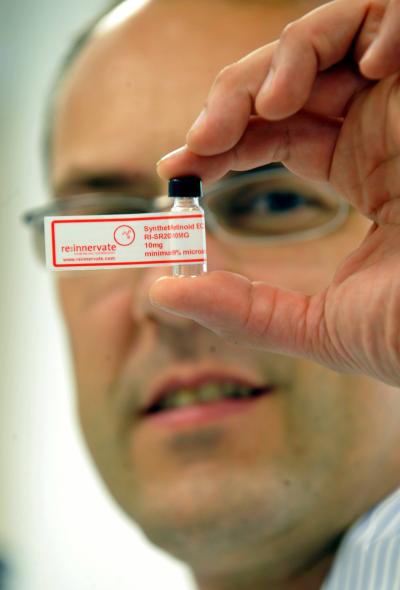
Scientists have designed, developed and tested new molecular tools for stem cell research to direct the formation of certain tissue types for use in drug development programmes.

A collaborative team of scientists from Durham University and the North East England Stem Cell Institute (NESCI) have developed two synthetic molecules which can be used to coax stem cells to 'differentiate' - that is, transform into other forms of tissue.

Their use could also help reduce the number of animals used in laboratory research. The team's results are published in the current issue of Organic and Biomolecular Chemistry.

The origin of the microscopic meteorites that make up cosmic dust has been revealed for the first time in new research out yesterday.

The research, published in the journal Geology, shows that some of the cosmic dust falling to Earth comes from an ancient asteroid belt between Jupiter and Mars. This research improves our knowledge of the solar system, and could provide a new and inexpensive method for understanding space.

Cosmic dust particles, originally from asteroids and comets, are minute pieces of pulverised rock. They measure up to a tenth of a millimetre in size and shroud the solar system in a thin cloud. Studying them is important because their mineral content records the conditions under which asteroids and comets were formed over four and a half billion years ago and provides an insight into the earliest history of our solar system.

One day soon, you may be able to pinpoint the geographic origins of your ancestors based on analysis of your DNA.

A study published online this week in Nature by an international team that included Cornell University researchers describes the use of DNA to predict the geographic origins of individuals from a sample of Europeans, often within a few hundred kilometers of where they were born.

"What we found is that within Europe, individuals with all four grandparents from a given region are slightly more similar genetically to one another, on average, than to individuals from more distant regions," said Carlos Bustamante, associate professor of biological statistics and computational biology at Cornell and the paper's senior author. John Novembre, an assistant professor in the University of California-Los Angeles' Department of Ecology and Evolution, was lead author of the study that also included researchers from GlaxoSmithKline, the University of Chicago and the University of Lausanne (Switzerland).

The ocean as an ecological and physical system is unmatched in its complexity but researchers are getting closer. A team of scientists is studying the complex ocean upwelling process by mimicking nature – pumping cold, nutrient-rich water from deep within the Pacific Ocean and releasing it into surface waters near Hawaii that lack the nitrogen and phosphorous necessary to support high biological production.

The researchers are harnessing the power of the ocean to conduct their experiments, using the up-and-down motion of waves to pump deep water to the surface. Their next step is to create a pump that can withstand the rigors of the rugged Pacific and then see if the biology follows the physics.

The theory behind the experiment was published in Marine Ecology Progress Series and the initial test of the pumps and their effect in the open ocean is getting its own documentary on the Discovery Channel, scheduled to air September 5th.