Banner
Pilot Study: Fibromyalgia Fatigue Improved By TENS Therapy

Fibromyalgia is the term for a poorly-understood condition where people experience pain and fatigue...

High Meat Consumption Linked To Lower Dementia Risk

Older people who eat large amounts of meat have a lower risk of dementia and cognitive decline...

Long Before The Inca Colonized Peru, Natives Had A Thriving Trade Network

A new DNA analysis reveals that long before the Incan Empire took over Peru, animals were...

Mesolithic People Had Meals With More Tradition Than You Thought

The common imagery of prehistoric people is either rooting through dirt for grubs and picking berries...

User picture.
News StaffRSS Feed of this column.

News Releases From All Over The World, Right To You... Read More »

Blogroll

You may not know "Daredevil" if you are not a comic book guy - the Ben Affleck movie certainly didn't endear him to most of the public. Daredevil lost his sight in an accident but, shortly after that, found his remaining senses had been enhanced.

It was common sense, the radiation-boosting aspects notwithstanding, and previous research has confirmed that when vision is lost, a person's senses of touch and hearing become enhanced. But exactly how this happens has been unclear.

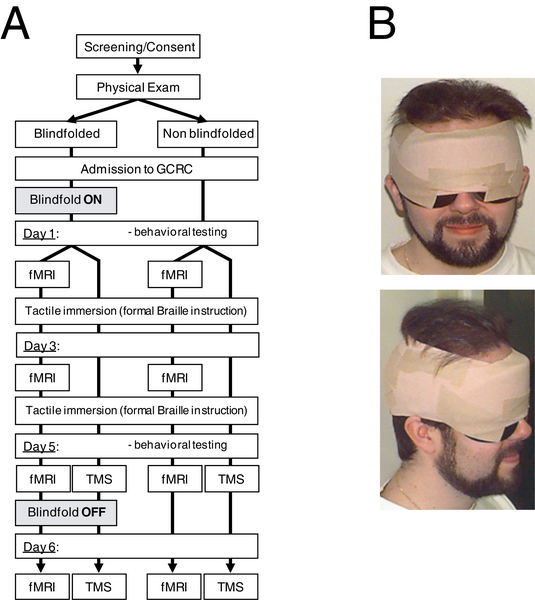
Now a long-term study from the Berenson-Allen Center for Noninvasive Brain Stimulation at Beth Israel Deaconess Medical Center (BIDMC) demonstrates that sudden and complete loss of vision leads to profound – but rapidly reversible -- changes in the visual cortex. These findings not only provide new insights into how the brain compensates for the loss of sight, but also suggest that the brain is more adaptable than originally thought.

Conservation zones, or 'No-take areas' (NTAs), that were set up to protect fish in the late 1960s and early 1970s are in the wrong place to protect vulnerable coral reefs from the effects of global warming, an international team of scientists warned today.

Now the team, led jointly by Newcastle University and the Wildlife Conservation Society, say that urgent action is needed to prevent the collapse of this important marine ecosystem.

The research is the largest study of its kind to have been carried out, covering 66 sites across seven countries and spanning over a decade in the Indian Ocean.

Contrary to stereotypes about masculinity, men interviewed in a large international study reported that being seen as honorable, self-reliant and respected was more important to their idea of masculinity than being seen as attractive, sexually active or successful with women.

The study published in the Journal of Sexual Medicine included interviews with more than 27,000 randomly selected men from eight countries (Germany, U.S., U.K., Spain, Brazil, Mexico, Italy and France), with about 16 percent of the men reporting erectile problems.

Regardless of age or nationality, the men more frequently ranked good health, harmonious family life and good relationships with their wife or partner as more important to their quality of life than material, self-fulfilling or purely sexual concerns. There was no significant difference in rankings of masculinity and quality of life characteristics between men who experienced erectile dysfunction and those who did not.

Do babies says "mama" and "papa" because they recognize their parents or did those words become terms for parents because that's what babies first say?

The human brain may be hard-wired to recognize certain repetition patterns, according to a study in Proceedings of the National Academy of Sciences.

Using the latest optical brain imaging techniques, University of British Columbia post-doctoral fellow Judit Gervain and a team of researchers from Italy and Chile documented brain activities of 22 newborns (2-3 days old) when exposed to recordings of made-up words.

How do galaxies form? The most widely accepted answer to this fundamental question is the model of 'hierarchical formation', a step-wise process in which small galaxies merge to build larger ones. One can think of the galaxies forming in a similar way to how streams merge to form rivers, and how these rivers, in turn, merge to form an even larger river.

This theoretical model predicts that massive galaxies grow through many merging events in their lifetime. But when did their cosmological growth spurts finish? When did the most massive galaxies get most of their mass?

Hydrogen will be one of the most important fuels of the future, if it can be obtained by efficiently splitting water. Today the electrolysis of water is a very energy intensive process, making it both expensive and unsustainable if the electricity necessary to generate it comes from the burning of fossil fuels anyway.

Photolysis, the splitting of water by light, is a highly promising alternative. A team of Australian and American researchers has now developed a catalyst that effectively catalyzes one of the necessary half reactions, the photooxidation of water. As it reports in the journal Angewandte Chemie, the core of the catalyst is a manganese-containing complex modeled after those found in photosynthetic organisms.