Banner
Pilot Study: Fibromyalgia Fatigue Improved By TENS Therapy

Fibromyalgia is the term for a poorly-understood condition where people experience pain and fatigue...

High Meat Consumption Linked To Lower Dementia Risk

Older people who eat large amounts of meat have a lower risk of dementia and cognitive decline...

Long Before The Inca Colonized Peru, Natives Had A Thriving Trade Network

A new DNA analysis reveals that long before the Incan Empire took over Peru, animals were...

Mesolithic People Had Meals With More Tradition Than You Thought

The common imagery of prehistoric people is either rooting through dirt for grubs and picking berries...

User picture.
News StaffRSS Feed of this column.

News Releases From All Over The World, Right To You... Read More »

Blogroll

As poets, songwriters and authors have described, our memories range from misty water-colored recollections to vividly detailed images of the times of our lives.

Now, a study led by researchers at Beth Israel Deaconess Medical Center (BIDMC) and Boston College offers new insights into the specific components of emotional memories, suggesting that sleep plays a key role in determining what we remember – and what we forget.

Reported in the August 2008 issue of the journal Psychological Science, the findings show that a period of slumber helps the brain to selectively preserve and enhance those aspects of a memory that are of greatest emotional resonance, while at the same time diminishing the memory's neutral background details.

What do a tree and the Eiffel Tower have in common?

According to a Duke University engineer, both are optimized for 'flow.' In the case of trees, the flow is of water from the ground throughout the trunk, branches and leaves, and into the air. The Eiffel Tower's flow carries stresses throughout the structure without collapsing under its own weight or being downed by the wind.

For most engineers, the laws governing fluid and solid mechanics like these examples are like oil and water – they just don't mix.

A theory developed by Adrian Bejan, J.A. Jones Professor of Mechanical Engineering at Duke's Pratt School of Engineering and colleague Sylvie Lorente, professor of civil engineering at the University of Toulouse, France, explains how these disparate forces can co-exist within the same theory.

An automobile powered by petroleum on the freeway and by electricity in town uses considerably less energy. A hybrid propulsion system that switches over to generator operation when the brakes go on, producing electric current that is temporarily stored in a battery, yields tremendous savings, particularly in urban traffic.

But up to now, hybrid technology has always had a storage problem. Scientists from three Fraunhofer Institutes are developing new storage modules in a project called "Electromobility Fleet Test."

The pilot project was launched by Volkswagen and Germany's Federal Ministry for the Environment BMU together with seven other partners. The Fraunhofer Institutes for Silicon Technology ISIT in Itzehoe, Integrated Circuits IIS in Nuremberg, and Integrated Systems and Device Technology IISB in Erlangen will be pooling their expertise for the next three years. The researchers are developing an energy storage module based on lithium-polymer accumulator technology that is suitable for use in vehicles.

As lithographic materials and strategies come close to fundamental technical limits, increase performance and size could become prohibitively expensive.

Further advances will require a new approach that is both commercially viable and capable of meeting the demanding quality-control standards of the industry.

In a collaborative effort between academic and industry, chemical and biological engineering professors Paul Nealey and Juan de Pablo, and other colleagues from the UW-Madison NSEC partnered with researchers from Hitachi Global Storage Technologies to test a promising new twist on the traditional methods. In the Aug. 15 issue of Science, the team demonstrates a patterning technology that may revolutionize the field, offering performance improvements over existing methods even while reducing the time and cost of manufacturing.

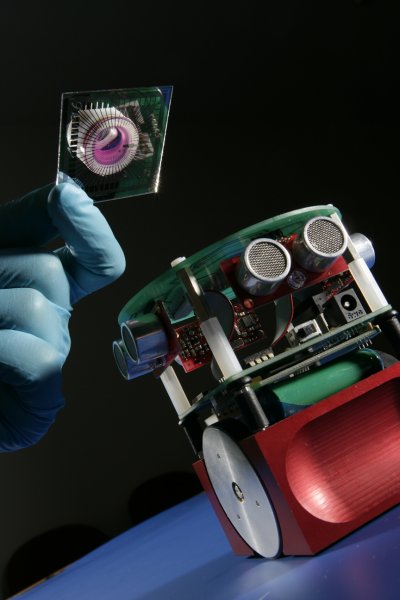
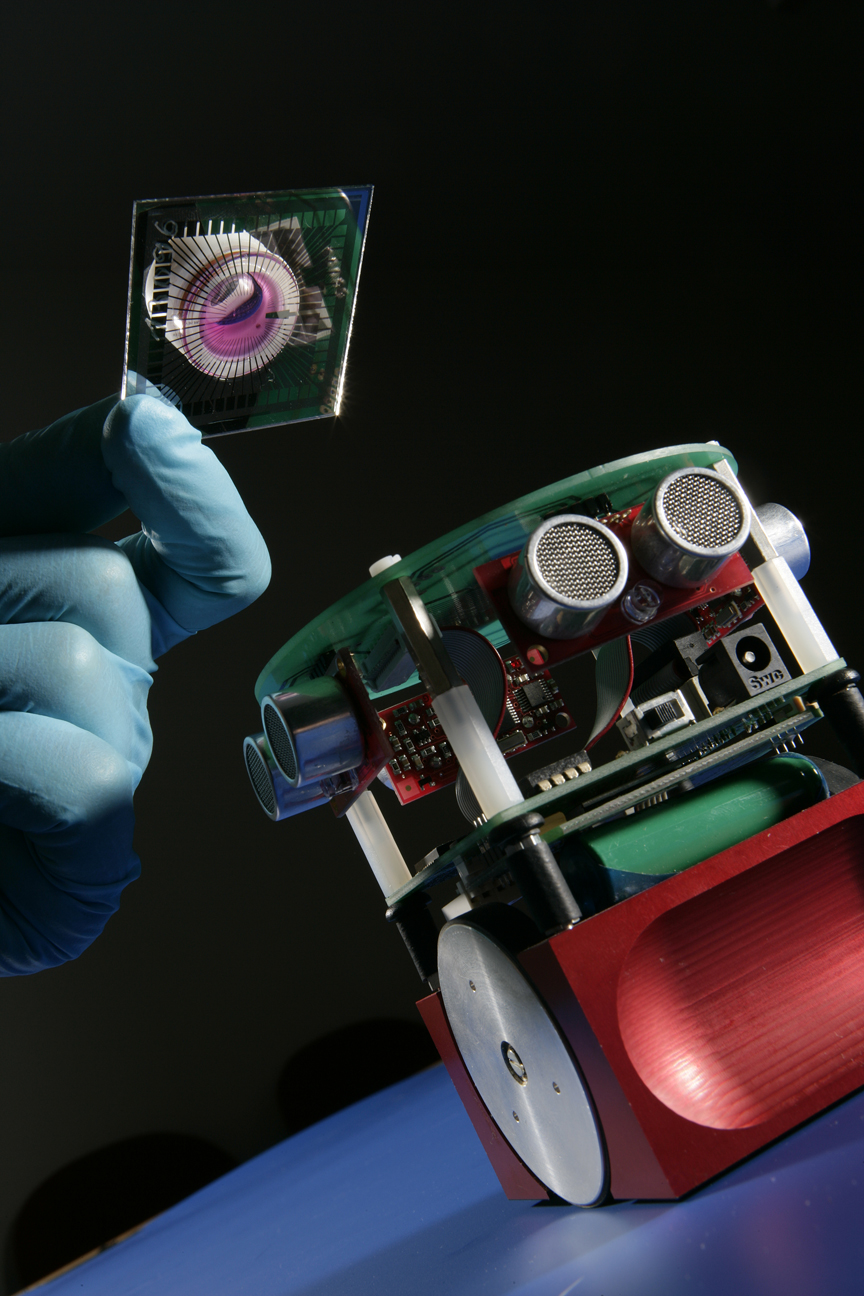
A multidisciplinary team at the University of Reading has developed a robot which is controlled by a biological brain formed from cultured neurons. This cutting edge research is the first step to examine how memories manifest themselves in the brain, and how a brain stores specific pieces of data.

The key aim is that eventually this will lead to a better understanding of development and of diseases and disorders which affect the brain such as Alzheimer's Disease, Parkinson’s Disease, stoke and brain injury.

The robot’s biological brain is made up of cultured neurons which are placed onto a multi electrode array (MEA). The MEA is a dish with approximately 60 electrodes which pick up the electrical signals generated by the cells. This is then used to drive the movement of the robot.

U.S. and Swiss scientists have made a breakthrough in understanding how a type of white blood cell called the eosinophil may help the body to fight bacterial infections in the digestive tract, according to research published online this week in Nature Medicine.

Hans-Uwe Simon, from the University of Bern, Switzerland, Gerald J.Gleich, M.D., from the University of Utah School of Medicine, and their colleagues discovered that bacteria can activate eosinophils to release mitochondrial DNA in a catapult-like fashion to create a net that captures and kills bacteria.