Banner
Pilot Study: Fibromyalgia Fatigue Improved By TENS Therapy

Fibromyalgia is the term for a poorly-understood condition where people experience pain and fatigue...

High Meat Consumption Linked To Lower Dementia Risk

Older people who eat large amounts of meat have a lower risk of dementia and cognitive decline...

Long Before The Inca Colonized Peru, Natives Had A Thriving Trade Network

A new DNA analysis reveals that long before the Incan Empire took over Peru, animals were...

Mesolithic People Had Meals With More Tradition Than You Thought

The common imagery of prehistoric people is either rooting through dirt for grubs and picking berries...

User picture.
News StaffRSS Feed of this column.

News Releases From All Over The World, Right To You... Read More »

Blogroll

Diamonds from Brazil have provided the answers to a question that Earth scientists have been trying to understand for many years: how is oceanic crust that has been subducted deep into the Earth recycled back into volcanic rocks?

A team of researchers from the University of Bristol and the STFC Daresbury Laboratory, have gained a deeper insight into how the Earth recycles itself in the deep earth tectonic cycle way beyond the depths that can be accessed by drilling. The full paper on this research was published in Nature.

The Earth’s oceanic crust is constantly renewed in a cycle which has been occurring for billions of years. This crust is constantly being renewed from below by magma from the Earth’s mantle that has been forced up at mid-ocean ridges. This crust is eventually returned to the mantle, sinking down at subduction zones that extend deep beneath the continents. Seismic imaging suggests that the oceanic crust can be subducted to depths of almost 3000km below the Earth’s surface where it can remain for billions of years, during which time the crust material develops its own unique ‘flavour’ in comparison with the surrounding magmas. Exactly how this happens is a question that has baffled Earth scientists for years.

The victory stance of a gold medalist and the slumped shoulders of a non-finalist are innate and biological rather than learned responses to success and failure, according to a University of British Columbia study using cross-cultural data gathered at the 2004 Olympic and Paralympic Games.

In the first study of its kind, UBC psychology researcher Jessica Tracy investigated how pride and shame are expressed across cultures, and among the congenitally blind. She compared the non-verbal expressions and body language of sighted, blind, and congenitally blind judo competitors representing more than 30 countries, among them Algeria, Taiwan, North Korea, the Ukraine and the United States.

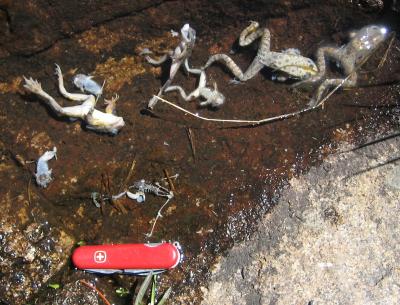
Amphibians, reigning survivors of past mass extinctions, are sending a clear, unequivocal signal that something is wrong, as their extinction rates rise to unprecedented levels, according to a paper published by the Proceedings of the National Academy of Sciences (PNAS). Humans are exacerbating two key natural threats – climate change and a deadly disease that is jumping from one species to another.

The authors confront the question of whether Earth is experiencing its sixth mass extinction and suggest that amphibians, as a case study for terrestrial life, provide a clear answer. "A general message from amphibians is that we may have little time to stave off a potential mass extinction," write co-authors Vance T. Vredenburg, assistant professor of biology at San Francisco State University, and David B. Wake, curator of herpetology in the Museum of Vertebrate Zoology at University of California, Berkeley, in the August 12 issue of PNAS.

Research led by UK and Australian scientists sheds new light on the role that our ancestors played in the extinction of Australia's prehistoric animals.

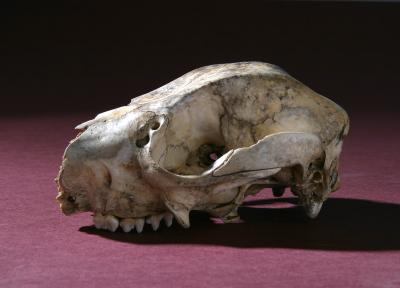
The study in the Proceedings of the National Academy of Sciences provides the first evidence that Tasmania's giant kangaroos and marsupial 'rhinos' and 'leopards' were still roaming the island when humans first arrived. The findings suggest that the mass extinction of Tasmania's large prehistoric animals was the result of human hunting, and not climate change as previously believed.

Scientists have long argued over the reasons behind the worldwide mass extinctions that took place towards the end of the last ice age. The main culprits are generally thought to be climate change or some form of human impact. People only arrived in Tasmania around 43,000 years ago, when the island became temporarily connected by a land bridge to mainland Australia. None of Tasmania's giant animals, known as 'megafauna' were known to have survived until this time. This appeared to clear humans of any involvement in the disappearance of the island's large megafauna.

Small, specially designed bits of ribonucleic acid (RNA) can interfere with cholesterol metabolism, reducing harmful cholesterol by two-thirds in pre-clinical tests, according to a new study by researchers at UT Southwestern Medical Center in collaboration with Alnylam Pharmaceuticals and the Massachusetts Institute of Technology.

In a study that appears on the Proceedings of the National Academy of Sciences, researchers found that a single dose of a small interfering RNA (siRNA), a chemical cousin of DNA, lowered cholesterol levels up to 60 percent in rodents, with the effects lasting for weeks. This result indicated that the RNA interference, or RNAi, mechanism could provide a new tactic for treating high cholesterol. Similar treatments in four nonhuman primates, conducted off-site by a certified contract research organization, produced an average 56 percent drop in low-density lipoprotein cholesterol levels in the animals’ blood.

A new report on severe sporting injuries among high school and college athletes shows cheerleading appears to account for a larger proportion of all such injuries than previously thought.

The latest annual report from the University of North Carolina at Chapel Hill-based National Center for Catastrophic Sports Injury Research shows high school cheerleading accounted for 65.1 percent of all catastrophic sports injuries among high school females over the past 25 years.

According to the report, almost 95,200 female students take part in high school cheerleading annually, along with about 2,150 males. College participation numbers are hard to find since cheerleading is not an NCAA sport. The report also notes that according to the NCAA Insurance program, 25 percent of money spent on student athlete injuries in 2005 resulted from cheerleading.