Banner
Pilot Study: Fibromyalgia Fatigue Improved By TENS Therapy

Fibromyalgia is the term for a poorly-understood condition where people experience pain and fatigue...

High Meat Consumption Linked To Lower Dementia Risk

Older people who eat large amounts of meat have a lower risk of dementia and cognitive decline...

Long Before The Inca Colonized Peru, Natives Had A Thriving Trade Network

A new DNA analysis reveals that long before the Incan Empire took over Peru, animals were...

Mesolithic People Had Meals With More Tradition Than You Thought

The common imagery of prehistoric people is either rooting through dirt for grubs and picking berries...

User picture.
News StaffRSS Feed of this column.

News Releases From All Over The World, Right To You... Read More »

Blogroll

"Big things come in small packages," the saying goes, and it couldn't be more true when discussing the mouse. This little creature has become a crucial part of human history through its contributions in understanding human genetics and disease.

In a review published in Disease Models & Mechanisms (DMM), genetics researchers from Yale University School of Medicine and Fudan University School of Life Sciences discuss the history and future of mice as a model organism.

They predict that the next frontiers in mouse genetics – such as creating mice expressing human genes to create "humanized" mice – will continue to provide scientists with new tools to not only decipher clinical mysteries, but also to test novel therapies and cures.

Controlling body weight is a complicated process but scientists investigating the brain's intricate neurocircuitry and its role in maintaining energy balance are forming a clearer picture of the myriad events that lead to weight gain ... and weight loss.

Writing in Nature Neuroscience, a study led by scientists at Beth Israel Deaconess Medical Center (BIDMC) identifies another piece of this complex puzzle, demonstrating that the neurotransmitter GABA --one of the master communicators among neurons – plays a role in controlling energy balance.

Anyone who has ever tried smoking probably remembers that first cigarette vividly - it likely brought either a nasty coughing fit or a rush of pleasure - a "buzz."

A new study links those first experiences with smoking, and the likelihood that a person is currently a smoker, to a particular genetic variation.

The new finding also adds to growing suspicion surrounding the role of a particular nicotine-receptor gene in smoking-related behaviors and in lung cancer. Other researchers have already linked variations in the same genetic region to smokers' level of dependence on nicotine, to the number of cigarettes smoked per day and to a far higher risk of lung cancer — the ultimate outcome of a lifetime of smoking.

Fingerprints don't get a lot of respect on television shows like CSI these days - but they are about to make a comeback.

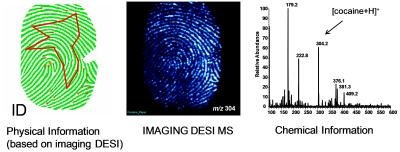
A new technology developed at Purdue University can detect trace amounts of explosives, drugs or other materials left behind in fingerprints and can even distinguish between overlapping fingerprints left by different individuals - a difficult task for current optical forensic methods.

A team led by R. Graham Cooks, Purdue's Henry Bohn Hass Distinguished Professor of Analytical Chemistry, has created a tool that reads and provides an image of a fingerprint's chemical signature. The technology can be used to determine what a person recently handled.

A newly discovered function for a hormone in melons suggests it plays a role in how sexual systems evolve in plants.

Scientists from several French institutions, led by Abdel Bendahmane of the National Institute for Agricultural Research (INRA), isolated the melon sex determination gene and determined its function. As part of this collaborative effort, New York University biologists Jonathan Flowers and Michael Purugganan, who are part of NYU's Center for Genomics and Systems Biology, conducted the evolutionary analysis of the study.

Because plants' sexual systems are varied—species may possess various combinations of male, female, or hermaphrodite systems—their evolution has long been of interest to scientists. This is especially the case in melons, whose sexual system—andromonoecy—carries both male and bisexual flowers and appears to have evolved recently. In this study, the researchers sought to understand what determines the recent formation of melons' new sexual system.

People like ideological commitment more than moderation and 'across the aisle' thinking in times of uncertainty, says University of Southern California economist Juan Carrillo, so extreme positions build trust among an electorate during rough periods.

In defiance of oddsmakers, he seems to think this is an advantage for Republicans, who have been predicting a 1964-era loss for John McCain.

"The current political advantage of the Republican Party stems from the ability of its candidates to develop 'signature ideas.' This strategy is rewarded even when the electorate has ideological reservations," he says.