Banner
Pilot Study: Fibromyalgia Fatigue Improved By TENS Therapy

Fibromyalgia is the term for a poorly-understood condition where people experience pain and fatigue...

High Meat Consumption Linked To Lower Dementia Risk

Older people who eat large amounts of meat have a lower risk of dementia and cognitive decline...

Long Before The Inca Colonized Peru, Natives Had A Thriving Trade Network

A new DNA analysis reveals that long before the Incan Empire took over Peru, animals were...

Mesolithic People Had Meals With More Tradition Than You Thought

The common imagery of prehistoric people is either rooting through dirt for grubs and picking berries...

User picture.
News StaffRSS Feed of this column.

News Releases From All Over The World, Right To You... Read More »

Blogroll

Yesterday, newspapers were telling us half of apes and monkeys face extinction and today we find out we could be overwhelmed by them.

The Wildlife Conservation Society released a census showing massive numbers of these great apes alive and well in the Republic of Congo.

Western lowland gorillas are one of four recognized gorilla sub-species, which also include mountain gorillas, eastern lowland gorillas, and Cross River gorillas. All are classified as "critically endangered" by the IUCN, except eastern lowland gorillas, which are endangered.

When Yale astrophysicist Kevin Schawinski and colleagues at Oxford University enlisted public support in cataloguing galaxies, they never envisioned the strange object Hanny van Arkel found in archived images of the night sky.

The Dutch school teacher, a volunteer in the Galaxy Zoo project that allows members of the public to take part in astronomy research online, discovered a mysterious and unique object some observers are calling a "cosmic ghost."

When van Arkel posted about the image that quickly became known as "Hanny's Voorwerp" ( Dutch for "object") on the Galaxy Zoo forum, astronomers who run the site began to investigate and soon realized van Arkel might have found a new class of astronomical object.

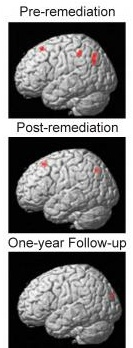
A new Carnegie Mellon University brain imaging study of dyslexic students and other poor readers shows that the brain can permanently rewire itself and overcome reading deficits, if students are given 100 hours of intensive remedial instruction.

The study, published in the August issue of the journal Neuropsychologia, shows that the remedial instruction resulted in an increase in brain activity in several cortical regions associated with reading, and that neural gains became further solidified during the year following instruction.

"This study demonstrates how remedial instruction can use the plasticity of the human brain to gain an educational improvement," said neuroscientist Marcel Just, director of Carnegie Mellon's Center for Cognitive Brain Imaging (CCBI) and senior author of the study. "Focused instruction can help underperforming brain areas to increase their proficiency."

Despite concerns that the terrorist attacks of September 11, 2001 would increase intolerance toward Muslims, the opposite is true, according to new research by University of British Columbia (UBC) and Stanford University researchers published this week in Journal of Personality and Social Psychology.

Paul Davies, a professor of psychology at UBC's Okanagan campus, and co-investigators Claude Steele and Hazel Rose Markus from Stanford University created a research program to examine the relationship between foreign threats, national identity and citizens' endorsement of models for both foreign and domestic intergroup relations.

New research from The University of Western Ontario reveals how the brain processes the 'rewarding' and addictive properties of nicotine, providing a better understanding of why some people seemingly become hooked with their first smoke. The research, led by Steven Laviolette of the Department of Anatomy and Cell Biology at the Schulich School of Medicine & Dentistry could lead to new therapies to prevent nicotine dependence and to treat nicotine withdrawal when smokers try to quit.

The researchers found one brain pathway in particular uses the neurotransmitter 'dopamine' to transmit signals related to nicotine's rewarding properties. This pathway is called the 'mesolimbic' dopamine system and is involved in the addictive properties of many drugs of abuse, including cocaine, alcohol and nicotine.

University of Minnesota researchers have answered a key question as to why antiretroviral therapy isn't effective in restoring immunity in HIV-infected patients.

Once a person is infected with the virus, fibrosis, or scarring, occurs in the lymph nodes – the home of T cells that fight infection. And once fibrosis occurs, T cells can't repopulate the lymph nodes when HIV therapy begins, said Timothy Schacker, M.D., professor of medicine and principal investigator on the study.