Banner
Pilot Study: Fibromyalgia Fatigue Improved By TENS Therapy

Fibromyalgia is the term for a poorly-understood condition where people experience pain and fatigue...

High Meat Consumption Linked To Lower Dementia Risk

Older people who eat large amounts of meat have a lower risk of dementia and cognitive decline...

Long Before The Inca Colonized Peru, Natives Had A Thriving Trade Network

A new DNA analysis reveals that long before the Incan Empire took over Peru, animals were...

Mesolithic People Had Meals With More Tradition Than You Thought

The common imagery of prehistoric people is either rooting through dirt for grubs and picking berries...

User picture.
News StaffRSS Feed of this column.

News Releases From All Over The World, Right To You... Read More »

Blogroll

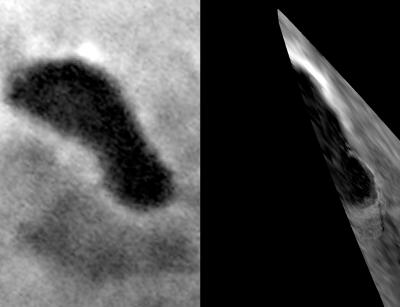
Titan, which is one-and-a-half times the size of Earth's moon and bigger than either Mercury or Pluto, is one of the most fascinating bodies in the solar system when it comes to exploring environments that may give rise to life.

Scientists have confirmed that it has just gotten more interesting - it has a surface liquid lake in the south polar region. Titan is truly wet. The lake is about 235 kilometers, or 150 miles, long, according to the visual and infrared mapping spectrometer, or VIMS, on NASA's Cassini orbiter, which identifies the chemical composition of objects by the way matter reflects light.

An insect that can dive as deep as 30 meters? Or Neoplea striola, a New England insect that can hibernate underwater all winter long?

Indeed, hundreds of insect species spend much of their time underwater, where food may be more plentiful, but until now scientists were unsure how they breathed.

It's by using a 'bubble' of air they create with their water-repellent skin as an external lung, according to John Bush, associate professor of applied mathematics at MIT, and Morris Flynn, assistant professor of mechanical engineering at the University of Alberta. When submerged these insects trap a thin layer of air on their bodies. These bubbles not only serve as a finite oxygen store, but also allow the insects to absorb oxygen from the surrounding water.

Lovastatin, a drug used to lower cholesterol and help prevent cardiovascular disease, has been shown to improve bone healing in an animal model of neurofibromatosis type 1 (NF1). The research, reported today in BMC Medicine, will be of great interest to NF1 patients and their physicians.

Many NF1 patients suffer from bowing, spontaneous fractures and pseudarthrosis (incomplete healing) of the tibias (shinbones). Mateusz Kolanczyk from Stefan Mundlos' laboratory in the Max Planck Institute for Molecular Genetics, Berlin, led a team that investigated lovastatin's ability to prevent pseudarthrosis in a new animal model of human NF1 disease.

Researchers have discovered new genes linked to schizophrenia, it has been revealed.

In two papers published in Nature today (July 30), scientists identify four mutated gene regions that may hold the key to producing new tailor-made drugs to treat the devastating mental illness.

It is hoped the finds, which are likely to galvanize the field of psychiatric genetics, could also lead to earlier diagnosis of the disorder, which affects around one in every 100 people.

Researchers at Yale School of Medicine have found the brain's appetite center uses fat for fuel by involving oxygen free radicals—molecules associated with aging and neurodegeneration. The findings suggest that antioxidants could play a role in weight control.

The study's lead authors were Sabrina Diano and Tamas Horvath, who are an associate professor and professor, respectively, in the Departments of Obstetrics, Gynecology & Reproductive Sciences and Neurobiology. Horvath is also chair of the Section of Comparative Medicine.

"In contrast to the accepted view, the brain does use fat as fuel," said Horvath. "Our study shows that the minute-by-minute control of appetite is regulated by free radicals, implying that if you interfere with free radicals, you may affect eating and satiety."

It is well-known that Vincent van Gogh often painted over his older works. Experts estimate that about one third of his early paintings conceal other compositions under them.

Using a new technique based on synchrotron radiation induced X-ray fluorescence spectroscopy, an international research team, including members from Delft University of Technology (The Netherlands) and the University of Antwerp (Belgium), has successfully applied this technique for the first time to the painting entitled Patch of Grass by Vincent van Gogh. Behind this painting is a portrait of a woman.