Banner
Pilot Study: Fibromyalgia Fatigue Improved By TENS Therapy

Fibromyalgia is the term for a poorly-understood condition where people experience pain and fatigue...

High Meat Consumption Linked To Lower Dementia Risk

Older people who eat large amounts of meat have a lower risk of dementia and cognitive decline...

Long Before The Inca Colonized Peru, Natives Had A Thriving Trade Network

A new DNA analysis reveals that long before the Incan Empire took over Peru, animals were...

Mesolithic People Had Meals With More Tradition Than You Thought

The common imagery of prehistoric people is either rooting through dirt for grubs and picking berries...

User picture.
News StaffRSS Feed of this column.

News Releases From All Over The World, Right To You... Read More »

Blogroll

This DelFly Micro, made by Delft University of Technology, is a 'Micro Air Vehicle' (MAV), an exceptionally small remote-controlled aircraft with camera and image recognition software. The Micro, weighing just 3 grams and measuring 10 centimeters (wingtip to wingtip) has a minuscule battery weighing just 1 gram, can fly for approximately three minutes and has a maximum speed of 5 meters per second.

This kind of ultra-small, remote-controlled, camera-equipped aircraft is of great interest because they could eventually be used for observation flights in difficult-to-reach or dangerous areas.

Adding just the right dash of nanoparticles to standard mixes of lubricants and refrigerants could yield the equivalent of an energy-saving chill pill for factories, hospitals, ships, and others with large cooling systems, suggest the latest results from National Institute of Standards and Technology (NIST) research that is pursuing promising formulations.

NIST experiments with varying concentrations of nanoparticle additives indicate a major opportunity to improve the energy efficiency of large industrial, commercial, and institutional cooling systems known as chillers. These systems account for about 13 percent of the power consumed by the nation’s buildings, and about 9 percent of the overall demand for electric power, according to the Department of Energy.

A new fossil discovery, the first of its kind from the whole of the Antarctic continent, provides scientists with new evidence to support the theory that the polar region was once much warmer.

The discovery by an international team of scientists was published in Proceedings of the Royal Society B and involved researchers from the University of Leicester, North Dakota State University, the British Geological Survey, Queen Mary University of London, and Boston University.

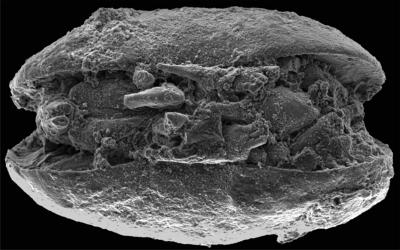
The team made a new fossil discovery in the Dry Valleys of the East Antarctic region. The fossils (ostracods) come from an ancient lake - 14 million years old - and are exceptionally well preserved, with all of their soft anatomy in 3-dimensions.

We are continuously bombarded with messages about the dangers of too much sun and the increased risk of melanoma (the less common and deadliest form of skin cancer), but are these dangers real, or is staying out of the sun causing us more harm than good?

For sun
Sam Shuster, a consultant dermatologist at Norfolk and Norwich University Hospital, says that sun exposure is the major cause of the common forms of skin cancer, which are all virtually benign, but not the rarer, truly malignant melanoma.

Shuster says that the common skin cancers develop in pale, sun exposed skin and are less frequent in people who avoid the sun and use protection.

In any country, some place has to be the deadliest. In the United Kingdom, that place is Scotland. The key reason is drug abuse, accounts for a third of the deaths behind Scotland's higher mortality rate, according to a study published on bmj.com today.

Traditionally, higher death rates compared to England and Wales have been blamed on the higher levels of deprivation in Scotland. Yet over half the difference between Scottish and English deaths cannot be accounted for by higher levels of deprivation. This puzzling "excess" of Scottish deaths has become referred to as the "Scottish effect."

Professor Bloor and colleagues from the University of Glasgow, analysed how many of these unaccounted-for deaths were the result of drug abuse.

More than 75 percent of the bank Web sites surveyed in a University of Michigan study had at least one design flaw that could make customers vulnerable to cyber thieves after their money or even their identity.

Atul Prakash, a professor in the Department of Electrical Engineering and Computer Science and doctoral students Laura Falk and Kevin Borders examined the Web sites of 214 financial institutions in 2006. They will present the findings for the first time at the Symposium on Usable Privacy and Security meeting at Carnegie Mellon University July 25.