Banner
Pilot Study: Fibromyalgia Fatigue Improved By TENS Therapy

Fibromyalgia is the term for a poorly-understood condition where people experience pain and fatigue...

High Meat Consumption Linked To Lower Dementia Risk

Older people who eat large amounts of meat have a lower risk of dementia and cognitive decline...

Long Before The Inca Colonized Peru, Natives Had A Thriving Trade Network

A new DNA analysis reveals that long before the Incan Empire took over Peru, animals were...

Mesolithic People Had Meals With More Tradition Than You Thought

The common imagery of prehistoric people is either rooting through dirt for grubs and picking berries...

User picture.
News StaffRSS Feed of this column.

News Releases From All Over The World, Right To You... Read More »

Blogroll

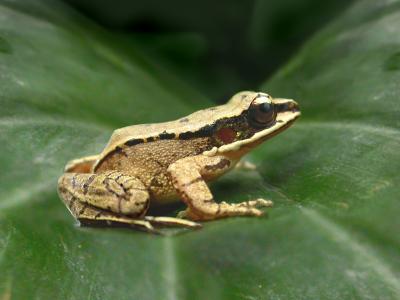
Researchers have discovered that a frog that lives near noisy springs in central China can tune its ears to different sound frequencies, much like the tuner on a radio can shift from one frequency to another. It is the only known example of an animal that can actively select what frequencies it hears, the researchers say.

The findings, from a collaborative effort led by the University of Illinois and the University of California at Los Angeles, appear this week in Proceedings of the National Academy of Sciences. The research team also included scientists from the Chinese Academy of Sciences and the Massachusetts Eye and Ear Infirmary (at Harvard Medical School).

Volunteering for environmental protection activities can be physically and mentally sustaining for older people, according to the latest issue of Public Policy & Aging Report (PPAR). In fact, this demographic group is in a unique position to have a noticeable impact on its surroundings.

For those looking to fill meaningful roles in the community after retirement, volunteerism provides opportunities for social integration. The programs of environmental organizations routinely bring together people of different generations. Many of these involve healthy physical activity, such as the testing of rivers or clean up of natural areas, for example.

The ongoing increase in the number of older U.S. citizens, coupled with a senior population seeking meaningful participation in society, can greatly serve environmental protection efforts.

Environmental factors can transform the ratio of females to males in plant populations according to new research out of the University of Toronto.

The study conducted by Ivana Stehlik, a lecturer, Jannice Friedman, a PhD candidate, and Spencer Barrett, a professor, involved a novel approach using genetic markers (known DNA sequences) to identify the sex of seeds. The team investigated six natural populations of the wind-pollinated herb Rumex nivalis in the Swiss Alps and mapped the distance between females and neighbouring males. They then measured the amount of pollen captured by female flowers and collected seeds from the plants when they were mature.

Cyanobacteria, also referred to as blue-green algae or pond scum, is found in nearly every habitat, from oceans to fresh water to bare rocks to soil, and is a source of many unique chemical structures.

Researchers at the University of Illinois at Chicago (UIC) College of Pharmacy are collaborating with the Ohio State University and two other organizations to discover new cancer therapies derived from natural sources such as pond scum and plants from tropical rainforests.

UIC researchers, led by principal investigator Jimmy Orjala, assistant professor of pharmacognosy, will collect small samples of pond scum throughout the Midwest and grow them in liquid solutions in a temperature-controlled laboratory.

Researchers in Madagascar have confirmed the existence of a population of greater bamboo lemurs more than 400 kilometers (240 miles) from the only other place where the Critically Endangered species is known to live, raising hopes for its survival.

The discovery of the distinctive lemurs with jaws powerful enough to crack giant bamboo, their favorite food, occurred in 2007 in the Torotorofotsy wetlands of east central Madagascar, which is designated a Ramsar site of international importance under the 1971 Convention on Wetlands.

Updated information on the species will be presented at the upcoming International Primatological Society 2008 Congress in Edinburgh, Scotland, on Aug. 3-8, as part of a new assessment of the world's primates that shows the state of mankind's closest living relatives.

The nerve connections that keep a fly's gaze stable during complex aerial manoeuvres, enabling it to respond quickly to obstacles in its flight path, are revealed in new detail in research published today.

Scientists from Imperial College London have described the connections between two key sets of nerve cells in a fly's brain that help it process what it sees and fast-track that information to its muscles. This helps it stay agile and respond quickly to its environment while on the move.

The study is an important step towards understanding how nervous systems operate, and could help us improve our knowledge of more complex animals. It could also be used to improve technical control systems in autonomous air vehicles - robots that stay stable in the air without crashing and with no need for remote control.