Banner
Pilot Study: Fibromyalgia Fatigue Improved By TENS Therapy

Fibromyalgia is the term for a poorly-understood condition where people experience pain and fatigue...

High Meat Consumption Linked To Lower Dementia Risk

Older people who eat large amounts of meat have a lower risk of dementia and cognitive decline...

Long Before The Inca Colonized Peru, Natives Had A Thriving Trade Network

A new DNA analysis reveals that long before the Incan Empire took over Peru, animals were...

Mesolithic People Had Meals With More Tradition Than You Thought

The common imagery of prehistoric people is either rooting through dirt for grubs and picking berries...

User picture.
News StaffRSS Feed of this column.

News Releases From All Over The World, Right To You... Read More »

Blogroll

For the first time, researchers have successfully grown functional human blood vessels in mice using cells from adult human donors — an important step in developing clinical strategies to grow tissue, researchers report in Circulation Research: Journal of the American Heart Association.

The researchers combined two different types of progenitor cells in a culture dish of nutrients and growth factors, then washed off the nutrients and implanted the cells into mice with weakened immune systems. Once implanted, the progenitor cell mixture grew and differentiated into a small ball of healthy blood vessels.

Progenitor cells are similar to stem cells but can only differentiate into specific cells, while stem cells can differentiate into practically any cell in the body.

Overweight mothers give birth to offspring who become even heavier, resulting in amplification of obesity across generations, said Baylor College of Medicine researchers in Houston who found that chemical changes in the ways genes are expressed – a phenomenon called epigenetics -- could affect successive generations of mice.

"There is an obesity epidemic in the United States and it's increasingly recognized as a worldwide phenomenon," said Dr. Robert A. Waterland, assistant professor of pediatrics – nutrition at BCM and lead author of the study that appears in the International Journal of Obesity. "Why is everyone getting heavier and heavier? One hypothesis is that maternal obesity before and during pregnancy affects the establishment of body weight regulatory mechanisms in her baby. Maternal obesity could promote obesity in the next generation."

The expectation that East-Asian people emphasize physical symptoms of depression (e.g. headaches, poor appetite or aches/pains in the body) is widely acknowledged, yet the few available empirical studies report mixed data on this issue. A new study from the Centre for Addiction and Mental Health (CAMH) debunks this cultural myth, and offers clinicians valuable insight to into cultural context when assessing a patient, leading to more accurate diagnosis.

In a diet-focused culture, desserts often get a bad rap, but if you have a sweet tooth don't despair. Some can actually be beneficial.

Desserts made with fruit, nature’s natural sweetener, are ideal, healthy after-dinner treats. Reducing the sugar and fats in a recipe can also Gettmake favorite desserts more healthy and still taste good.

The July issue of Mayo Clinic Health Letter offers healthy dessert suggestions, including:

Grill fruit slices: Cut apples, pineapple, pears or peaches into chunks. Brush them lightly with canola oil and sprinkle with cinnamon. Grill the fruit on skewers or wrap in foil and grill over low heat for three to five minutes.

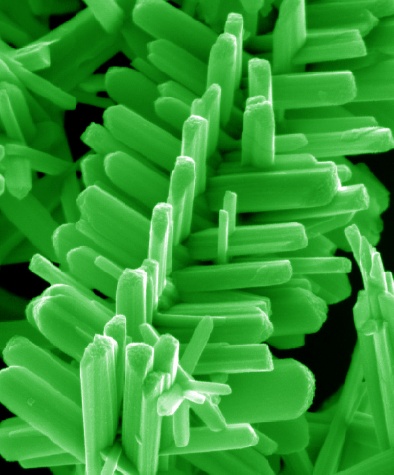
A new technique for growing single-crystal nanorods and controlling their shape using biomolecules could enable the development of smaller, more powerful heat pumps and devices that harvest electricity from heat.

Researchers at Rensselaer Polytechnic Institute have discovered how to direct the growth of nanorods made up of two single crystals using a biomolecular surfactant. The researchers were also able to create “branched” structures by carefully controlling the temperature, time, and amount of surfactant used during synthesis.

Most nanostructures comprised of a core and a shell generally require more than one step to synthesize, but these new research results demonstrate how to synthesize such nanorods in only one step.

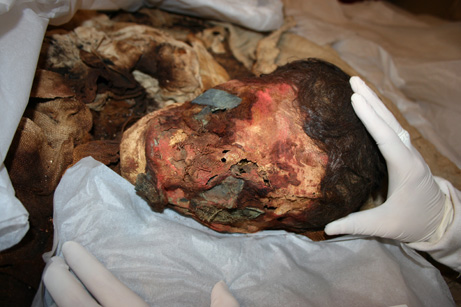
Tulane University anthropologist Kit Nelson is the co-director of a National Geographic-sponsored team that is in the process of unraveling a mummy bundle found in Peru's historic Huaura Valley. The mummy is believed to have been an elite member of the Chancay culture, a civilization that thrived in the central coast of Peru from about 1000 to 1400 AD. The territory of the Chancay was later home to the Incas.

Nelson's work was funded by a Faculty Enhancement Grant from Tulane University and through a grant from National Geographic's Committee for Research and Exploration, a century-old body that funds important work in the earth sciences throughout the world.