Banner
Pilot Study: Fibromyalgia Fatigue Improved By TENS Therapy

Fibromyalgia is the term for a poorly-understood condition where people experience pain and fatigue...

High Meat Consumption Linked To Lower Dementia Risk

Older people who eat large amounts of meat have a lower risk of dementia and cognitive decline...

Long Before The Inca Colonized Peru, Natives Had A Thriving Trade Network

A new DNA analysis reveals that long before the Incan Empire took over Peru, animals were...

Mesolithic People Had Meals With More Tradition Than You Thought

The common imagery of prehistoric people is either rooting through dirt for grubs and picking berries...

User picture.
News StaffRSS Feed of this column.

News Releases From All Over The World, Right To You... Read More »

Blogroll

Researchers from China, France, Italy, and the United Kingdom, have created a model that shows exactly how, when a baby suckles at a mother's breast, it starts a chain of events that leads to a surge of the "trust" hormone oxytocin in their mother's brain.

Research at the University of Liverpool has found how Saharan dust storms help sustain life over extensive regions of the North Atlantic Ocean.

Working aboard research vessels in the Atlantic, scientists mapped the distribution of nutrients including phosphorous and nitrogen and investigated how organisms such as phytoplankton are sustained in areas with low nutrient levels.

They found that plants are able to grow in these regions because they are able to take advantage of iron minerals in Saharan dust storms. This allows them to use organic or 'recycled' material from dead or decaying plants when nutrients such as phosphorous – an essential component of DNA – in the ocean are low.

Viruses achieve their definition of success when they can thrive without killing their host. Now, biologists Pamela Bjorkman and Zhiru Yang of the California Institute of Technology have uncovered how one such virus, prevalent in humans, evolved over time to hide from the immune system.

The human immune system and the viruses hosted by our bodies are in a continual dance for survival--viruses ever seek new ways to evade detection, and our immune system devises new methods to hunt them down. Human Cytomegalovirus (HCMV), says Bjorkman, Caltech's Delbrück Professor of Biology and a Howard Hughes Medical Institute (HHMI) Investigator, "is the definition of a successful virus--it thrives but it doesn't affect the host."

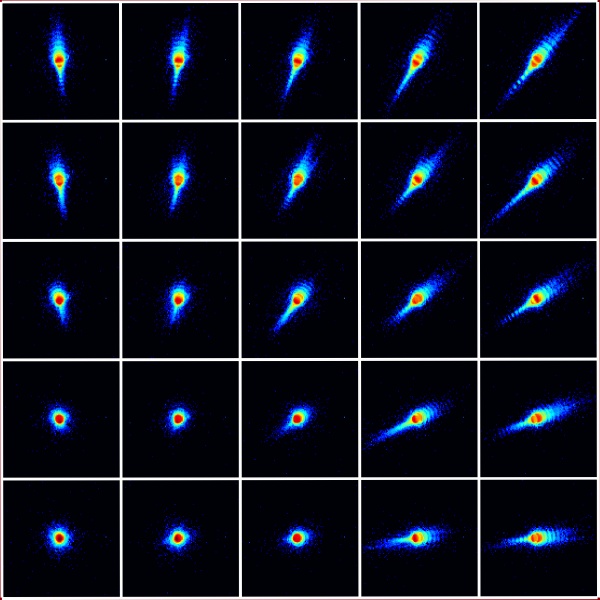
A super-resolution X-ray microscope developed by a team of researchers from the Paul Scherrer Institut (PSI) and EPFL in Switzerland combines the high penetration power of x-rays with high spatial resolution, making it possible for the first time to shed light on the detailed interior composition of semiconductor devices and cellular structures.

The new instrument uses a Megapixel Pilatus detector (whose big brother will be detecting collisions from CERN's Large Hadron Collider), which has excited the synchrotron community for its ability to count millions of single x-ray photons over a large area. This key feature makes it possible to record detailed diffraction patterns while the sample is raster-scanned through the focal spot of the beam. In contrast, conventional x-ray (or electron) scanning microscopes measure only the total transmitted intensity.

"Survival of the fittest" is the catch phrase of evolution by natural selection. While natural selection favors the most fit organisms around, evolutionary biologists have long wondered whether this leads to the best possible organisms in the long run.

A team of researchers at The University of Texas at Austin, led by Drs. Matthew Cowperthwaite and Lauren Ancel Meyers, has developed a new theory, which suggests that life may not always be optimal.

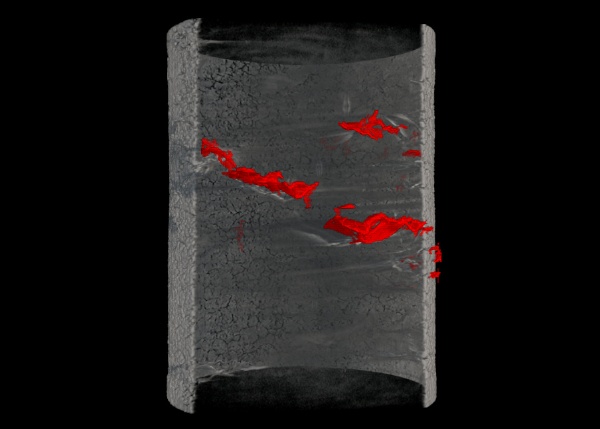
A team of researchers from the University of Manchester, the National Institute of Applied Sciences (INSA) in Lyon and the ESRF has revealed how a growing crack interacts with the 3D crystal structure of stainless steel.

By using a new grain mapping technique it was possible to determine the internal 3D structure of the material without destroying the sample. Afterwards, a crack was initiated in the stainless steel, and the scientists were able to study how the crack grew between the grains. This is the first time that such an experiment has used the 3D grain mapping technique, and the first results are published in Science this week.