Banner
Pilot Study: Fibromyalgia Fatigue Improved By TENS Therapy

Fibromyalgia is the term for a poorly-understood condition where people experience pain and fatigue...

High Meat Consumption Linked To Lower Dementia Risk

Older people who eat large amounts of meat have a lower risk of dementia and cognitive decline...

Long Before The Inca Colonized Peru, Natives Had A Thriving Trade Network

A new DNA analysis reveals that long before the Incan Empire took over Peru, animals were...

Mesolithic People Had Meals With More Tradition Than You Thought

The common imagery of prehistoric people is either rooting through dirt for grubs and picking berries...

User picture.
News StaffRSS Feed of this column.

News Releases From All Over The World, Right To You... Read More »

Blogroll

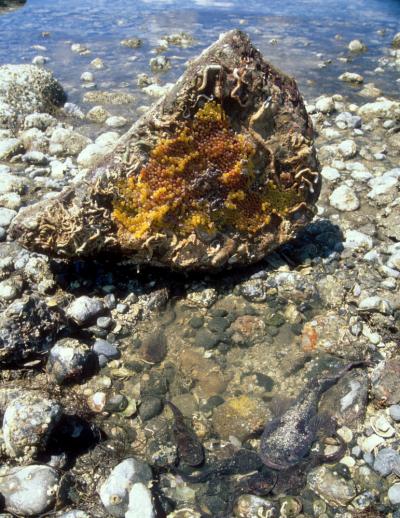
New research on the midshipman fish, a close relative of the toadfish, indicates that that the ability to make and respond to sound is an ancient part of the vertebrate success story.

After building a nest for his potential partner, he calls to nearby females by contracting his swim bladder, the air-filled sac fish use to maintain buoyancy. The sound he makes is not a song or a whistle, but a hum; more reminiscent of a long-winded foghorn than a ballad. Female midshipman find it very alluring, and they only approach a male's nest if he makes this call.

Researchers at Goldsmiths, University of London have conducted a study that highlights how errors can occur in the eyewitness identification process of the criminal justice system. The study shows that stress and fear reduce the likelihood of successful identification, bringing into question a victim’s ability to identify the perpetrator of a crime.

Visitors to the London Dungeon were asked to describe and identify an actor encountered in the ‘Labyrinth of the Lost’ who stepped out to block their path. Whilst they were in the labyrinth, some participants wore a heart rate monitor to measure the level of their anxiety. The researchers found that participants who had experienced a higher state of anxiety were less likely to report correct descriptions of the actor and were less likely to correctly identify him/her in a line-up than participants who had experienced less anxiety.

Some bacterial cells can swim, morph into new forms and even become dangerously virulent - all without initial involvement of DNA. Yale University researchers writing in Science describe how bacteria accomplish this amazing feat - and in doing so provide a glimpse of what the earliest forms of life on Earth may have looked like.

To initiate many important functions, bacteria sometimes depend entirely upon ancient forms of RNA, once viewed simply as the chemical intermediary between DNA's instruction manual and the creation of proteins, said Ronald Breaker, the Henry Ford II Professor of Molecular, Cellular and Developmental Biology at Yale and senior author of the study.

University of Alberta scientists contend they have the answer to mass extinction of animals and plants 93 million years ago. The answer, research has uncovered, has been found at the bottom of the sea floor where lava fountains erupted, altering the chemistry of the sea and possibly of the atmosphere.

Earth and Atmospheric Science researchers Steven Turgeon and Robert Creaser found specific isotope levels of the element osmium, an indicator of volcanism in seawater, in black shale—rocks containing high amounts of organic matter—drilled off the coast of South America and in the mountains of central Italy.

New evidence that the brain regions responsible for vision are capable of adapting in adults offers new hope for those with an untreated condition commonly known as lazy eye. Also called amblyopia, the condition is the most prevalent cause of visual impairment in a single eye, affecting about six million people in the United States alone.

"If not detected early enough—before seven to twelve years of age—the condition has been considered untreatable because the brain wasn't thought to be plastic enough," said Benjamin Thompson of McGill University in Canada. "The main message here is to show that there really is plasticity in the adult visual system. There is real momentum now to find a treatment for adult amblyopia."

Every moment we live, cells in our bodies are dying. One type of cell death activates an immune response while another type doesn't. Now researchers at Washington University School of Medicine in St. Louis and St. Jude's Children's Research Hospital in Memphis have figured out how some dying cells signal the immune system. They say the finding eventually could have important implications in the treatment of autoimmune diseases and cancer.

In the July 18 issue of the journal Immunity, the researchers report a molecule, called high mobility group box-1 protein (HMGB1), which cells release when they die, seems to determine whether the immune system is alerted. But what happens to HMGB1 after it's made and whether the immune system ever gets the signal depends on how the cell dies.