Banner
Pilot Study: Fibromyalgia Fatigue Improved By TENS Therapy

Fibromyalgia is the term for a poorly-understood condition where people experience pain and fatigue...

High Meat Consumption Linked To Lower Dementia Risk

Older people who eat large amounts of meat have a lower risk of dementia and cognitive decline...

Long Before The Inca Colonized Peru, Natives Had A Thriving Trade Network

A new DNA analysis reveals that long before the Incan Empire took over Peru, animals were...

Mesolithic People Had Meals With More Tradition Than You Thought

The common imagery of prehistoric people is either rooting through dirt for grubs and picking berries...

User picture.
News StaffRSS Feed of this column.

News Releases From All Over The World, Right To You... Read More »

Blogroll

Genetic recombination in germ cells leads to offspring with a new genetic make-up and influences the course of evolution.

In the current issue of Nature, researchers at the European Molecular Biology Laboratory (EMBL) in Heidelberg, Germany, and the EMBL-European Bioinformatics Institute (EMBL-EBI) in Hinxton, UK, have presented the most precise map of genetic recombination yet and they say it sheds light on fundamental questions about genetic shuffling and has implications for the tracking of disease genes and their inheritance.

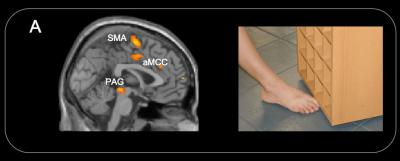
Children between the ages of seven and 12 appear to be naturally inclined to feel empathy for others in pain, according to researchers at the University of Chicago, who used functional Magnetic Resonance Imaging (fMRI) scans to study responses in children.

The responses on the scans were similar to those found in studies of adults. Researchers found that children, like adults, show responses to pain in the same areas of their brains. The research also found additional aspects of the brain activated in children, when youngsters saw another person intentionally hurt by another individual.

"This study is the first to examine in young children both the neural response to pain in others and the impact of someone causing pain to someone else," said Jean Decety, Professor in the Departments of Psychology and Psychiatry at the University of Chicago, who reported the findings in the article, "Who Caused the Pain? An fMRI Investigation of Empathy and Intentionality in Children," published in the currrent issue of Neuropsychologia. Joining him as co-authors were University students Kalina Michalska and Yuko Aktsuki.

Millions of pounds of lead used in hunting, fishing and shooting sports wind up in the environment each year and can threaten or kill wildlife, according to a new scientific report.

Lead is a metal with no known beneficial role in biological systems, and its use in gasoline, paint, pesticides, and solder in food cans has nearly been eliminated. Although lead shot was banned for waterfowl hunting in 1991, its use in ammunition for upland hunting, shooting sports, and in fishing tackle remains common.

In some ways, your body's thoughts and actions are like a complex series of water faucets but the spigots open or close in response to signals. Each thought or action sends a million electrical signals pulsing through your body.

At the heart of the process of generating these electrical impulses is the ion channel.

Ion channels belong to a special class of proteins embedded in the oily membranes of the cell. They regulate the movement of charged particles, called ions, into and out of the cell. Much like water faucets that can be controlled by turning a knob, channels open or close in response to specific signals. For instance, ion channels that open in response to pressure on the skin regulate our sense of touch.

A newly developed nano-sized electronic device is an important step toward helping astronomers see invisible light dating from the creation of the universe. This invisible light makes up 98% of the light emitted since the "big bang," and may provide insights into the earliest stages of star and galaxy formation almost 14 billion years ago.

The tiny, new circuit, developed by physicsts at Rutgers University, NASA's Jet Propulsion Laboratory in Pasadena, Calif., and the State University of New York at Buffalo, is 100 times smaller than the thickness of a human hair. It is sensitive to faint traces of light in the far-infrared spectrum (longest of the infrared wavelengths), well beyond the colors humans see.

"In the expanding universe, the earliest stars move away from us at a speed approaching the speed of light," said Michael Gershenson, professor of physics at Rutgers and one of the lead investigators. "As a result, their light is strongly red-shifted when it reaches us, appearing infrared."

Researchers from the European Molecular Biology Laboratory (EMBL) discovered a new way to make use of drugs' unwanted side effects. They developed a computational method that compares how similar the side effects of different drugs are and predicts how likely the drugs act on the same target molecule. The study, published in Science this week, hints at new uses of marketed drugs.

Similar drugs often share target proteins, modes of action and unpleasant side effects. In reverse this means that drugs that evoke similar side effects likely act on the same molecular targets. A team of EMBL researchers now developed a computational tool that compares side effects to test if they can predict common targets of drugs.